
We’re running low again, folks, so send in any good photos you have. I know you have a lot of free time during the holidays!
Today’s photos, and two bonus videos, come from reader Amy Perry of Indiana. Her captions and IDs are indented, and you can enlarge the photos by clicking on them.
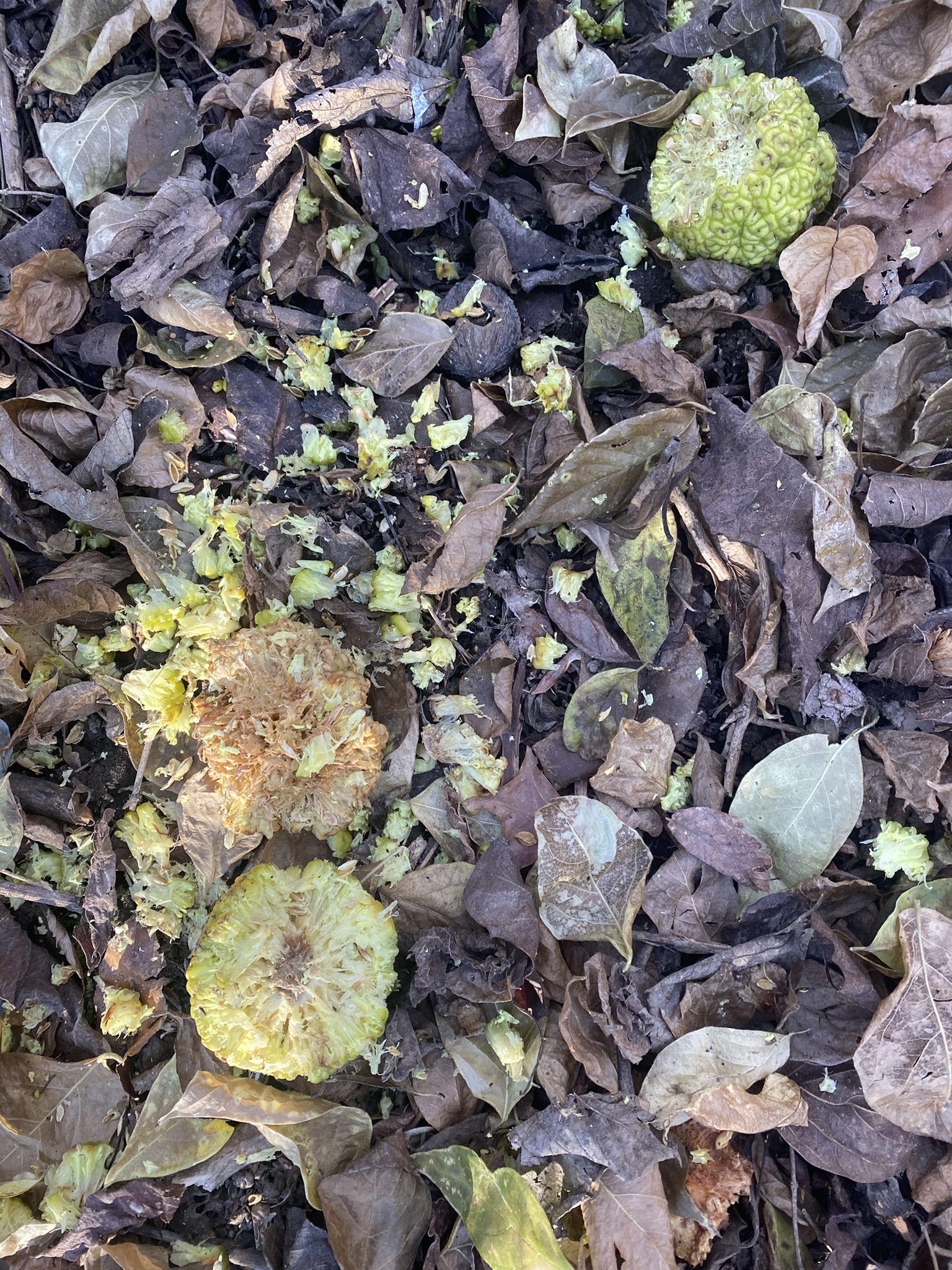
A half-eaten osage orange (Maclura pomifera) in December on the forest floor at Flat Fork Creek Park, Fishers, Indiana. The only animal that Wikipedia says eats these is squirrels. It says they are ineffective seed dispersers. Native to Indiana:
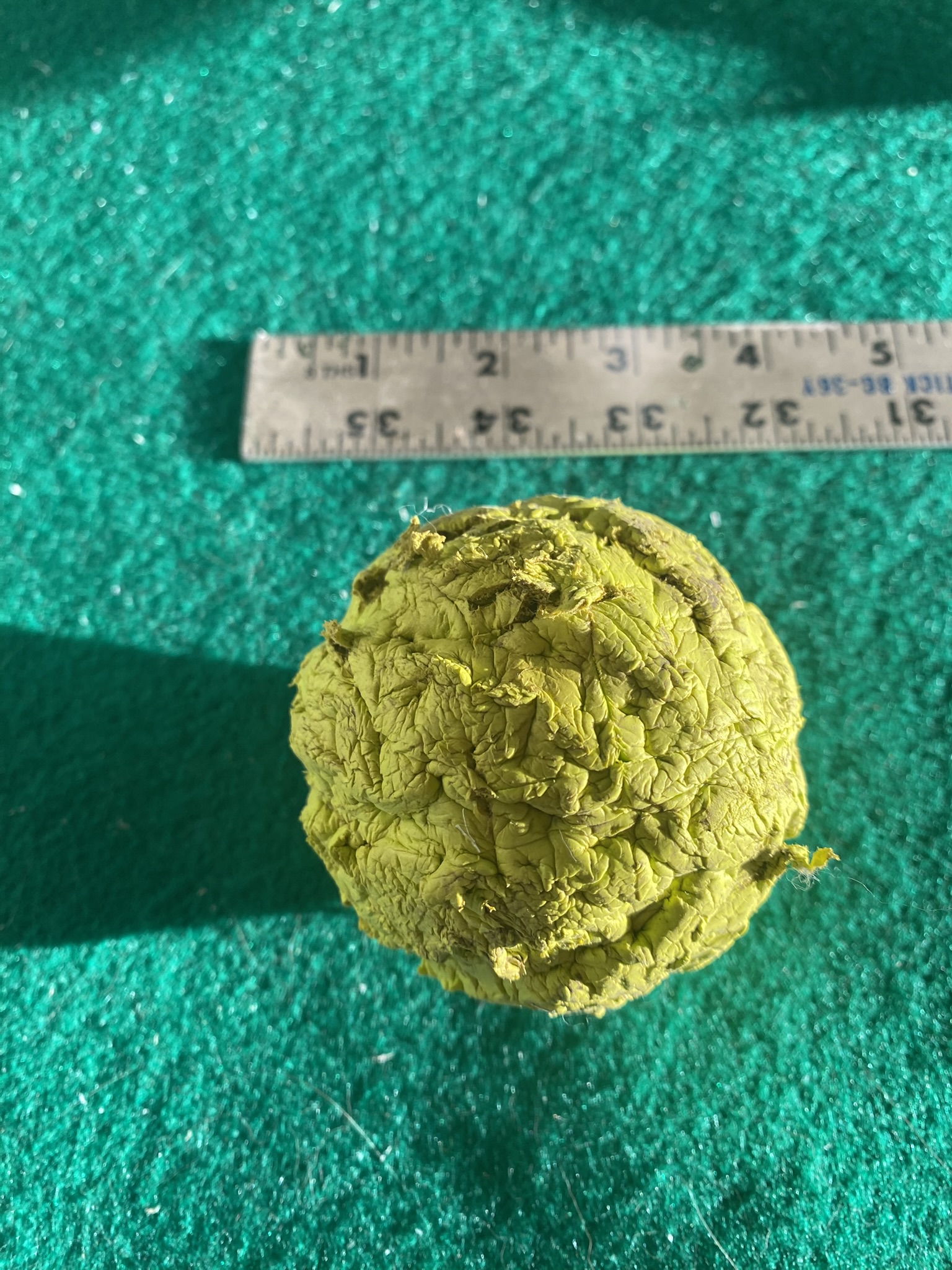
A whole osage orange. They’re also called hedge apples, because people sometimes prune them so they grow really thickly and make a hedge. They’re the size of a softball:
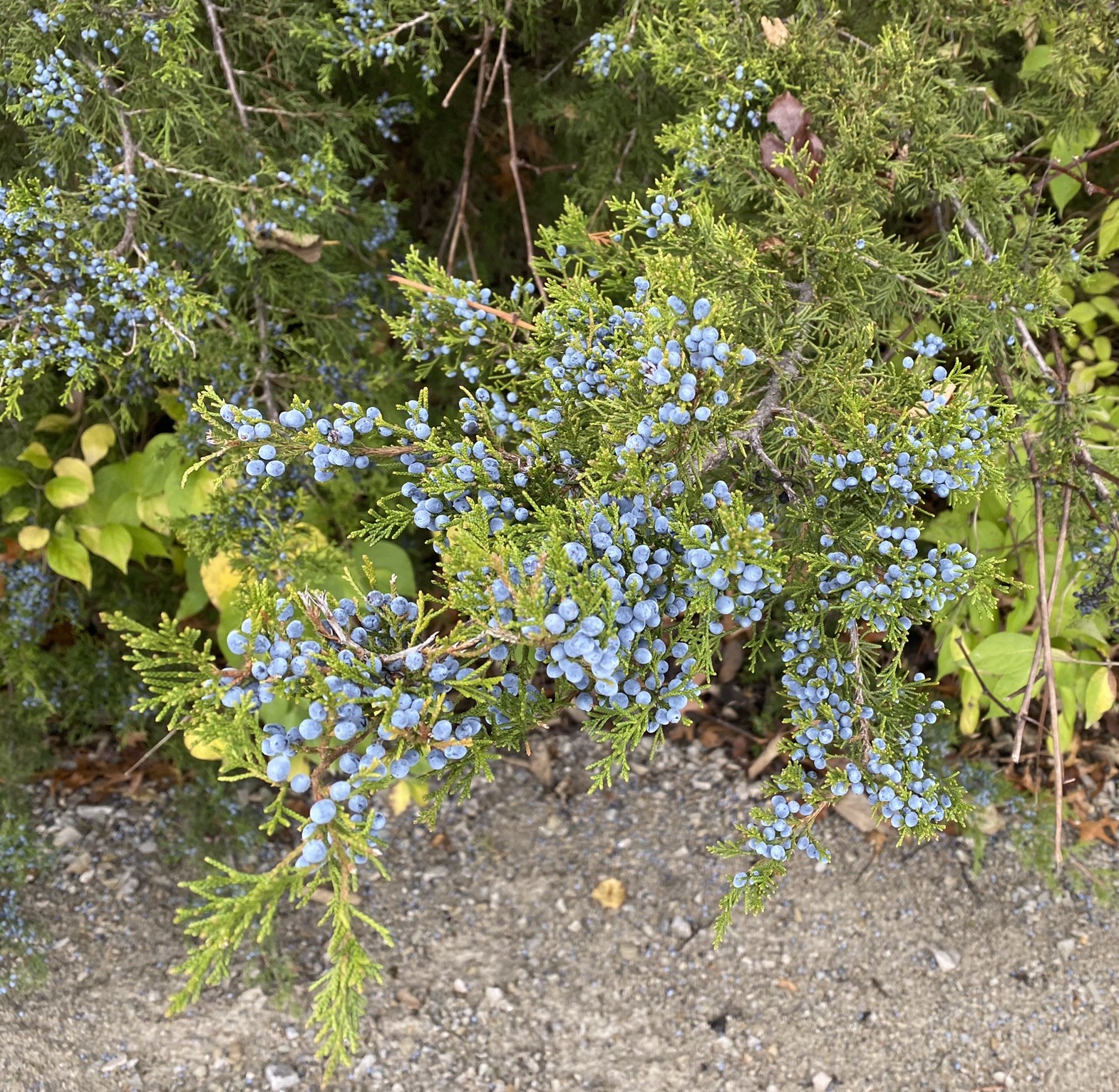
Juniper berries (Juniperus communis) in December along the Nickel Plate Trail, Fishers, Indiana, a railroad turned trail:
Queen Anne’s Lace (Daucus carota) in December along the Nickel Plate Trail, a railroad-turned trail. 4 shows one in bloom. Sometimes the plant in bloom has a red dot in the middle, resembling a drop of blood from Queen Anne when she was sewing, as the story goes:
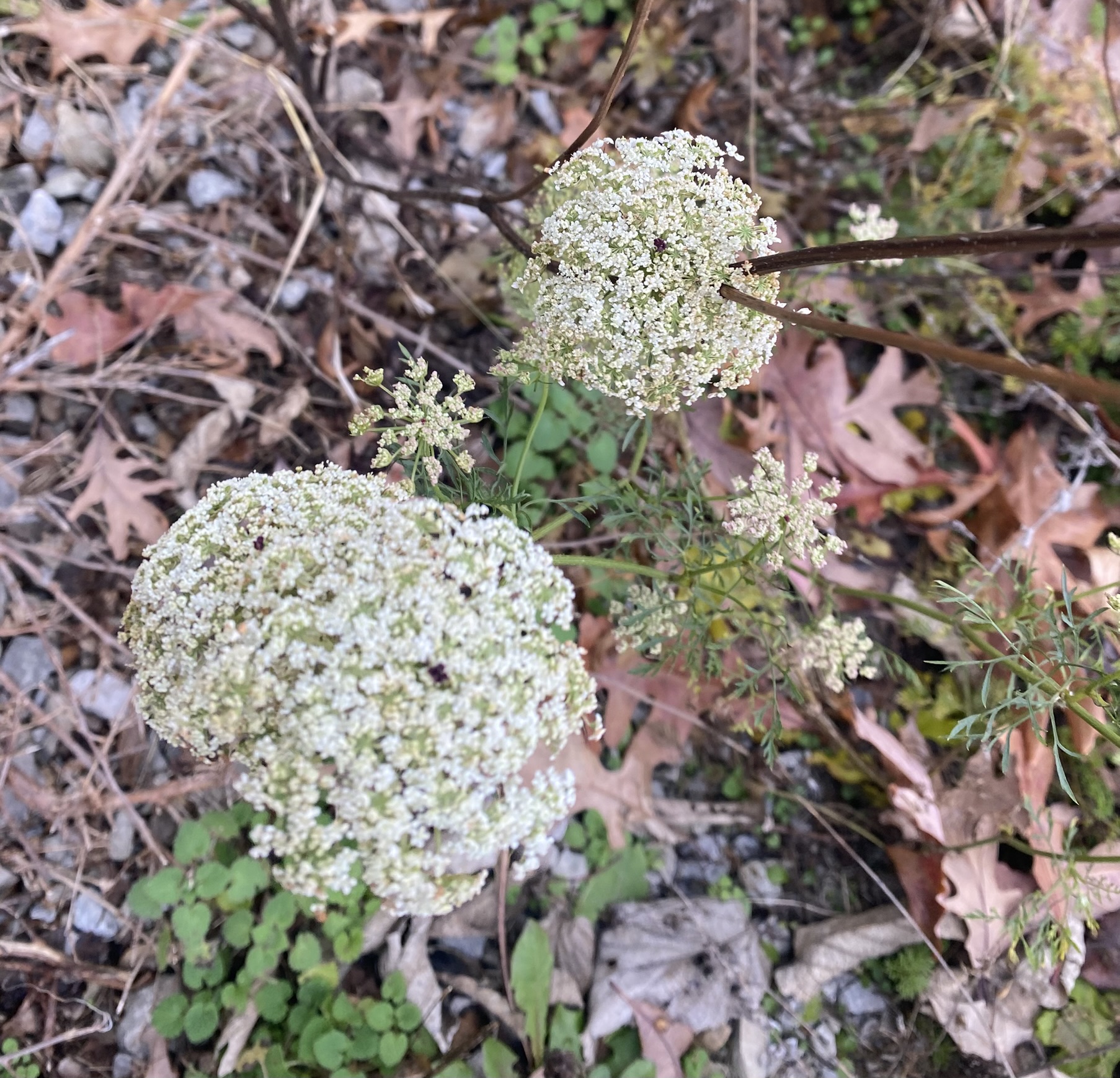
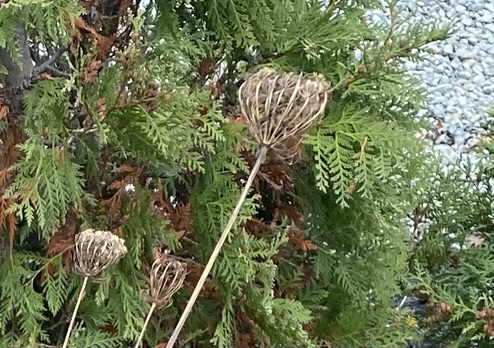
Here’s one curled up after blooming, showing why the flower is sometimes called bird’s nest. As the seeds ripen, the flower curls inward to form a birds-nest shape and turns brownish. Indiana DNR ranks it medium as an invasive, meaning it is not bad enough to warrant regulation in Indiana:
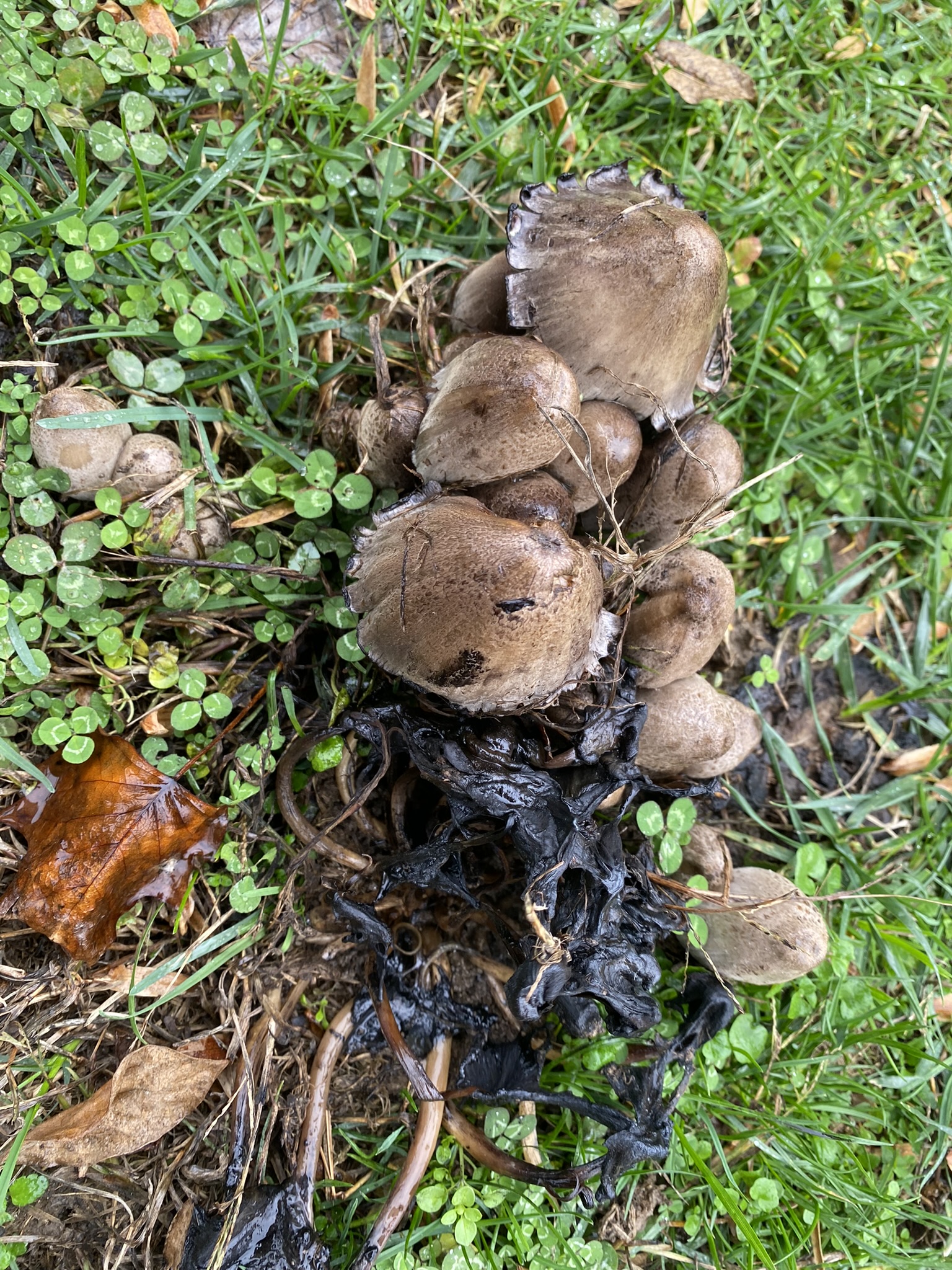
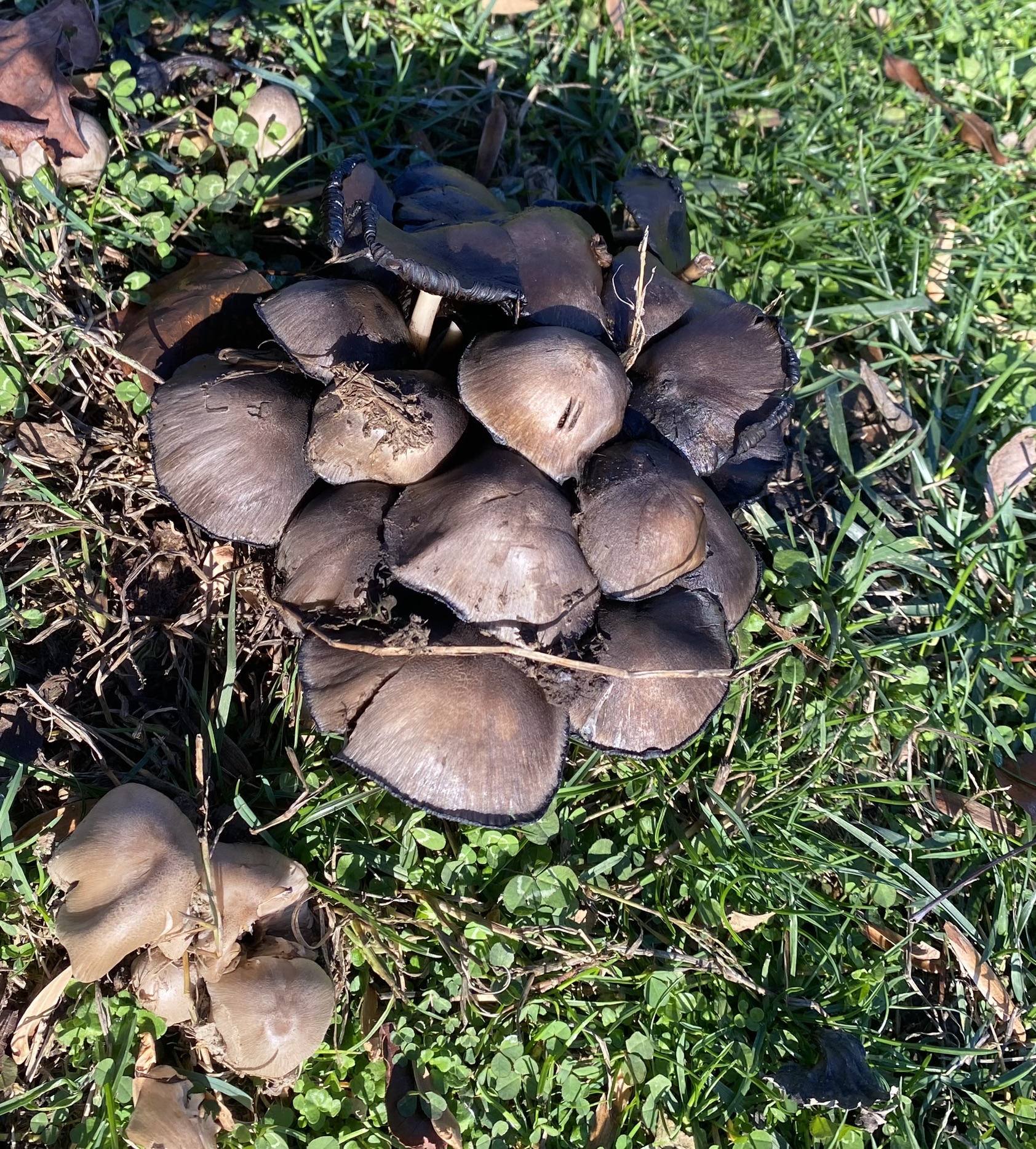
Inky cap (Coprinopsis atramentaria) mushrooms after lots of rain in November in Central Park, Carmel, Indiana. Also known as common ink cap and tippler’s bane (because it’s poisonous when consumed along with alcohol):
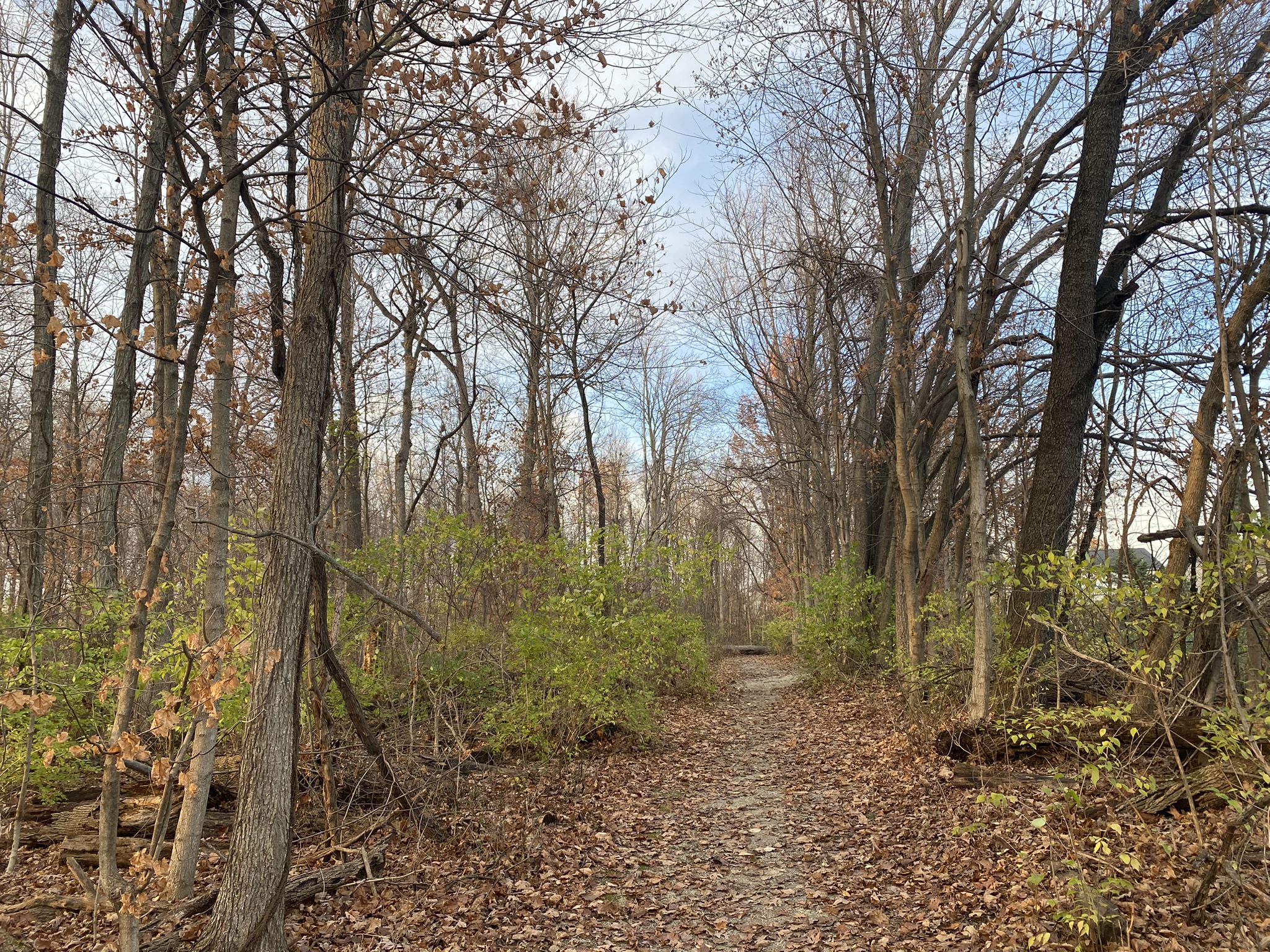
One way that we native plant lovers in central Indiana identify invasive plants is the fact that they are the first to green up in the spring and the last to lose their leaves in late fall. Here is a path in Hoosier Woods in Fishers, Indiana, in November, lined with the Asian bush honeysuckle (Lonicera tatarica, Lonicera morrowii):
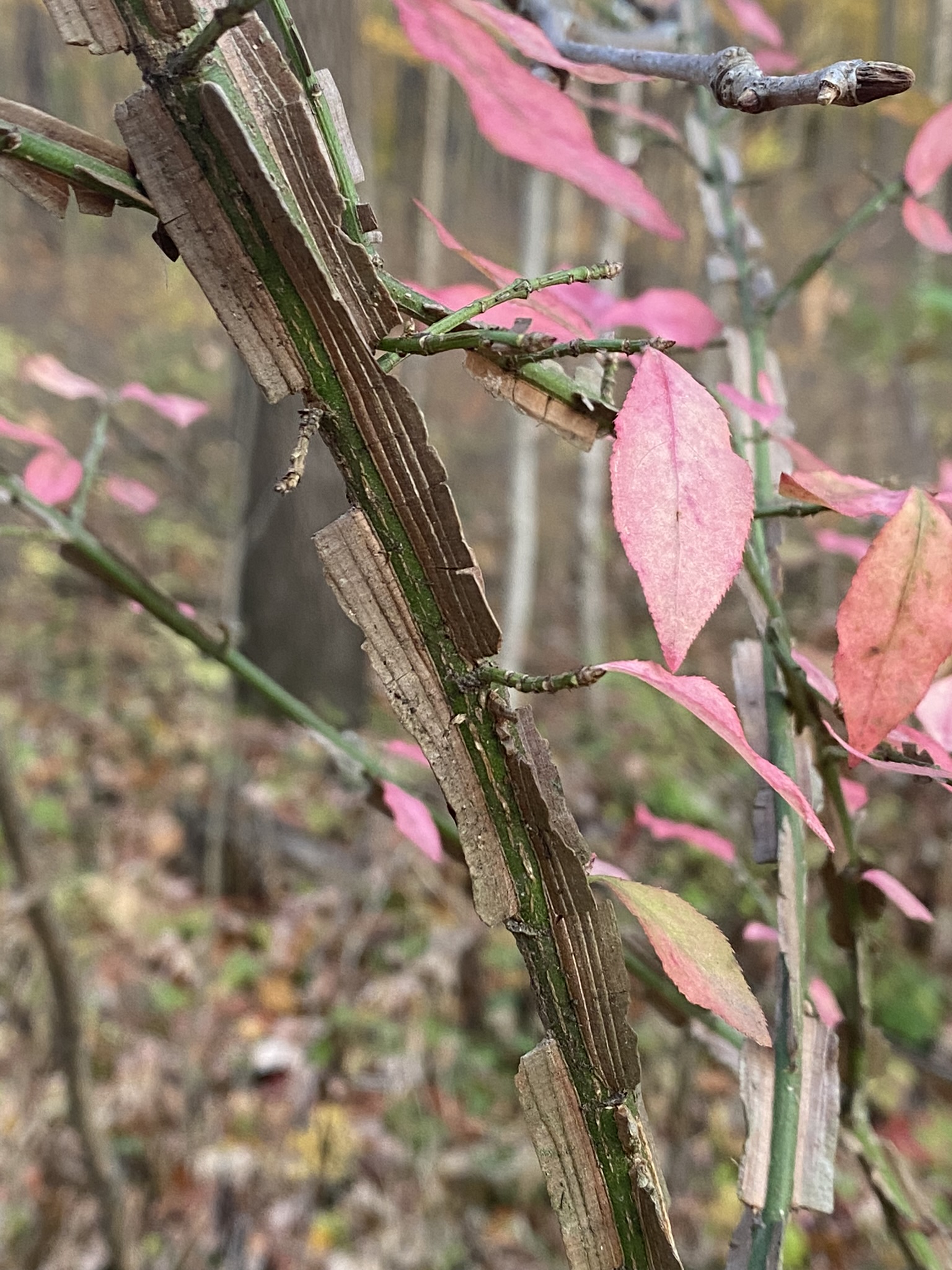
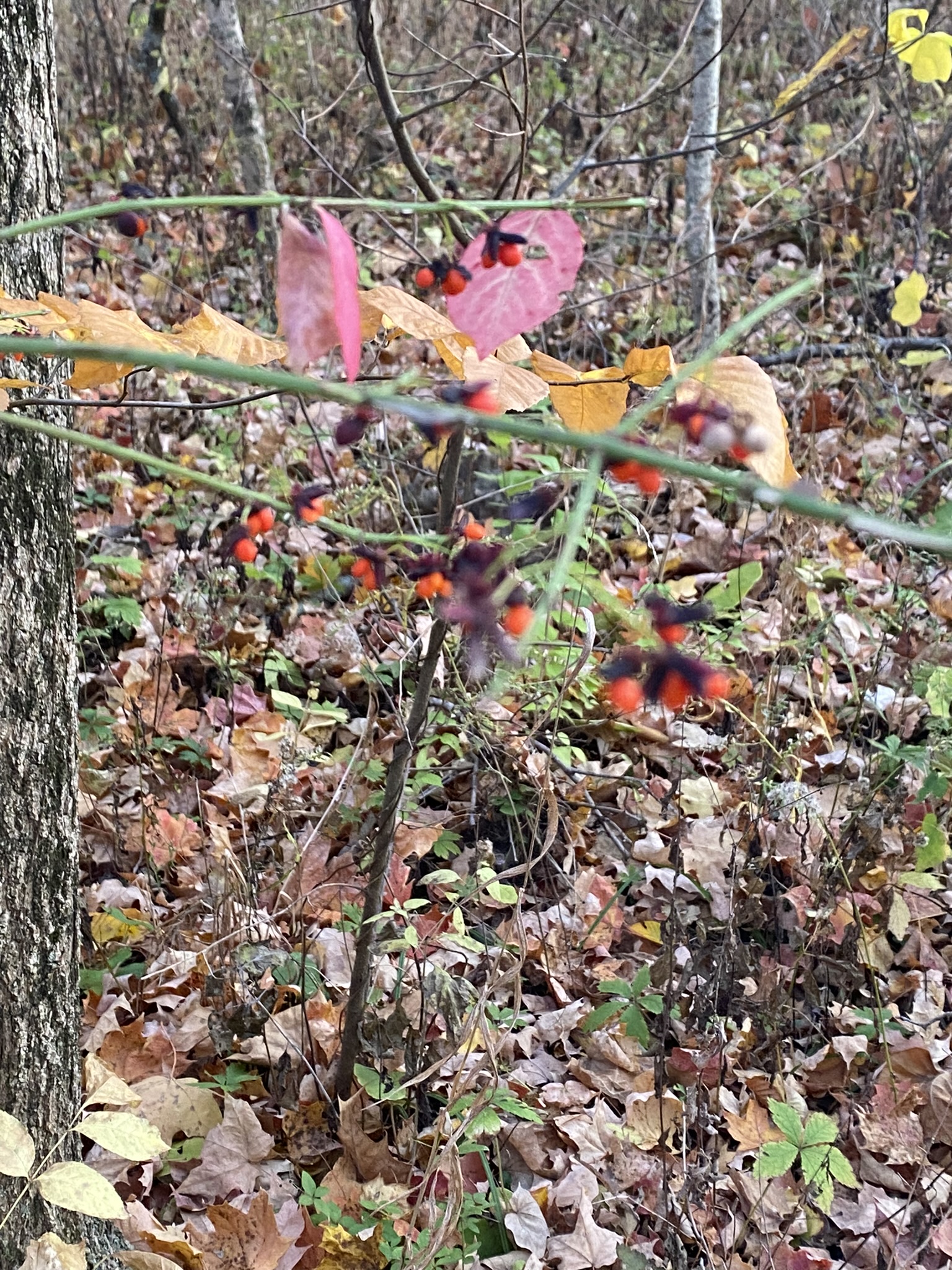
This burning bush (Euonymus alatus) in October deep in Ritchey Woods Nature Preserve in Fishers, Indiana, proves that invasive plants in our yards DO spread even though we don’t see it happen. Birds no doubt planted this one. The deep red leaves, the wing-like (hence alatus) formations on the stem, and the red seeds identify it. Sometimes the seeds are yellow or orange:
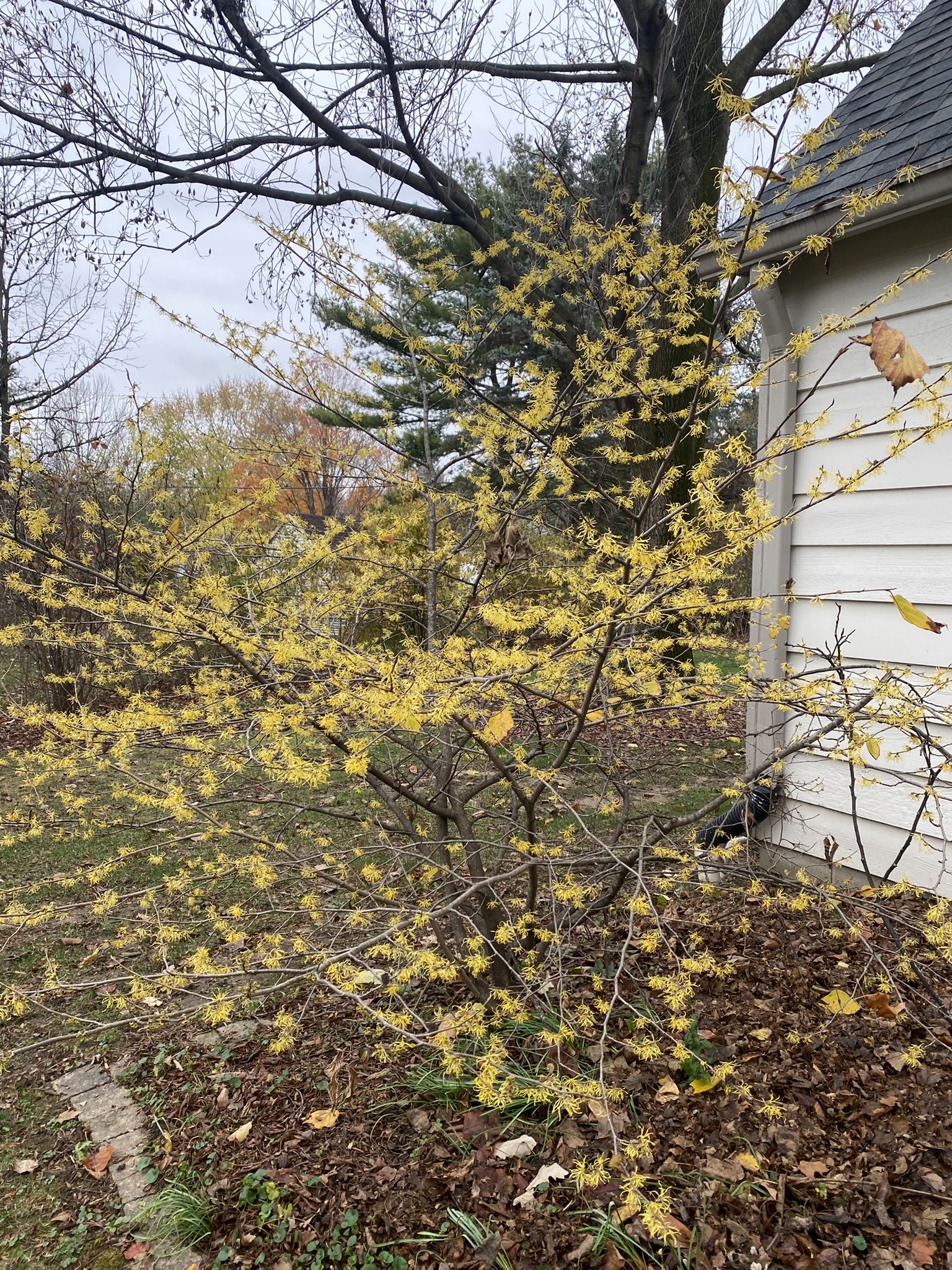
Witch hazel (Hamamelis virginiana) plant in our yard in November in Fishers, Indiana. One of the few shrubs that blooms in the fall. Native to Indiana:
And two videos:
Great blue heron (Ardea herodias):
I crushed the leaf of a cup plant (Silphium perfoliatum) to show its sandpaper-like quality. Note the square stem, a characteristic of that species. The leaves of this species look like giant oak leaves. “At the bottom of the plant, the leaves are huge — to 16 inches long — but the leaves are progressively smaller toward the top of the stem. In full sun, the upright lower leaves turn their edges toward north and south, with the flat surfaces facing east and west, giving compass plant its common name.”–Missouri Dept. of Conservation. Some sources say the leaves do this to avoid the effects of full sun.
Enjoyable, interesting set – some are familiar to me – intrigued how a poison can become such when ingested with a 2nd agent… errr, not to sound like a murder mystery, but …
I think that it is an allergy rather than a poison. My late wife had a most stylish version. For Christmas, I cooked loin of pork stuffed with Perigord truffles and with it we drank an excellent Pauillac: Chateau Grand Puy Lacoste. Next day, she was ill all day. She commented that it was the best tasting puke ever.
Oy – thanks.
Oh BTW
Don’t eat unripe / not exactly / pre-ripe avocado. Has some fatty acids that … well, I recommend reading about it. Never knew until too late. Not sure if reaction, poison, or other.
Apparently can cause stomach upsets in some people, but it’s ok to eat them. I have without problems.
https://www.chefsresource.com/is-it-ok-to-eat-unripe-avocado/
That fact would make an interesting murder mystery. Wikipedia explains why. The mushrooms contain a substance used in a drug that is used to make alcoholics get sick when they consume alcohol.
Fascinating plants! Thank you for the information, especially on the cup plant.
Very interesting. I did not know that about Queen Ann’s Lace.
There is the controversial idea that Osage Oranges evolved to be dispersed by some giant herbivore that is now extinct.
I thought they evolved to be made into fence posts?!
Thank you for this – so very interesting. I remember picking Queen Ann’s Lace as a child, but never heard the story about the red dot.
So many of these beautiful plants are ignored. We walk right by them and rarely take notice. It’s too bad. Osage Orange, on the other hand, is such a shock to see that it’s hard not to notice. Those giant “oranges” are striking. It’s amazing (to me) that those tress invest so much energy each year into such a giant crop of giant fruits.
And, of course, our beloved Queen Anne’s Lace is so beautiful. Near our home in the Seattle area is a disturbed roadside where they grow in lush abundance. In the 1960’s in upstate New York, I had a creative elementary school teacher who instructed us to collect some Queen Anne’s Lace flowers for an experiment. She filled jars with colored water—blue, red, green—and had us plop the stems of the flowers into the water. In a few days, the lace turned the color of the water. A curious young child doesn’t forget such experiences.
You can make a quite excellent gin from infusing some of those juniper berries in “lab” alcohol (95%). Do not use 100%. Marinate for a week or so in 95%, then dilute to preference.
When I submitted the photos I forgot to say that gin comes from the juniper berries. So, thank you.
Some gins do, not all. 😉
+1 Hank bless Everclear. 😉
Osage Orange, where it grows large enough (mainly in Argentina), also makes excellent wood for the backs and sides of guitars. Very bright scratch tone and tap tone. Good for flamenco guitars.
Why do invasive plants have a longer vegetation season?