
Welcome to Monday, June 3, 2024, the start of another damn week and National Egg Day. Remember when eggs were bad for you? Here from Wikipedia are some bird eggs of various colors and sizes. Look at the size of that ostrich egg (I guess the sea urchin is there for size comparison, as it’s not an egg, and, anyway, the chicken egg will suffice.

It’s also National Chocolate Macaroon Day (remember the difference between “macaroons” and “macarons”; the picture erroneously shows the latter), World Cider Day (an estimable drink in the UK if you can get a pint of properly kept cider from the keg), National Itch Day, World Clubfoot Day, Opium Suppression Movement Day in Taiwan and World Bicycle Day.
Readers are welcome to mark notable events, births, or deaths on this day by consulting the June 3 Wikipedia page.
Da Nooz:
*Netanyahu’s between a rock and a hard place after Biden announced a deal that, he said, was from Israel, and told Hamas to accept it. (It’s still not clear to me if that deal, which may leave Hamas in power, really was proposed by Israel.) Thus the NYT article called “Netanyahu may face a choice between a truce and his government’s survival.”
On Friday, Mr. Biden outlined broad terms that he said were presented by Israel to the American, Qatari and Egyptian mediators who have been pushing for a deal to pause the fighting and free hostages in Gaza. Israeli officials confirmed that the terms matched a cease-fire proposal that had been approved by Israel’s war cabinet but not yet presented to the Israeli public.
Now, analysts say, it is crunchtime for Bibi, as the prime minister is popularly known.
Mr. Biden “booted Netanyahu out of the closet of ambiguity and presented Netanyahu’s proposal himself,” Ben Caspit, a biographer and longtime critic of the prime minister, wrote in Sunday’s Maariv, a Hebrew daily. “Then he asked a simple question: Does Bibi support Netanyahu’s proposal? Yes or no. No nonsense and hot air.”
The leaders of two far-right parties in the coalition — Bezalel Smotrich, Israel’s minister of finance, and Itamar Ben-Gvir, the national security minister — have pledged to bring Mr. Netanyahu’s government down if the prime minister goes along with the deal outlined by Mr. Biden before Hamas is fully destroyed. Some hard-line members of Mr. Netanyahu’s own Likud party have said they will join them.
At the same time, Benny Gantz and Gadi Eisenkot, two former military chiefs who joined the emergency government for the duration of the war, have threatened to withdraw the support of their centrist National Unity party by June 8 if Mr. Netanyahu fails to come up with a clear path forward. And opposition parties have begun organizing to try to topple the government.
The cease-fire proposal involves three phases. Under the plan, groups of hostages would be released in exchange for hundreds of Palestinian prisoners in Israeli jails, a temporary cease-fire would turn into a permanent cessation of hostilities, and an internationally backed effort would be launched to rebuild Gaza.
This is what worries me: first, the release of convicted Palestinian terrorists, who would simply go home and take up their business again. The hostages are not equivalent to prisoners, and Israel should not insist on a trade, or a bit-by-bit release. They should all be released NOW.
Second, a “permanent cessation of hostilities” is likely to leave Hamas in power, and so nothing will have been resolved. If you ask me what my solution is, I would say “no ceasefire until Hamas has become powerless”, and a demand for unconditional surrender. That’s not realistic, of course, but it’s not realistic to leave Hamas in power, either. Thus I think the title of the article should have been: “Netanyahu may face a choice between a truce and his country’s survival.”
*My colleague Dorian Abbot just republished on Heterodox STEM an essay by an anonymous author posted three weeks ago on his Substack site, an essay called “DEI: The great misunderstanding“. The author appears to be of Russian or East European origin (the first paragraph tells you why):
In my view, the problem here is that many Westerners misunderstand what DEI is, how it works, and why it is so destructive. They misunderstand it because they were born, grew up, and lived in democratic, capitalist societies that valued individual freedoms and responsibilities, while DEI at its core is a collectivist ideology. Therefore, its comprehension comes easier to those of us who experienced collectivist notions first-hand.
A good example of this misunderstanding is the term “DEI hire” that is being applied to individuals, most recently the disgraced former president of Harvard University Claudine Gay and the democratically elected Mayor of Baltimore Brandon M. Scott. The problem is that DEI does not operate at the level of individuals, but on the scale of the entire society, by modifying the selection criteria for admissions, hiring, and promotion. The term, therefore, is an oxymoron; everyone hired in academia in the past decade or so has been a DEI hire, and that is precisely why the ideology is so destructive. DEI works by replacing selection criteria that have previously been based on merit with those based on an allegiance to the ideology, propagating its destruction in the space of multitude of institutions, and in time—through generations of faculty and students. Whereas in the past, hiring and admission decisions were based on one’s ability to do the job, thirst for knowledge, and aptitude to pursue it, now they are based on one’s ability to perpetuate the ideology and its growing bureaucracies. The result is a communist dream, where those who were nothing, are becoming everything—with the associated destructive consequences.
A detour is needed here to address one of the most pervasive myths behind the need for DEI: that academia was never a meritocracy. This nonsense is being repeated ad nauseum in the hopes that repeating it will somehow make it true. One argument is that it could not possibly have been a meritocracy because the applicant pool was limited: e.g., women were not admitted to educational institutions, quotas were instituted limiting the admission of Jewish candidates, etc. Yes, imposing such limits on the applicant pool is a bad thing. Progressive societies have been doing away with these practices (unlike regressive societies, cue the Taliban). Yet, the principles that were used to select candidates from the limited pool – those principles were based on ability and aptitude and were, at their core, meritocratic, much like sex-segregated athletics or chess remain meritocratic in each sex category.
A more poignant criticism is not that academia wasn’t meritocratic, but that meritocracy itself is imperfect; that the failure of nominally meritocratic procedures resulted in the selection of the proverbial “wrong man for the job”. This, of course, is true: anyone who’s ever set foot on a university campus has no doubt encountered people of very questionable qualifications. Coupled with limited applicant pools, such failures of meritocratic selection evoke a deep sense of unfairness: why should someone incompetent be selected over someone who had no chance to compete in the first place? They shouldn’t, of course.
DEI grew out of authoritarian ideologies and is repeating their tried and tired destructive paradigms. It is based on the fallacy that a fair selection must reflect the composition of the population, on fighting “overrepresentation”—the same notions were used by the Nazis to justify their antisemitic policies in German and Austrian universities, and beyond, in 1930s; It is based on the notion that everyone must first and foremost be an activist, guarding ideological purity and promoting contemporary notions of morality and social justice—the notion adopted in the USSR, where every act and statement were imbued with political significance, one that was either in accordance the party line, or against it.
There follows a rather weak analogy to natural selection:
. . . Those, who survive the selection based on DEI ideology, are fit for activism, cowardice of mobs, bigotry, antisemitism and other forms of racism, violence and destruction. This is exactly what we see in today’s campus protests, and this has always been the point: to produce generations of activists who not only lack knowledge, but who were robbed of the skills needed to develop it, of the curiosity to seek answers to their questions beyond the “party line”. There never were any good intentions.
But all professors, by the author’s admission, have survived the selection, and so all faculty should be unthinking activists. Surely this is not the case, so while DEI can be blamed for the rise of activisim born of ignorance, it doesnt explain why all faculty aren’t activists. Or perhaps you can save the hypothesis by saying that only younger faculty are activists, as those were the ones hired and raised in the Era of DEI. And indeed, younger faculty are the most common among faculty involved in war protests, but there are plenty of younger ones who have sense, too.
*The Shroud of Turin is renowned as the “burial shroud of Jesus”, and there are still many people who think it was, despite dispositive evidence that it was not—that it was made long after the event is supposed to have happened, the image is pigemented, not made from blood, and and it’s not anatomically correct. The “body image” is best seen when you look at a negative of a photo of the shroud, and see this:

I happen to have read the most thorough analysis of the shroud, this long book by Andrea Nicolotti (click for Amazon link), which recounts the history of the “artifact” and then concludes it’s a fraud. (Many people hate that conclusion as they want to believe in Jesus.)

In Michael Shermer’s new Substack Post on Skeptic, “The shroud of Turin,” he, with the help of Massimo Pigliucci, who happens to be in Turin and hosted by Nicolotti, persuaded the author to give an excerpt of the book showing why it’s most likely a forgery. The post and the book are long, so I’ll just give a few salient points. Prose is Nikcolotti’s:
While this approach is legitimate, what people most want to know about holy relics like the Shroud of Turin today is their authenticity, particularly during the Age of Science with its emphasis on evidence-based belief. Unfortunately for believers in the Shroud and related relics, the likelihood of being fake becomes almost 100 percent when it has to do with people who lived at the time of Jesus or before.
The Shroud of Turin is part of the trove of Christ-related relics that were never mentioned in ancient times. When the search for relics in the Holy Land began—with the discovery of the cross, belatedly attributed to Helena, mother of the emperor Constantine—no one at that time ever claimed to have found Jesus’ burial cloths, nor is there any record of anyone having thought to look for them.
. . . It was not until the second half of the 6th century that pilgrims began to mention relics of Jesus’ burial cloths in Jerusalem, albeit with various doubts as to where they had been preserved and what form they took. The next step was the systematic and often unverified discovery of additional relics from the Holy Land, including the bathtub of baby Jesus, his cradle, nappy, footprints, foreskin, umbilical cord, milk teeth, the tail of the donkey on which he entered Jerusalem, the crockery from the Last Supper, the scourging pillar, his blood, the relics of the bodies of Jesus’ grandparents and the Three Wise Men, and even the milk of the Virgin Mary and her wedding ring. But no shroud.
. . . The Turin Shroud first appeared in the historical record in France (a place that already hosted many competing shrouds) around 1355. It is different from all the previous shrouds in that the others did not display the image of the dead Christ, and until then no source had ever mentioned a shroud bearing such an image (although Rome hosted the well-known Veil of Veronica, a piece of cloth said to feature an image of the Holy Face of Jesus). The explanation behind its creation can be found in the contemporary development of a cult of devotion centered on the representations of the physical suffering of Christ and his wounded body.
. . . The clash between sindonology and science reached its peak in 1988; without involving STURP but with permission from the archbishop of Turin, the Holy See and the Pontifical Academy of Sciences, a radiocarbon examination was carried out that year involving 12 measurements conducted in three different laboratories. As expected, the test provided a date that corresponds perfectly with the date indicated by the historical documents, namely the 13th-14th century. As often happens when a scientific finding contradicts a religious belief, however, from that moment on attempts to invalidate the carbon dating proliferated on increasingly unbelievable grounds, including: conspiracy, pollution of the samples, unreliability of the examination, enrichment of the radiocarbon percentage due to the secondary effects of the resurrection, etc.
. . . The results were published in the world’s leading multidisciplinary scientific journal, Nature. Conclusion: the cloth of the Shroud can be assigned with a confidence of 95 percent accuracy to a date between AD 1260 and 1390.
If you read reviews of the book, you’ll still see people kvetching about the methods used to date the shroud, though the lack of historical provenance isn’t mentioned! There’s more, But I’ll quote one more bit; one of the many critiques by people who really the shroud to be real:
A more curious variant of the pollution theory suggests that the radiocarbon dating was performed on a sample that was repaired with more recent threads. This would force us to imagine that two widely recognized textile experts who were present on the day of the sampling were unable to notice that they had cut a piece so repaired, despite the fact that they had observed the fabric carefully for hours; to distort the result by 13 centuries the threads employed in the mending would have had to have been more numerous than the threads of the part to be mended. To eliminate any doubt, in 2010 the University of Arizona reexamined a trace of fabric leftover from the radiocarbon dating in 1988, concluding:
But read the rest; you’ll be well equipped to debunk the Shroud Lovers. Or read the book, which I’ve done, but do be aware that it’s a long slog. The summary that Shermer gives tells you all you need to know.
*Speaking of Substacks, Friend of the Website and artist Kelly Houle has her own new Subtack called Ut Pictura Poesis (“As is painting, so is poetry“); do consider subscribing as a way of subsidizing natural-history art. Her first post, “Capturing the Queen: The problem of painting a nocturne,” is about of her favorite subjects: plants that bloom in the night. An excerpt:
This week I made a trip to Tucson to deliver a painting to Tohono Chul Park for this year’s Queen of the Night exhibit, an annual celebration of the night-blooming cactus that flowers en masse in the Sonoran Desert each summer. Each year Tohono Chul celebrates its world famous collection of Peniocereus greggii or night-blooming cereus, with an exhibition in the Entry Gallery. Artists are asked to contribute works that represent any part of the Peniocereus greggii plant. This year the exhibit includes 15 works by local artists and will run from June 1st through July 28th.
Capturing The Queen is no small feat. For weeks the horticultural staff at Tohono Chul measures the buds of the night blooming flowers daily to try to predict when the bloom will occur. It’s a tricky business, as the mechanism that causes the flowers to open on the same night isn’t well understood. When the flowers do decide to put on a show, they often give only a few hours notice. Anyone who wants to witness the event in person must be willing to drop everything and head out into the desert. For the months of June and July serious garden partiers are on call. For me, it’s a two-hour drive from Phoenix, so I need to make my hotel reservation and leave within an hour of the initial announcement. I’ve been able to make the trip twice in the last ten years.
. . .Seeking out the night-blooming cactus requires a sense of adventure. For a homebody like me, even venturing out to the botanical garden a bit of a big deal. If I have to travel I tend to turn into Emily Dickinson in a letter to Elizabeth Holland complaining about having to move:
“I cannot tell you how we moved. I had rather not remember. I believe my “effects” were brought in a bandbox, and the “deathless me,” on foot, not many moments after. I took at the time a memorandum of my several senses, and also of my hat and coat, and my best shoes – but it was lost in the melee…”
I’m usually very happy to stay at home in my routines that allow me to paint and write with as little interruption as possible. Travel is difficult for people like me, but I make an exception to commune with the night-flowering. My bag is packed. On bloom night I will be out with lanterns looking for myself.

Here’s what the flower of this species looks like (every flower on every cactus in one area blooms on the same night); the photo was taken by Kelly:

*The WSJ reports that lung cancer, once equivalent to a death sentence, is now being cured or held at bay for years—all thanks to new drugs and gene sequencing that allows targeted therapy on cancer-causing mutations.
There is more hope than ever for people diagnosed with the deadliest cancer.
Declines in smoking and the advent of screening and newer drugs have transformed the outlook for patients with lung cancer, once considered a death sentence. Progress against the disease has propelled the drop in overall cancer deaths in the U.S. over the past three decades.
And there is more to gain. More patients can fend off the disease for months or years with targeted or immune-boosting drugs, results released this weekend at a top cancer conference showed. That includes patients with forms of the disease that are notoriously tough to treat.
“It had such an abysmal prognosis. And now we have people who are being cured who we never thought would be cured,” said Dr. Angela DeMichele, a medical oncologist at Penn Medicine.
AstraZeneca’s drug Tagrisso can contain lung cancer nearly three years longer than chemotherapy and radiation alone for some stage-three patients, one study released Sunday showed. Another found that some patients with aggressive disease survived nearly two years longer with the company’s immunotherapy drug Imfinzi, the first advance for that lung-cancer subtype in decades.
Another study presented at the American Society of Clinical Oncology conference in Chicago found that 60% of advanced patients were alive without their disease advancing at five years after taking Pfizer’s Lorbrena, a drug that targeted a genetic mutation in their tumors. That compares with just 8% of patients on an older drug with the same target.
“These results are really outstanding,” said Dr. David Spigel, chief scientific officer at Sarah Cannon Research Institute in Tennessee, lead researcher on the Imfinzi trial. “A really major step forward in lung-cancer care.”
Tagrisso, Imfinzi and Lorbrena are all approved by the Food and Drug Administration and in use.
. . .More than 234,000 Americans are diagnosed with lung cancer annually. It is the leading cause of cancer death among men and women, killing some 125,000 Americans each year. The lung-cancer survival rate has increased by some 20% in the past five years, according to the American Lung Association.
Projected U.S. cancer deaths, 2024Source: National Cancer InstituteLungColorectalPancreaticBreastProstateLiverLeukemiaNon-Hodgkin lymphomaBrain/nervous systemBladder040,00080,000120,000Lung cancer has responded to newer drugs such as immunotherapies better than some other cancers, doctors said, in part because its tumors tend to have many mutations that make it easier to find and attack.
Here’s a figure showing the change in survival rates of lung cancer versus other cancers. Lung cancer is by far the most common form of cancer, probably because of the prevalence of smoking, but the mortality rate has dropped significantly. But so has that of all cancers combined, a story that’s not told in the article.

Meanwhile in Dobrzyn, Hili is supervising another editorial meeting of Listy.
Hili: That’s the end of the editorial meeting.A: But are we taking Liat’s article?Hili: You and Małgorzata decide.

Hili: Zebranie redakcyjne zakończone.
Ja: Ale czy bierzemy ten artykuł Liat?
Hili: Ustalcie to z Małgorzatą.
*******************
From Now That’s Wild:

From somewhere on the Internet:

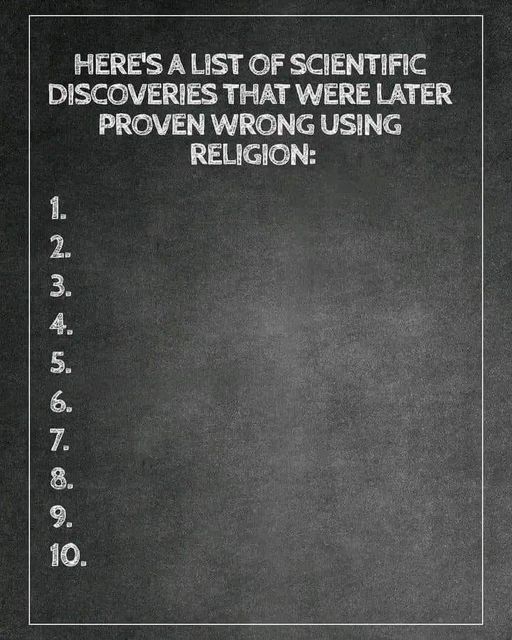
From Science Humor (now think of all the religious assertions that were later proven wrong by science:
From Masih, another Iranian woman with her eye shot out for protesting (English subtitles):
The regime in Iran blinded this young woman during protest after the killing of Mahsa Amini. Now she joined “United Against Gender Apartheid” campaign to call on free world specially students in the West to join our fight.#UnitedAgainstGenderApartheid
— Masih Alinejad 🏳️ (@AlinejadMasih) June 1, 2024
Here’s a comment Simon found on the Trumpiverse:
https://t.co/a9n2EzWzyk pic.twitter.com/A6CSXWMFeQ
— Patton Oswalt (@pattonoswalt) June 2, 2024
From Luana on accusations that appear to be floating around. Have a look at the thread:
Recently there has been a reckoning about whether scientists, like evolutionary psychologist and population geneticists, are responsible for the “bad” beliefs and violence of people who read and cite their work.
I don’t think they are 🧵— Diana S. Fleischman (@sentientist) May 31, 2024
As Barry says, “The hawk survived. . . but the snake is deeply disappointed. Can anybody identify the snake?
Hawk got snake then snake got the hawk pic.twitter.com/eYX5qyKxhL
— Nature is Amazing ☘️ (@AMAZlNGNATURE) June 1, 2024
From Malcolm; tiger gets a belly rub!
Cat is a cat everywhere. pic.twitter.com/rh88ibaQJD
— Nature is Amazing ☘️ (@AMAZlNGNATURE) April 26, 2024
From the Auschwitz Memorial; an eight-year-old boy gassed upon arrival at the camp.
3 June 1935 | A French Jewish boy, Jacques Moncarz, was born in Paris.
He arrived at #Auschwitz on 13 February 1944 in a transport of 1,500 Jews deported from Drancy. He was among 1,229 of them murdered in a gas chamber after the selection. pic.twitter.com/UtF2Odh0pc
— Auschwitz Memorial (@AuschwitzMuseum) June 3, 2024
Two tweets from Dr. Cobb. The first came from his work on Crick’s biography, and Matthew adds this: “If you don’t know who David Liu is, he is a Harvard chemist who has developed a new, incredibly safe single-base pair form of gene editing that is being used in therapies. He is amazingly smart and nice. Make sure you click to see all our interactions.”
Great knows great. Yes, this is *the* @davidrliu. He had developed a neural network model of visual attention, which (unknown to him) was similar to something Hinton was working on. He was only 16 at the time. Did they meet? I don’t know yet. pic.twitter.com/GPK44XdXrP
— Matthew Cobb (@matthewcobb) April 27, 2024
I didn’t know about this one:
The juror who identitified himself as right wing & his main news sources as Fox and Truth Social saying ‘of course he’s fucking guilty’ is low key one of the most New York things I’ve ever seen, hilarious
— Justin Sherin (@wychstreet) May 31, 2024
I once saw a documentary film which a) claimed that Leonardo manufactured the shroud and b) added an image of himself (via a camera obscura) as a sort of practical joke.
If I recall correctly, although long believed to be the burial shroud of Jesus, the image didn’t show up until someone took a photograph.
I love the list of discoveries falsified (essentially) through/with religion.
… that could be finessed but I get the joke.
Great set of items here – indeed, lung cancer progress is great – the more the better.
On DEI in academia, I am not sure how things work nowadays, but, if I recall correctly, in the past hiring was done by the department. This suggests the DEI adherence might have been stronger in some disciplines than in others. Of course, over time, it’s likely that there has been some leakage and people in other disciplines might have been convinced that DEI was the right way forward. The problem of DEI officers is that they are now working to infect all groups within the faculty. At the same time, we’ve seen the ashes heaped on the heads of anyone who dissents now.
Faculty hiring is done by department at my university, and every other university I know of, but our university can offer incentives for DEI hires. For example, in our last hire the #1 candidate was a white male (hetero, on top of that!) who was on a post-doc at Harvard, but the #2 candidate on the short list was a Black female, also impressively brilliant and oddly enough also on a Harvard post-doc, but the fit was a little off. I was the department chair, so I explained to my dean the dilemma, and the dean offered to make the #2 choice a DEI hire, and we could hire the #1 choice to fill the line. Two TT hires at once. The Black woman has been outstanding, by the way, and is pulling in major research grants, multiple refereed articles every year, and is being eyed by the administration for a possible associate dean position once she gets tenure. DEI worked.
The value of a dangerous surgical operation cannot be gleaned from testimonials given by its survivors.
I am glad that your university was able to heave a collective sigh of relief that the diversity hire worked out and that it had the resources (from somewhere) to hire both candidates in the first place.
Well, it was not my intention to suggest that DEI as a program is a good thing — simply that it can work on occasion. Indeed, your surgical example is a form of a caution that I always give to my students, usually calling it something like the Dolphin Deception. The old sailors’ belief was that dolphins would carry a drowning sailor to shore. That is easy to believe because you never hear from the sailors who were carried in the opposite direction.
Regarding whether are responsible for bad beliefs, I think we’ve seen enough examples now of idioms where literally anything can be asserted to be implicated in an activity that is not politically correct. Titania McGrath has her list of things that are “racist.” Everyday we see “climate change” is caused by or is causing something that isn’t liked. We shouldn’t be surprised that this happens. We should be dismayed that there isn’t more push-back, though.
There’s a London psychotherapist and ‘life coach’ on youtube “Attention Bazaar” has a very interesting (if difficult to grok) series deconstructing deconstruction and it’s corrosive effects on individuals railing against *all* societal norms as supporting perceived illegitimate power structures, using views like the ‘Spiral Dynamics’ theory of development.
I am now quite fascinated by the apparent need of many atheists to debunk theist beliefs. I had been exposed to this phenomenon a little over a decade ago. A misguided evangelist cross-posted into the Usenet group sci.logic from alt.atheist — apparently hoping to prove how his “logical” arguments would find support within a community interested in logic.
I spent about two months participating in alt.atheist. I did this upon an invitation — an atheist began “screaming” (ALL CAPS) over the fact that I had posted a link to translations of Thomas Aquinas (in sci.logic). Dumbfounded by the inexplicable response, another atheist invited me to visit alt.atheist in order to witness the pandemonium caused by evangelicals violating community interest.
For the record, Leibniz attributes his development of the identity of indiscernibles to analogy with a proof by Aquinas. In turn, Aquinas’ proof appears to be an application of Aristotle’s assertion that genera are prior to species.
I learned, from this experience, a great deal about people who fundamentally disagree with one another — not anything actionable, of course. And, I found the exchanges between established professors of mathematics (I had not been the only person drawn into this) and legal professionals quite entertaining. From those exchanges, I came to understand that logic is not univocal in very significant ways.
Those accounts seem puzzling. In the few web sites where I hang (this being one of them), the appearance of a theist among the atheists always gets a vigorous reaction, but more like how lions would react when thrown a juicy steak.
lol.
Exactly. Perhaps, “pandemonium” had been too lackluster as a description. A worldwide newsgroup open to any subscription can attract a large number of subscribers insincere with respect to community interests. It certainly was not simply one evangelist.
The newsgroup alt.atheist also had an associated moderated newsgroup. I also learned a great deal from the posts within that group as well. But, the open newsgroup had really been a free-for-all.
My cat has the exact same decision-making tree. He might be a copy-cat.
Is the snake a bullsnake?
Tagrisso (TM), the first lung cancer drug mentioned, is a step in the evolution of a class of drugs over a couple of decades now. They target mutations in the EGFR receptor that regulates tumour growth. They are relevant in the family of lung cancers that are not associated with tobacco smoking and are useful only if the patient’s tumour has the relevant target mutation in EGFR. EGFR-mutated lung cancers occur in about 10% of non-smokers with lung cancer in North America, and in 40% in Asia. (Many North Americans with these mutated cancers are of East-Asian ancestry.) As cigarette smoking becomes unfashionable in rich countries, a greater and greater proportion of lung cancer is in this group, although most lung cancers are still smoking-related and lung cancer rates over-all are of course falling. So we are talking about a minority of a minority of patients with lung cancer who can benefit from these new(-ish) drugs.
Its’s a good thing this subset of lung cancer is a fairly rare disease. The cost of a single tablet — a daily dose — of Tagrisso in Ontario is $322 and patients typically get 10 months of benefit before resistance arises.
A focus of these drugs is in so-called “adjuvant” treatment, where a patient with a surgically operable primary tumor without distant spread takes Tagrisso immediately to forestall regrowth. These studies of “early” disease benefit from lead-time bias where survival is artificially prolonged just because the clock of follow-up is started much earlier in the patient’s natural progression. One such study yielded a five-year survival of 88% with Tagrisso compared to 78% without. (These figures obviously apply to those patients who had early diagnosis of small tumours and were in good enough physical shape to have chest surgery.) So these cancers are inherently less aggressive than the smokers’ cancers where it is unusual to survive three years from diagnosis much less five.
So as not to be guilty of cherry-picking, I will acknowledge Imfinzi (TM), a monoclonal antibody given by infusion every two weeks that doesn’t require EGFR mutations and so is used in unresectable smokers’ lung cancer too, after they’ve had standard chemotherapy and radiation. It prolonged median survival at two years from 56% to 66%. (Great or meh, you decide.)
And Lorbrena (TM) (lorlatinib) is known from the CROWN-III study to be useful in patients with metastatic NSCLC that has spread, especially to the brain, and has a so-called “ALK” mutation in the EGF Receptor. Only 2-7% of patients have this mutation. The new study is a follow-up analysis of CROWN-III. 60% survival without progression at 5 years of follow-up would be a stunning, unheard-of advance if true. Most of the treatment failures occurred in the first year, so those who got through a year, even if they aren’t still taking the drug — about half aren’t — may well be cured. The beauty of trials that look at survival is that the patients are incontestably alive to provide the proof of the pudding. Here’s the study published in full that was reported at the ASCO meeting, worth a look:
https://ascopubs.org/doi/10.1200/JCO.24.00581
This is like discovering penicillin for cancer.
(Lung cancer is not the most common cause of cancer. It accounts for the greatest number of cancer deaths because it is common and deadly.)
Thanks for the extra info. Not that I have lung cancer (AFAIK), but I find it interesting to read about new treatments of anything.
Where are a) Israel’s right to exist in Hamas’ charter, and b) the disposition of the tunnels in the ceasefire/truce equation? My guess is it won’t happen.
Nice to see Tucson’s beloved Tohono Chul Park in today’s “Hili”–It’s actually nice to hear anything about Tucson that doesn’t mention fentanyl, the border or another “tent city”–and I’m not talking about the kind they had at the University. Do check it out if you ever visit the “old pueblo”. It’s a gem of an oasis tucked deceptively close to one of our city’s busiest arteries, but you’d never know it once you’re in there.
Congratulations, Kelly, on having your painting included in the exhibit. I’ll admit to never witnessing a blooming of the “the Queen”.
>Conclusion: the cloth of the Shroud [of Turin] can be assigned with a confidence of 95 percent accuracy to a date between AD 1260 and 1390.
Having some fun with this. Feh, say the believers, what’s 95% confidence in science worth? We want six-sigma confidence (about 1 in a billion) before we’ll accept the cloth couldn’t have been made in AD 33. A little playing with z-scores around the midpoint of the stated 95% confidence interval and we get AD 1130 as the lower bound of an interval encompassing six standard deviations. That is, the flax for the linen was not only confidently not growing when Christ was crucified, it still hadn’t been planted when William the Conqueror invaded England.
Even 1 in a trillion confidence (7 standard deviations) doesn’t get you back to 1066.