
by Matthew Cobb
Regular readers will know that the BBC has a series of natural history programmes based on UK wildlife through the seasons, generally named after the annual three-week spring series Springwatch. Autumnwatch, the briefer autumnal version, began last night on BBC2 and had some gorgeous images (website here; non-UK viewers can watch clips too).
In the 30-minute on-line and more informal magazine programme that traditionally follows each episode (called ‘Unsprung’), they had a fascinating discussion about re-wilding with journalist and campaigner George Monbiot, showed some clips of lynx that greatly excited my young cat, Harry, and briefly flashed some stunning footage from Martin Grimm, a freelance field ornithologist and wildlife photographer based in Heidelberg.
Grimm was apparently on a research boat in the Baltic last week when, in the middle of night, flocks of migrating birds – mainly chaffinches and brambling, well known to UK residents from their gardens – descended on the boat, presumably attracted by the lights. Here are a couple of videos posted by Grimm on his YouTube channel:
The author Richard Hughes (1900-1976), whom you may know from his first book, A High Wind in Jamaica, and perhaps from the unfinished trilogy The Human Predicament, wrote a little-read book called In Hazard, based on the story of the S.S. Phemius which was caught in a hurricane in 1932.
In a key scene in the book (republished in the US in 2008), Hughes describes how the ship – called the Archimedes in his fictional version – eventually reaches the eye of the storm, where everything is calm. There, all of a sudden, flocks and flocks of exhausted, bewildered birds descend on the boat, having been battered by the storm. They have a few hours of respite, before being hurled off by the wind as the boat begins its journey out the other side of the hurricane. I read that scene over 30 years ago and it still lives with me. The reality must have been something like that captured by Grimm, only infinitely more so.
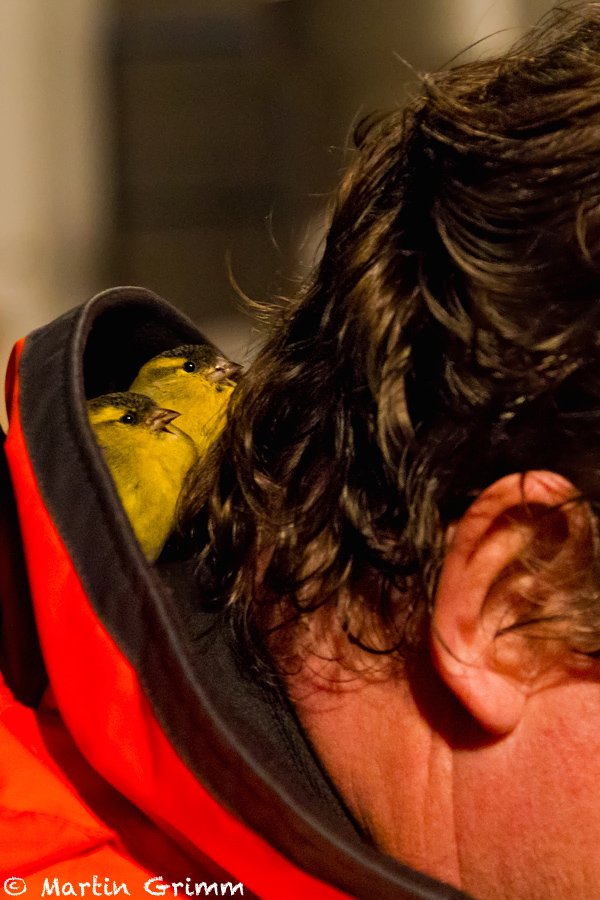
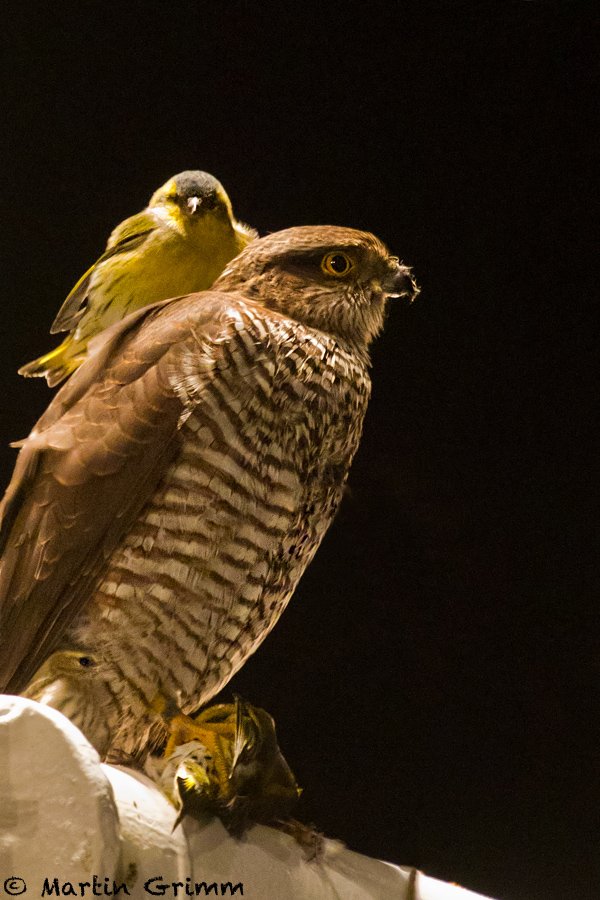
Here are some photos of the scene on Grimm’s boat that were posted on Tw*tter, including a rather surprised-looking sparrowhawk who appears to have its lunch perched on its head:



Great pics! When I first saw the first picture I thought they were bees.
Very impressive. And the term ‘poopdeck’ is likely to mean something other than a roof of a cabin on the ship.
Hah! With that many birds, yes. Given however that they just flew through a hurricane, with little food for many hours, and that they can’t voluntarily control their defecation, I’d bet most of them have had all the poop scared out of them before they reached the boat.
Do they get PTSD? I can imagine the willingness to be near humans and raptors is probably explained by shock/trauma from flying through a hurricane as much as it is exhaustion.
That’s not popcorn scattered all over the deck and on the railing in the photo. Maybe they were just relieved to be safe. SWIDT?
Slight confusion here Eric – the birds int the photos haven’t flown through a hurricane (not common in the Baltic) or indeed any kind of storm – they were migrating south and hopped off for a break on the boat. Sparrowhawks migrate south, too – presumably because their meals are moving. The hurricane comes from the fictional references to Richard Hughes’ In Hazard. – MC
“not common in the Baltic”
–lol!
In addition to what Eric says above, don’t at least some migratory birds resorb much of their non-migration-related equipment (guts, sex organs) while migrating, to provide fuel for the flapping machinery and to reduce extraneous energy consumption.
Losing 50% plus of your gut would make the annual beached-whale session in the sun a different ritual for the people.
and sub
Having experienced several Hurricanes or Typhoons as they are called in the Pacific, I can’t imagine going through one on a boat or how birds could make it.
I never fully understood the idea or magnitude of the eye of a typhoon until I experienced it as well, one time. This one typhoon seemed to have camped on top of us with little movement and we were in the eye for 15 hours or more. It seemed the thing was over and people went outside again. But that night it was over and the wind blew 100 MPH, only in the opposite direction from the night before.
That sounds so eerie!
The last image reminds us: there is safety in numbers. Many birds that flock must have that idea in mind. The hawk can only eat so many at a time making most others complacent.
Thanks for mentioning the book In Hazard. I will definitely check it out. I loved A High Wind In Jamaica.
The reference brought back memories of reading it more than 50 years ago as prescribed reading from our English teacher at school. I can still remember some of the vivid imagery.
In addition to having lunch perched on its head it would appear to have supper clenched in its claws!
Amazing pictures – the siskins in the sailor’s hood and the goldcrests on the rope are incredibly cute!
Goldcrests are the smallest birds in the western palearctic region and weigh just 5 or 6g. It is astonishing that such tiny creatures can succesfully undertake long sea crossings on their annual migration.
Re the In Hazard reference:
A few weeks before I left southeast Texas to drive to the Pacific NW and begin grad school, a hurricane blew through the upper Texas coast. I was staying at my parents’ house, and while the eye passed over, I decided to cook breakfast on the gas grill on the back patio (we had no electricity for days). There were hundreds of seabirds flying inland with the hurricane, in the eye of the storm. I imagine that once in the eye, the birds must fly within it until the hurricane weakens enough to escape, and then must navigate back to the Gulf.
Fascinating story, thanks!
One hears of fall-outs like this one due to weather, or to simply reaching land after many miles over water. And one hears that nocturnal migrants can be attracted (or distracted) by lights, often resulting in their death by building-strike. But I hadn’t heard of a mass fall-out due to light, before.
We can only hope they don’t suffer the fate that befalls so many in the Mediterranean…
http://ngm.nationalgeographic.com/2013/07/songbird-migration/franzen-text
That is appalling and infuriating!
I’ll pretend I didn’t see that.