Michael Shermer, theologian

November 26, 2009 • 9:35 am

It always amuses me when an accommodationist tells the faithful that no, there is no conflict between science and religion, at least not if they stopped believing in just those things that cause a conflict.  In a Darwin-anniversary piece on CNN, Michael Shermer comes out as an accommodationist, and more:  he suggests that people really should modify their beliefs if they conflict with science:

All of these fears are baseless. If one is a theist, it should not matter when God made the universe — 10,000 years ago or 10 billion years ago. The difference of six zeros is meaningless to an omniscient and omnipotent being, and the glory of divine creation cries out for praise regardless of when it happened.

Likewise, it should not matter how God created life, whether it was through a miraculous spoken word or through the natural forces of the universe that He created. The grandeur of God’s works commands awe regardless of what processes He used.

Who is Shermer, I suggest, to tell people what beliefs should or should not “matter” to them?  Try telling this to a fundamentalist Christian or a devout Muslim.  To these folks, scripture is scripture, and it matters that it is true.  If, as recent work suggests, prayer doesn’t work, should Shermer tell the faithful that it doesn’t matter whether or not they pray?

This piece disappointed me, as I’ve long admired Shermer’s writings, and applauded loudly when he went after Bill Maher’s anti-vaccination stance.  But lately he’s been assuming the faitheist mantle more and more often (could it be because of Templeton sponsorship?).

It would be lovely if Shermer would admit that, in the real world, the only kind of religion not at war with science is deism.

Back tomorrow

November 26, 2009 • 1:41 am

I will be back Friday and,  I hope,  resume posting.  Thanks to Matthew and Greg (who has been ill with pneumonia) for filling in for me.  I have some tales and some swell holiday snaps.

In the meantime, what is all this about the proper pronounciation of “van Gogh”?”  None of us use the proper pronounciation for foreign names!  Do you say “Firenze” for “Florence,”  “Moskva” for “Moscow”, and “Par–ee” for “Paris”?   A Russian once told me the proper pronounciations of “Tolstoy” and “Dostoevsky,” which only slightly resemble how we Americans pronounce those names.  Let us not chastise one another for using the English/American pronounciations of foreign names, for none of us adhere strictly to that rule.  Let he who is without sin cast the first noun!

In the meantime, I have seen many Tintorettos, Giottos, Bellinis and the like. Rembrandt and van Gogh have them all beat.

Happy Thanksgiving (make mine pasta)!

Best American Painters

Winslow Homer

Thomas Eakin

Georgia O’Keefe

Edward Hopper

Jackson Pollock

Amsterdam: van Gogh

November 22, 2009 • 1:07 pm

The Netherlands produced three of my dozen favorite painters (see below), an amazing yield for so small a land. Amsterdam houses museums for two of them—Rembrandt and van Gogh—and the Rijksmuseum also has a few specimens from the limited output of Vermeer. But perhaps a sunny Saturday was not a good time to visit the van Gogh Museum: regardless of the month, weekends bring out flocks of locals and tourists. And the Dutch are tall, so that seeing the paintings among them is like examining a distant deer through thick forest. But go one must, for if you like van Gogh — and who doesn’t? — you’ll find loads of his works — an orgy of color and line filling two of the building’s three floors. If you’ve been to the Musée d’Orsay in Paris, you may think you’ve had a good ration of van Gogh, but you haven’t.

Here you find many public favorites: his room at Arles, a vase of irises, another of sunflowers, The Potato Eaters, self-portraits, landscapes from southern France. There is one of his last paintings, Wheatfield with Crows. And other fantastic pieces: a stunning near-monochrome still life and a lascivious portrait of almond blossoms writhing, almost sexually, across a cerulean blue sky. You can locate the most famous paintings by the knots of visitors before them, but many masterpieces inhabit the interstices.

What you see in person, but miss in reproductions, is the thick impasto that makes the museum-shop postcards such poor replicas of the originals. The paint is laid on in thick dollops, like frosting rising high above the canvas — so high that it makes its own highlights. And many of van Gogh’s paintings, as he admitted to his brother, were done quickly, perhaps to exorcise the demons of anxiety and depression that plagued him in his final years.

Van Gogh’s output in the last three years of his life (1888-1890) is astonishing. Despite his depression, for which he was famously hospitalized, he turned out painting after painting, all of them great. The thick lines of paint that sometimes appear in his earlier works now are ubiquitous, lined up like armies of worms marching across the canvas. Nobody else had seen like that before.

Many of van Gogh’s letters are also on display, revealing not only superb penmanship (and lots of drawings: he worked out many of his ideas in these screeds), but a surprising eloquence. He was clearly not an unlettered proletarian of native genius, but a learned and deeply thoughtful man. And he worked hard: many letters, especially to his brother Theo, describe Vincent’s torturous efforts to get things visually right. How sad that when he finally did, he nevertheless imagined himself a total failure, and ended his life.

van Gogh shot himself in the chest soon after finishing Wheatfield with Crows (it is not, as is often believed, his last painting), and many have commented on the symbolism: a road disappears into a field, and death-presaging birds rise from the wheat while a menacing black sky looms like a veil. One wonders whether van Gogh had already planned his suicide, and was painting in desperation. The work reeks of haste and anxiety — the crows are ciphers, each bird four quick strokes of a black-daubed brush, two upside-down “v”s.

Near the end of the exhibit is van Gogh’s last letter, unfinished, in French, and addressed to his brother. It was found on Vincent’s body, and Theo later annotated it in memoriam of “that tragic day.” In several places the letter is spotted with light orange stains; the accompanying label suggests that this may be Vincent’s blood but that the matter is unclear. The geneticist in me cried out for forensic analysis.

Favorite painters (i.e., the best painters,in order)

1. Rembrandt
2. van Gogh
3. Picasso
4. Michelangelo
5. da Vinci
6. Dürer
7. Johannes Vermeer
8. Raphael
9. Caravaggio
10. Monet
11. Turner
12. Toulouse-Lautrec

Wild cards:

Kandinsky
Feininger

A few favorite paintings:

The Isenheim Altarpiece; Mathias Grünewald

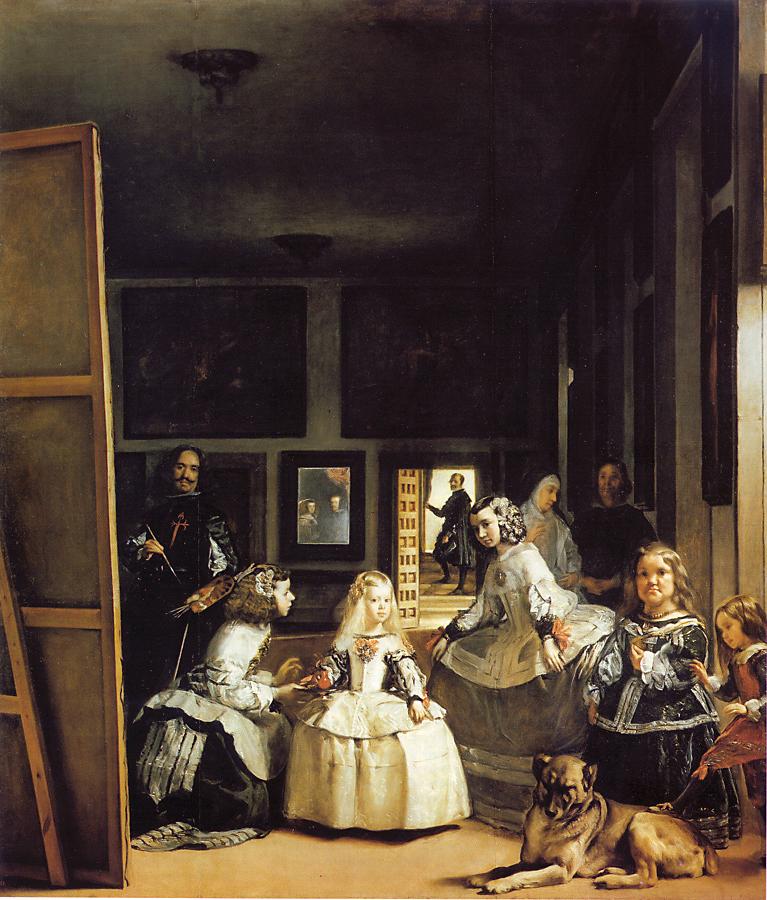
Las Meninas; Velázquez

Guernica; Picasso

Virgin of the Rocks; da Vinci

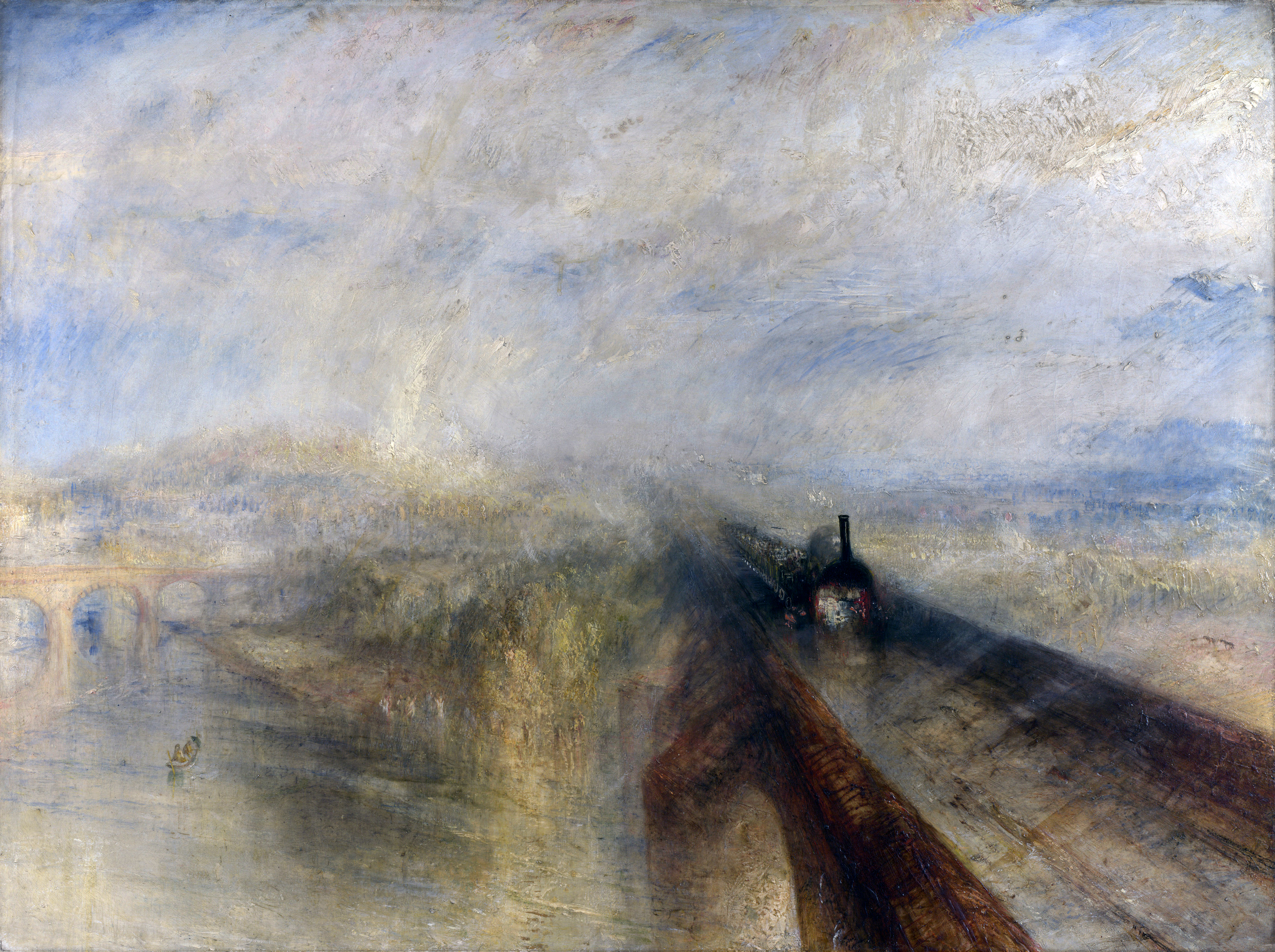
Rain, Steam, and Speed: the Great Western Railway; Turner.

The Prophet Hannah; Rembrandt

Wheatfield with a Reaper; van Gogh

Self Portrait at 28; Dürer

Caturday felid: rib-eating evolution puss!

November 22, 2009 • 3:01 am

I see that Matthew has tried to plug the gap produced by yesterday’s missing felid, putting up an estimable post about pine martens. But here, albeit a day late, is a real felid.

Meet Timor, a Bengal cat owned by the friend of a friend. Unlike Adam, he doesn’t want to relinquish his rib. This cat would certainly be at home in Chicago.

Here’s the owner’s description of Timor and his predilection for pork ribs:

Although usually a sweet and gentle feline, Timor is crazy for pork ribs. He will defend them against anyone or anycat. Note his rather impressive canines. Moreover, he doesn’t stop growling until he’s completely shattered the bone and consumed every last morsel. At most that takes 10 minutes. There are 4 cats in this household: Timor, Sunda, Wallace and Henry. Being catered to by nerdy biologists (bat biologist Betsy Dumont and entomologist Sean Werle), they are named for Alfred Russel Wallace, Henry Walter Bates and two of the islands near Wallace’s
line. Henry and Timor are Bengals, and Wallace and Sunda are rescued strays. Wallace (the grey cat in the video) is the alpha cat in every other setting, but no one messes with Timor when he has a bone.

h/t: Betsy and Hempenstein.

Caturday mustelid

November 21, 2009 • 10:39 am

by Matthew Cobb

Not sure if Jerry’s European trip will allow him to post a Caturday Felid today, so here’s something I’ve just posted over at the Z-letter [apologies for double posting]. Not really about cats, and yet, a bit:

The European pine marten (Martes martes) is a mustelid – part of the weasel family – and about the size of a cat. There is also a North American relative (Martes americana). They mainly nocturnal and pretty hard to spot. Here’s a rather nice picture of a pine marten, from DJS photography (note its right ear, presumably nibbled in a fight):

On the last episode of Autumnwatch on the BBC last night, Chris Packham claimed that pine martens are very partial to a jam sandwich, and this does indeed seem to be the case (Mr Google has 272 hits with those two phrases – 273 now this page has been posted [= 274 with this copy of the page…]).

Although primarily carnivorous, they will also eat berries, honey and other sweet stuff. Hence the jam sandwiches. Cats, on the other hand, do not eat jam sandwiches or honey. And cats cannot taste sugar, for the simple reason that their genome does not possess the relevant T1R2 receptor which, together with the T1R3 receptor (which they do have), enables mammals to detect sugar.

So I predict that when the pine marten genome is eventually sequenced, we will find, nestled in its chromosomes, the T1R2 receptor…

Coyne vs Palin. A knockout in round 1.

November 19, 2009 • 5:48 pm

by Matthew Cobb

The media brouhaha around the publication of Sarah Palin’s new book has spread round the world, even if the BBC reporter this morning had to admit that the only real sign of public fervour at one signing was two teenagers who sat it out, alone, outside a mall bookshop overnight.

Palin is not only a figurehead for the most conservative sections of US opinion, she has now come out as a creationist. However, like many creationists, she claims to accept the existence of “microevolution”. The real issue, she claims, is that one species cannot split into two, or give rise to another species. God alone can do that.

Here’s her argument in all its glory:

“I believed in the evidence for microevolution—that geologic and species change occurs incrementally over time, (…) But I didn’t believe in the theory that human beings—thinking, loving beings—originated from fish that sprouted legs and crawled out of the sea. Or that human beings began as single-celled organisms that developed into monkeys who eventually swung down from trees; I believed we came about not through a random process, but were created by God.”

Leaving aside the tiresome misinterpretation that natural selection is “random” (where has any evolutionist said this?), this needs some robust rebuttal, which was provided by Jerry Coyne, in an e-mail published over at The Daily Beast:

“University of Chicago ecology and evolution professor at Jerry Coyne calls the passage in Palin’s book a “typical creationist ploy” easily refuted by fossil evidence suggesting transitions between animals as fish and amphibians or land animals and whales. “Her stand is basically a biblically oriented stand…that has no basis in fact,” Coyne told The Daily Beast in an e-mail. “It is a ridiculous ploy of the ‘duck kind,’ i.e. a canard.”

‘Nuff said.

Faith-based groups to advise British government

November 17, 2009 • 7:10 am

With the help of communities secreatary John Denham , the British government is setting up an panel of religious leaders to advise on public policy decisions. Over at the Guardian, Anthony Grayling takes this truly bad idea apart with a series of rhetorical questions, e.g.:


And what, Mr Denham, of the rule of law as this will be viewed by your faith advisers? Is each citizen of this country equal before the same law for all, or will injustice and discrimination thrive behind the closed doors of faith-based courts? Are each of the faiths to be allowed exceptions and exemptions – for example, so that any faith school can exclude well-qualified teachers because they do not share the ancient superstition with which a particular school seeks to brainwash small children’s minds?

Also Mr Denham, why is your policy so discriminatory in itself? What of the Buddhists, the Zoroastrians, the Mother Goddess worshippers? What of the Druids, the White Witches, the Pagans, the astrologers, the Satanists? Are these not “faith groups” whose outlooks have precisely as much credibility and evidence-base as the Christians and Muslims? Are you going to include them and give them some of our tax money too? Can I start an “I Believe in Fairies” church and can I come to your meetings and get some government hand-outs too? If not, why not?