Why Evolution is True is a blog written by Jerry Coyne, centered on evolution and biology but also dealing with diverse topics like politics, culture, and cats.
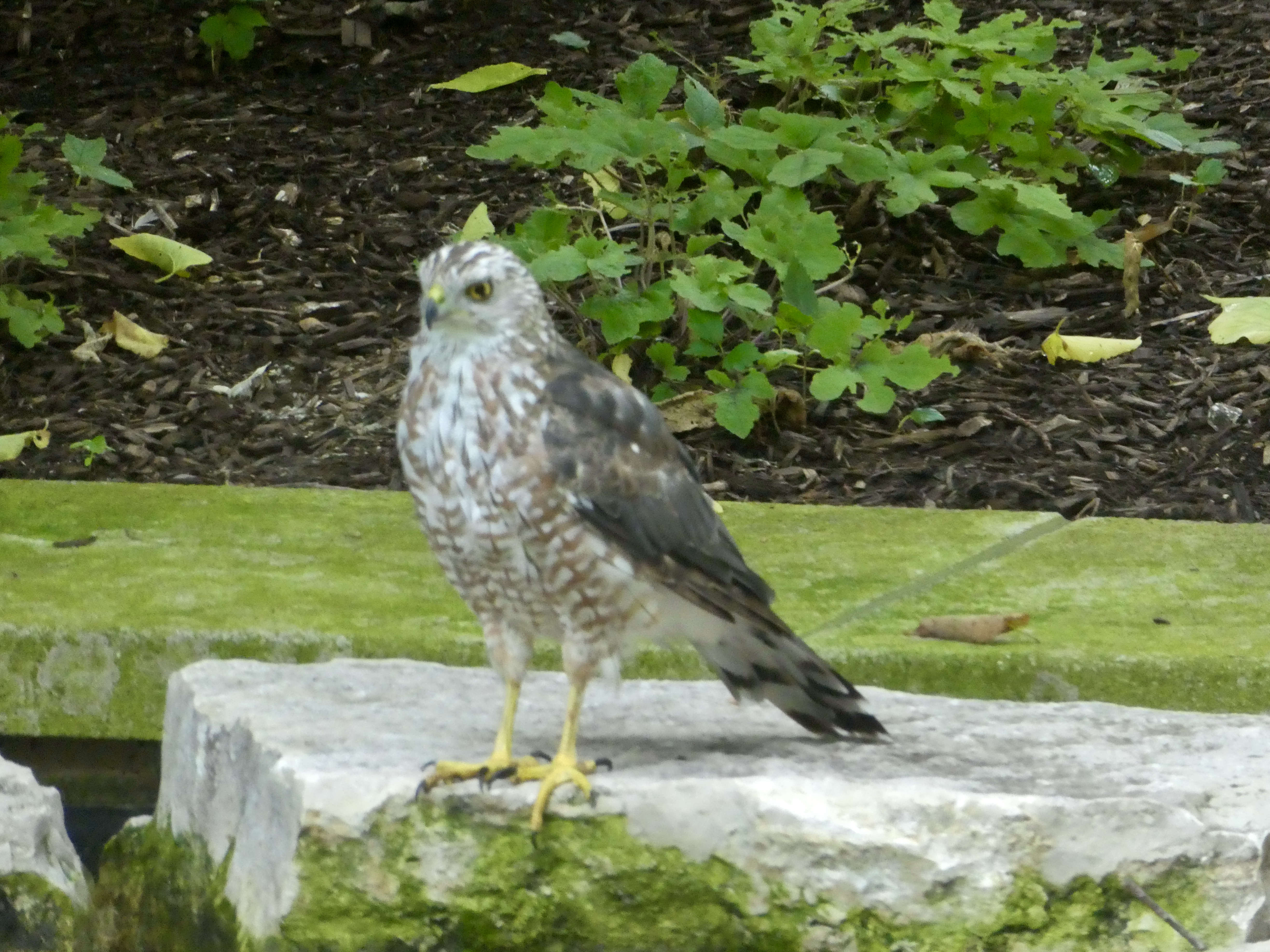
We almost had another brood in Botany Pond: a hen several blocks away showed up with a brood of about nine ducklings, and though I was in Iceland, the stalwart members of Team Duck tried to shoo them into Botany Pond where they’d be safe (there were people to feed them). Sadly, they got all messed up trying to get through a hedge, and Team Duck, along with Facilities and the Chicago Bird Collision Monitors, all on the scene, couldn’t get the mother and brood together to herd. Seven of the ducklings were rescued and taken to rehab, but mom and two babies stayed in the bush, and disappeared overnight.
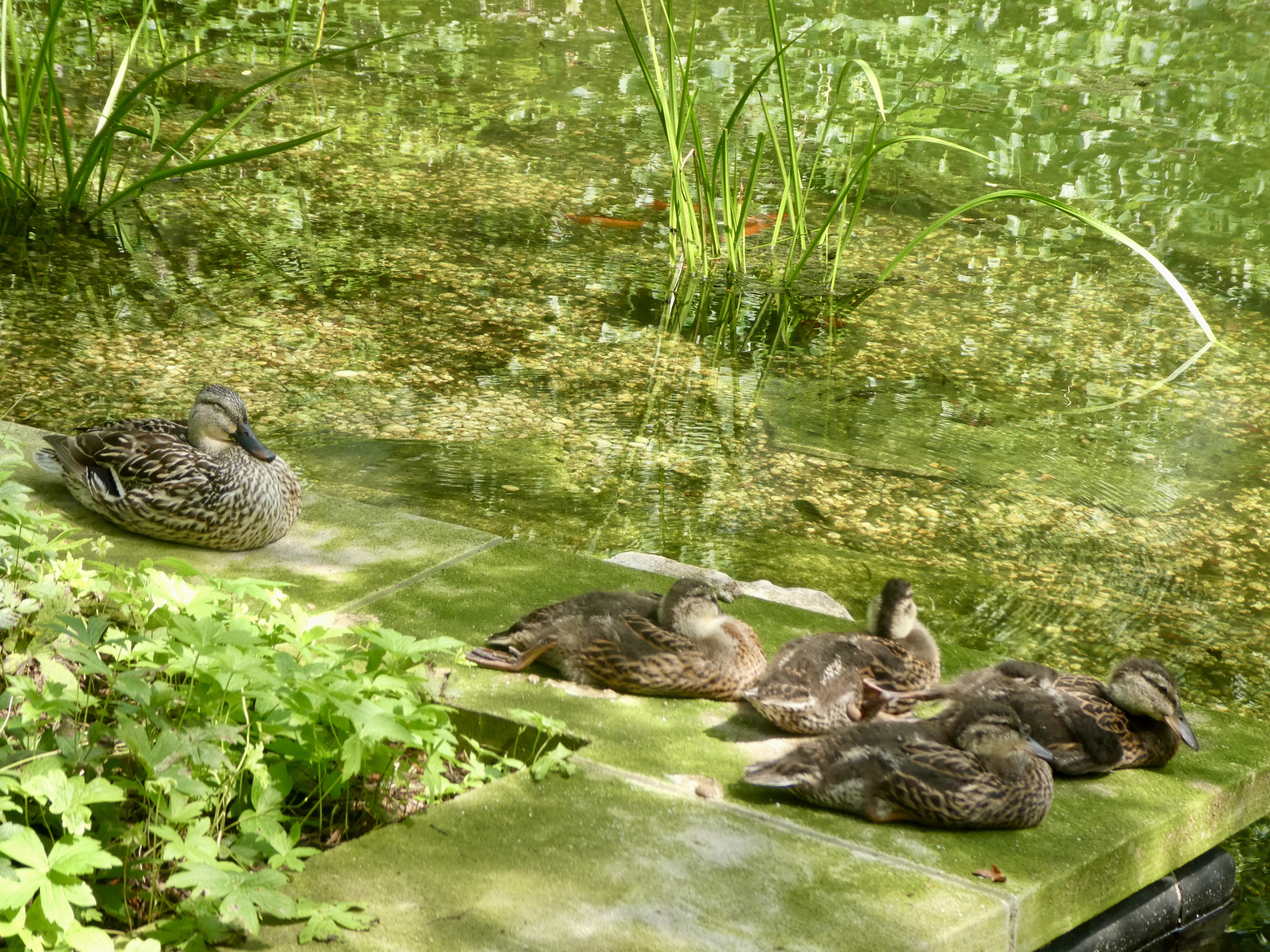
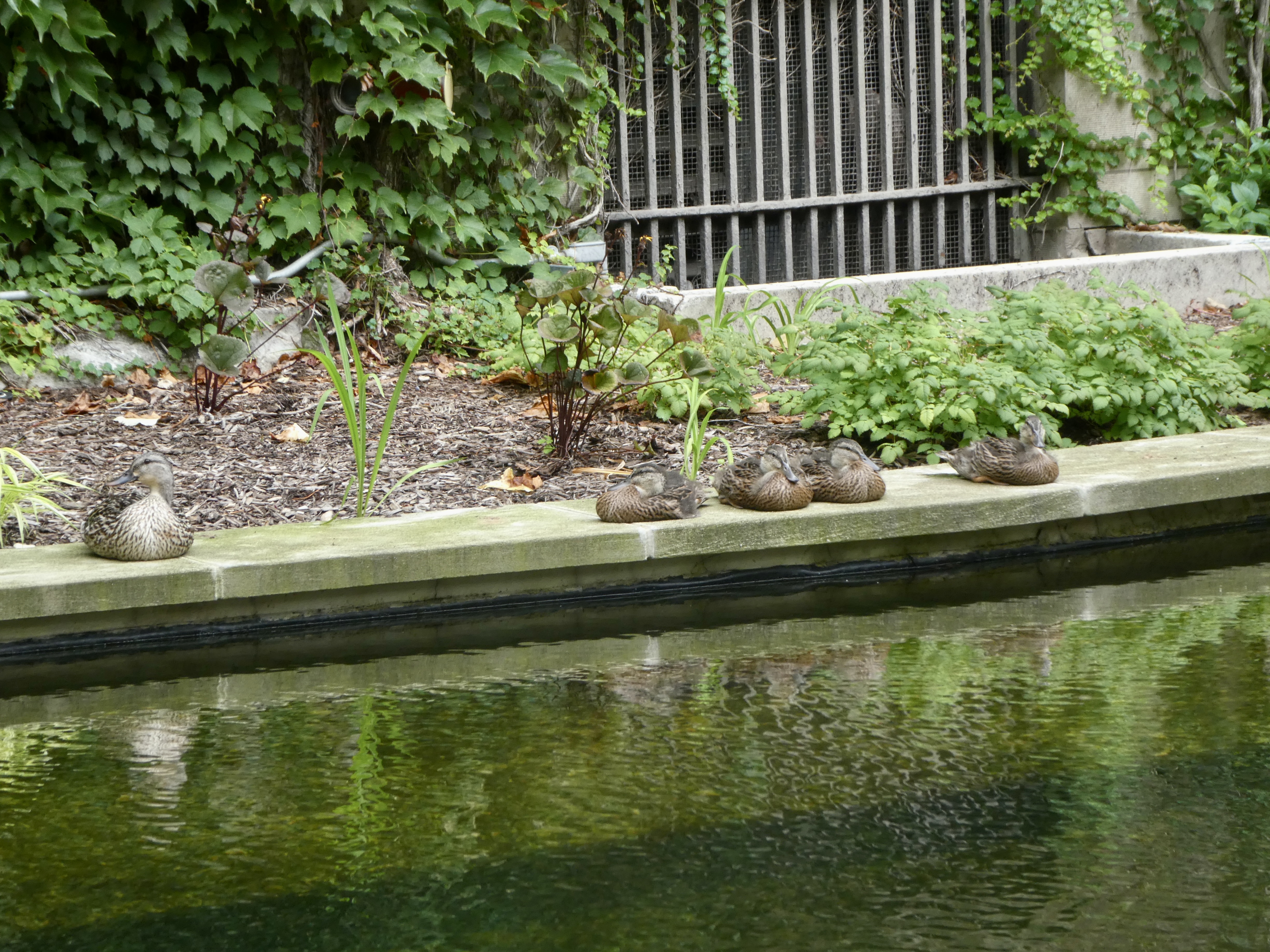
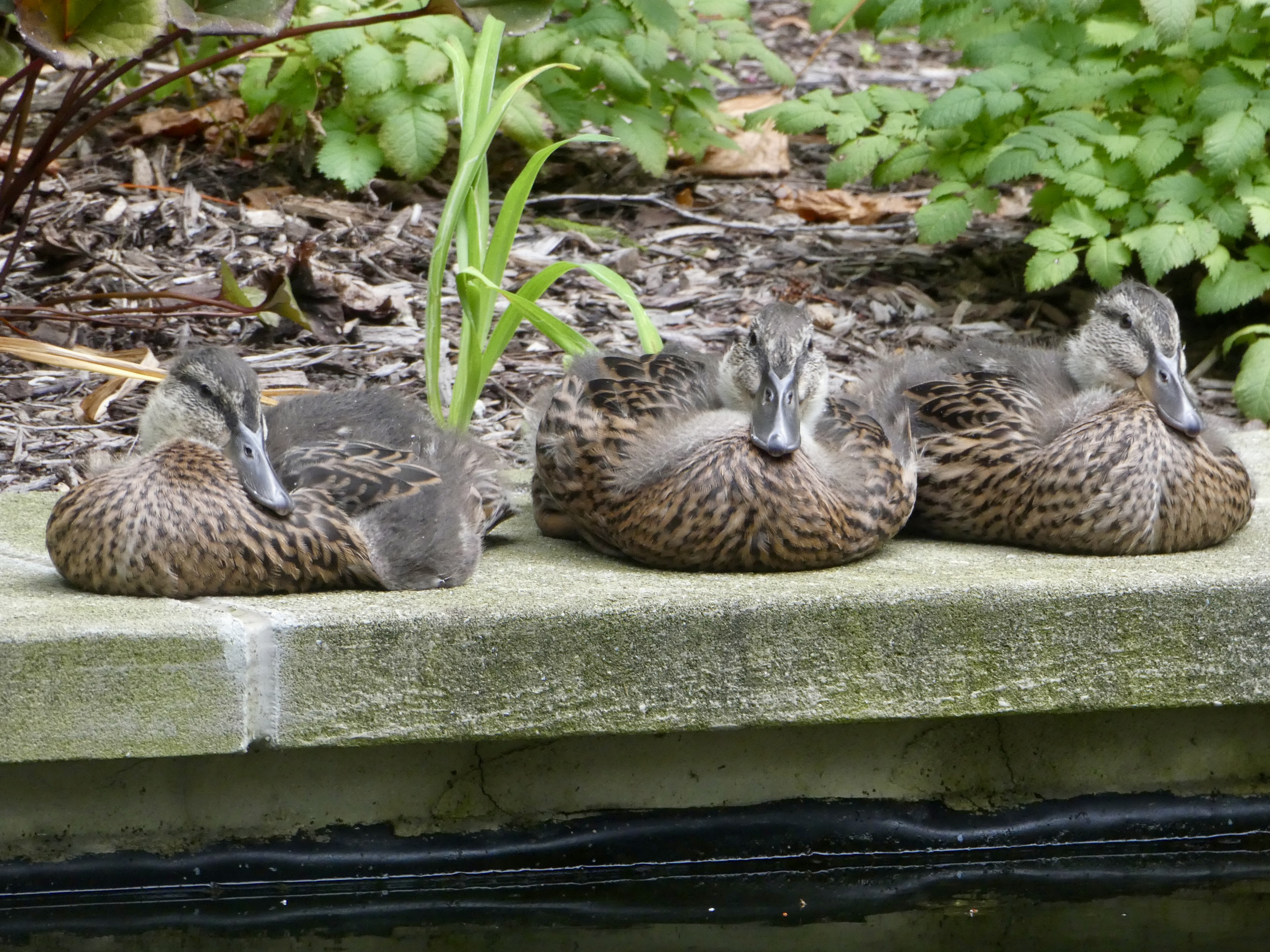
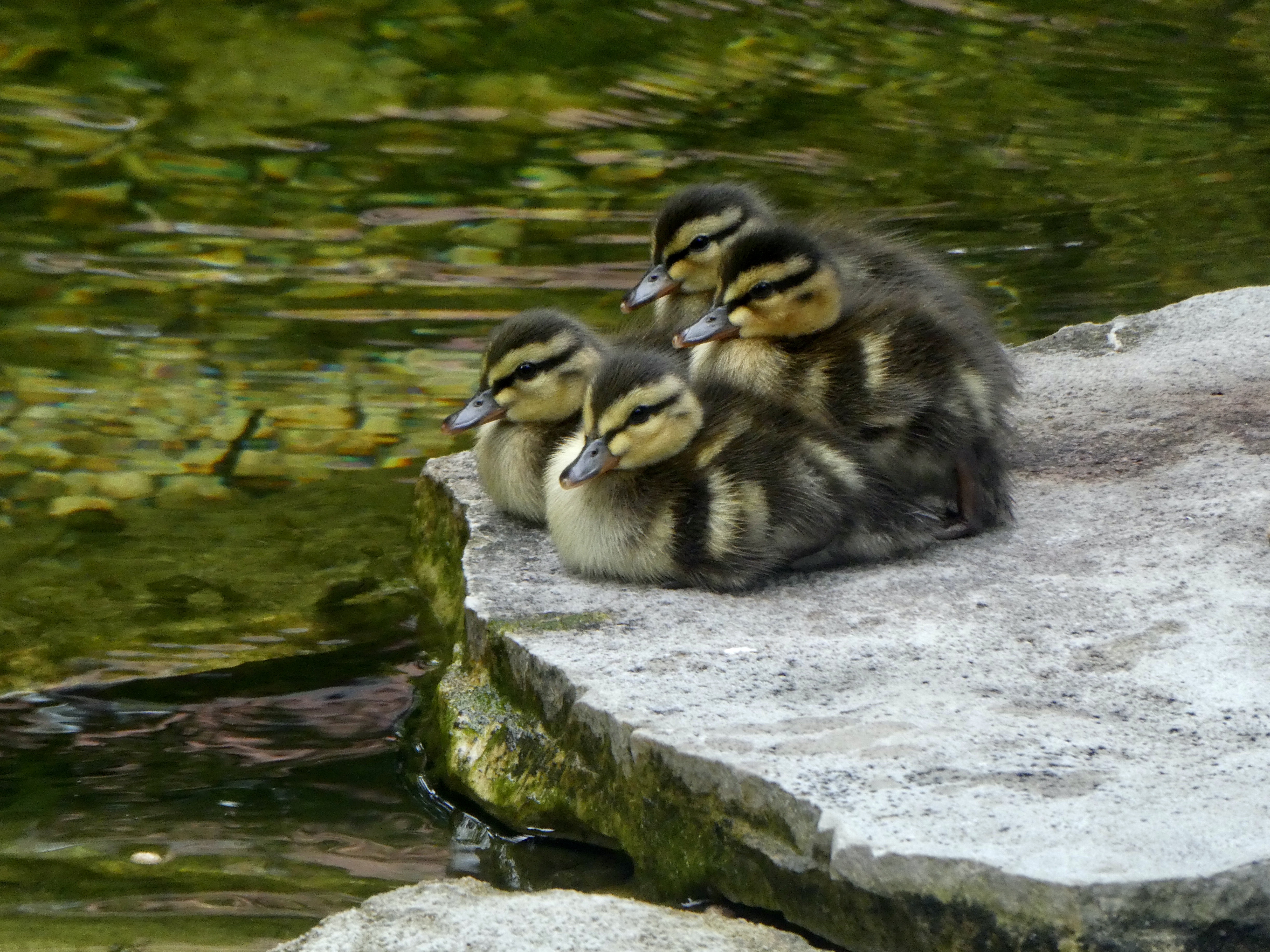
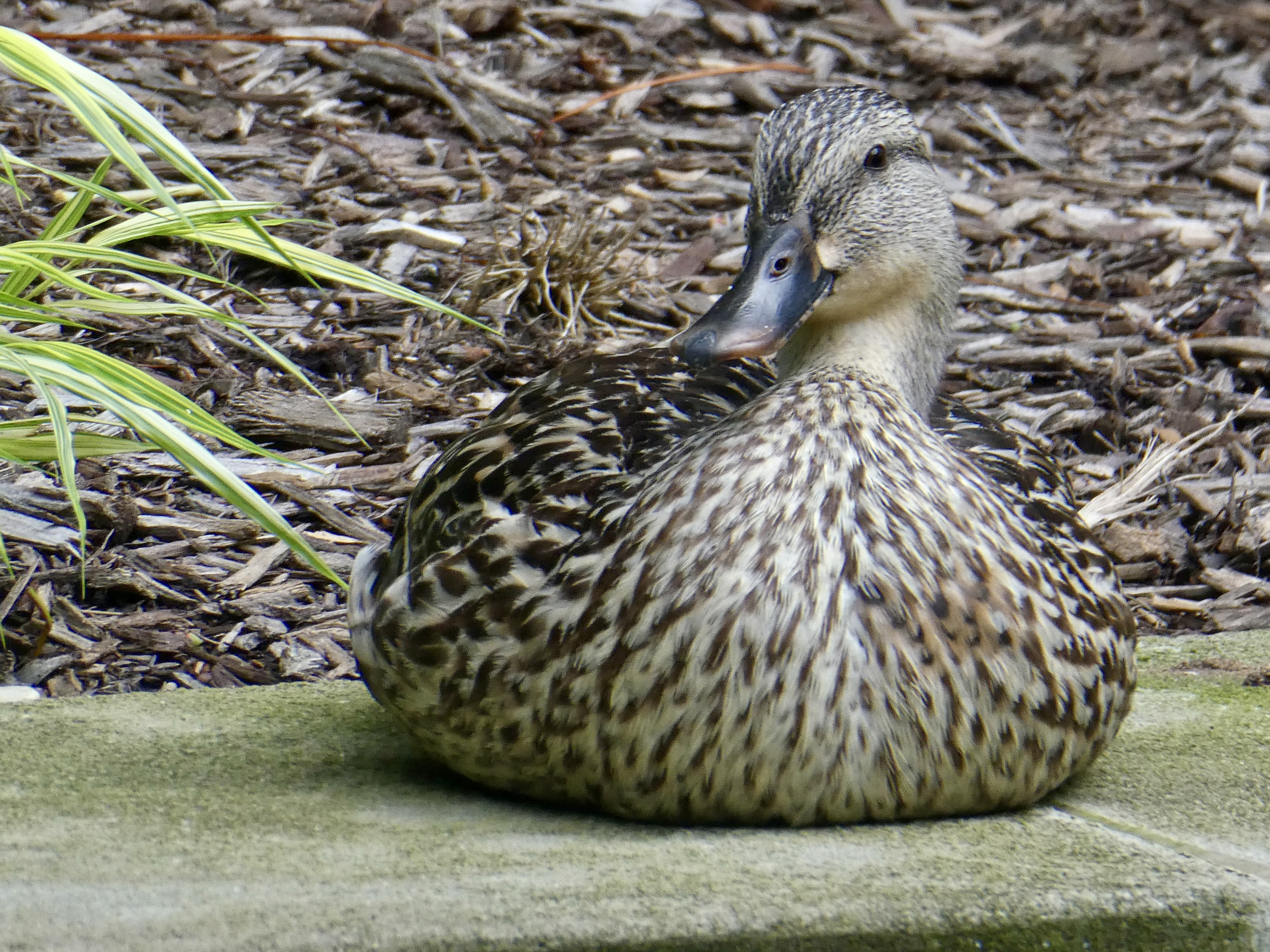
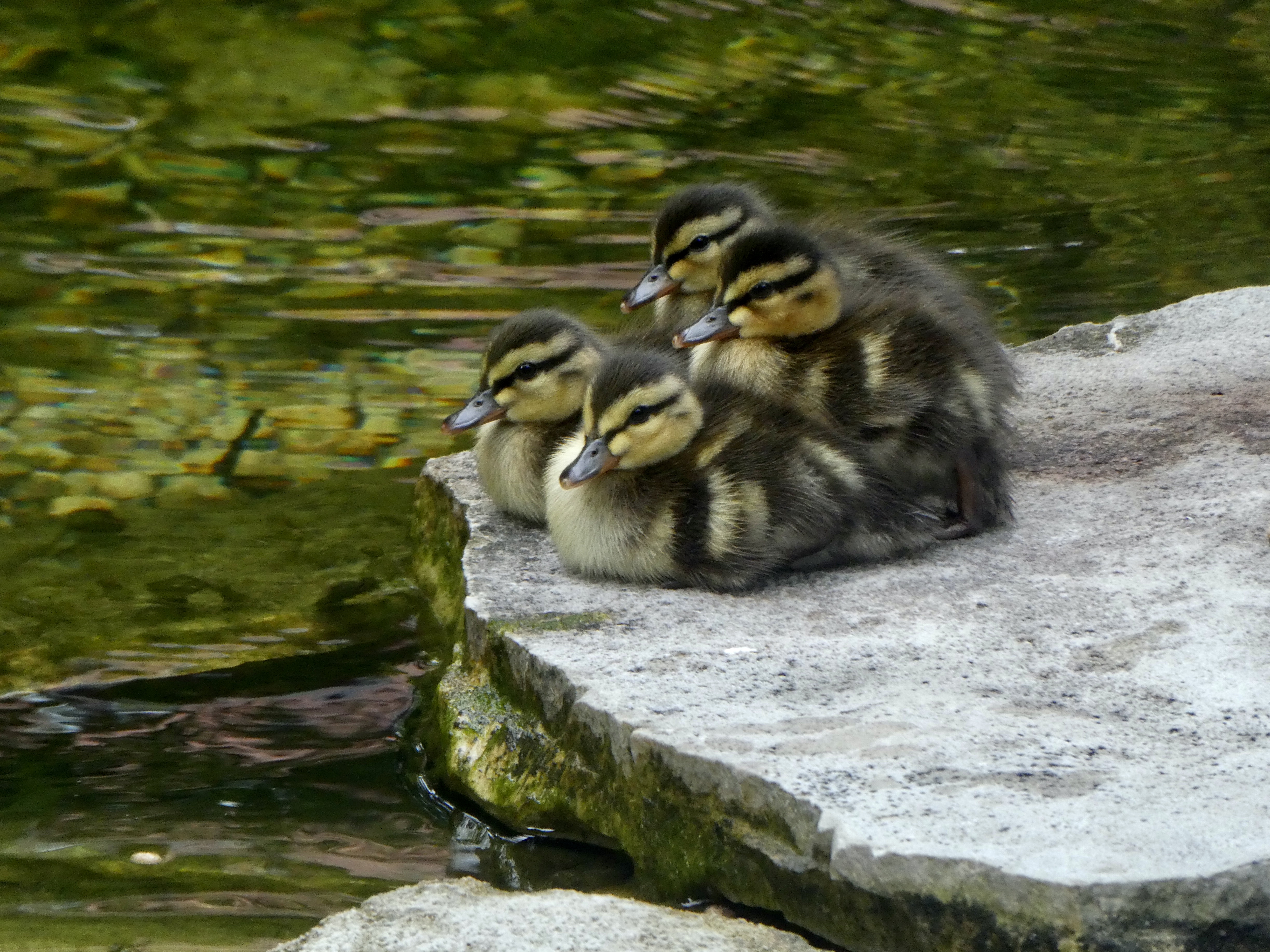
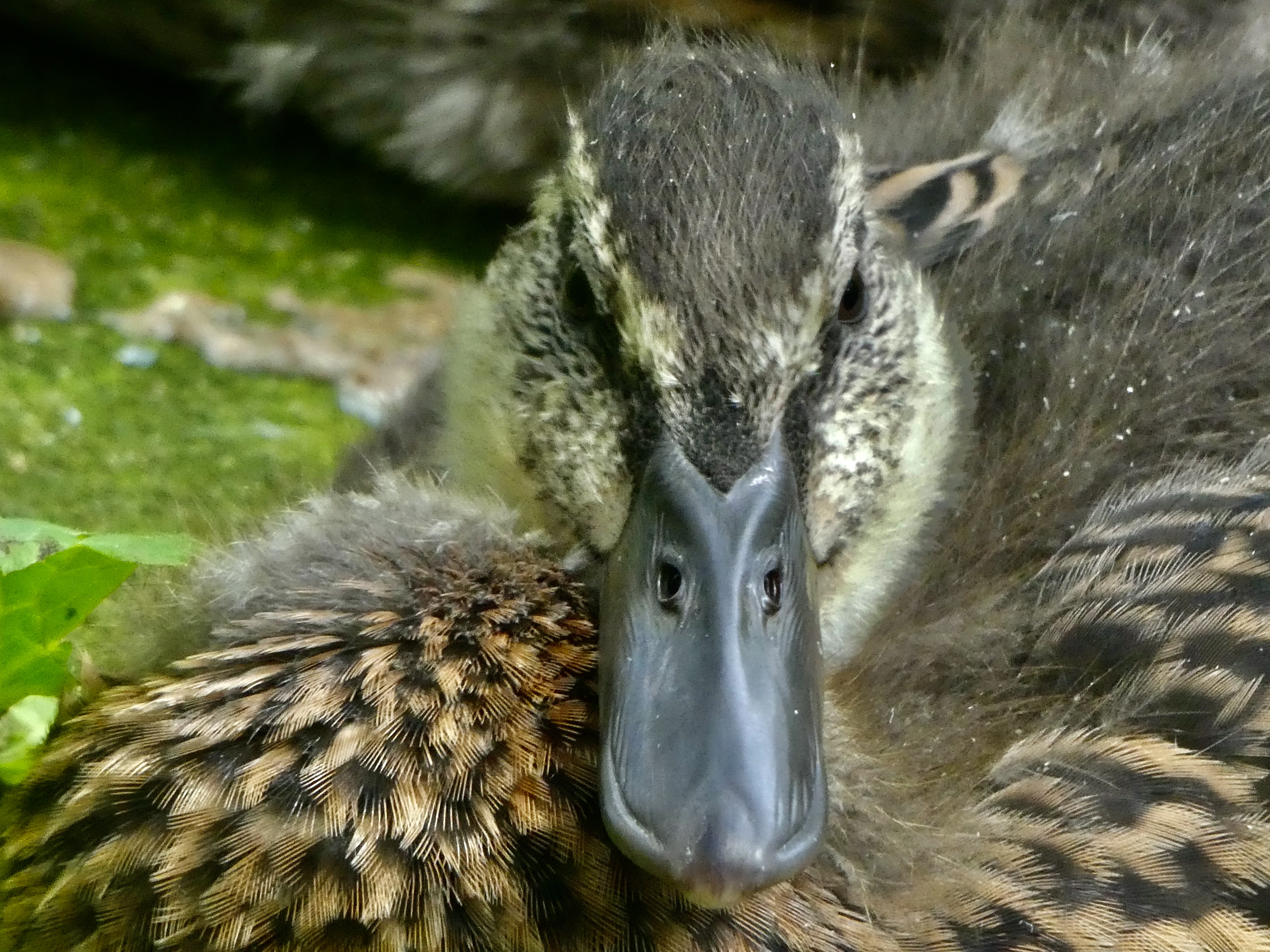
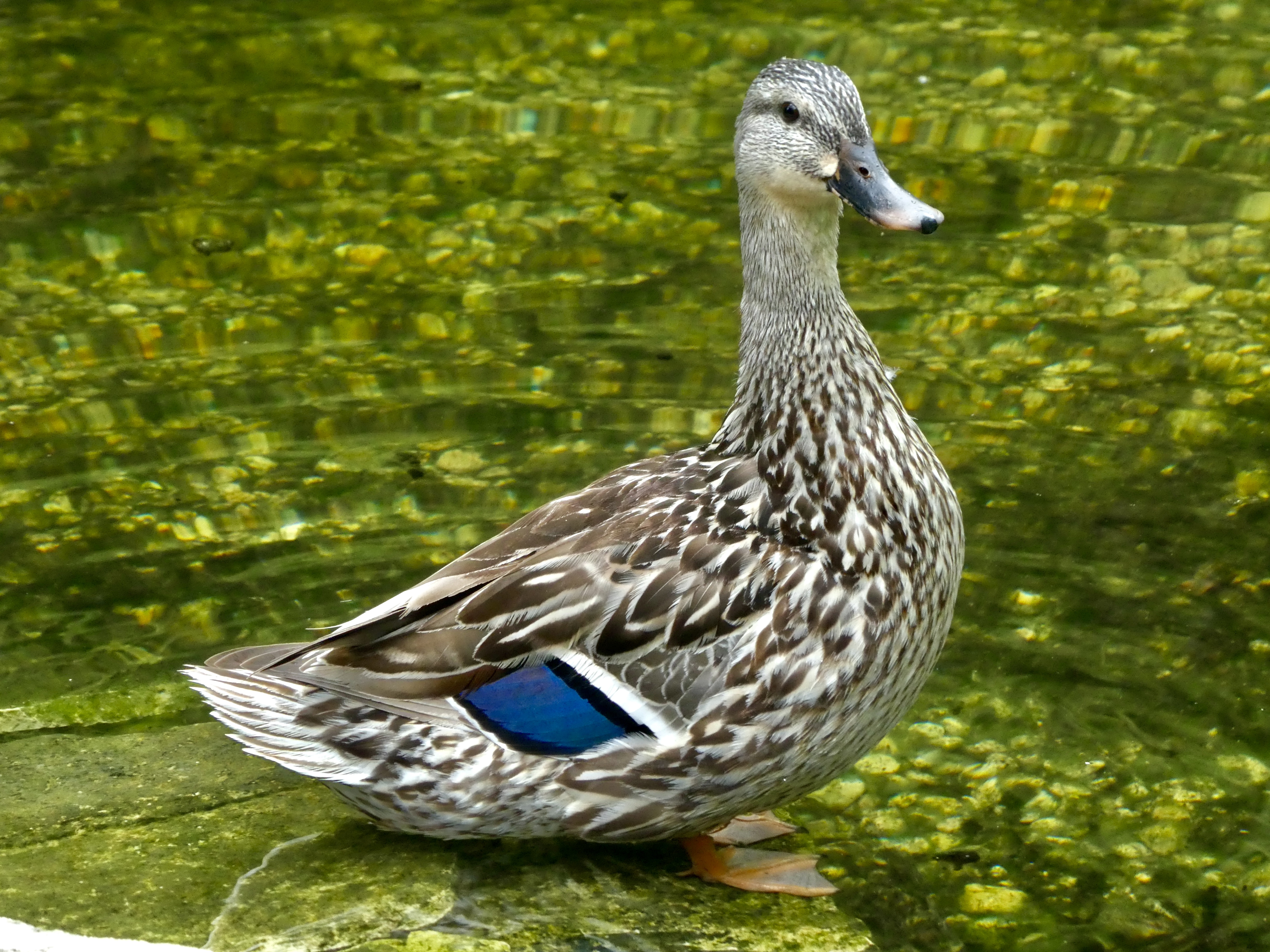
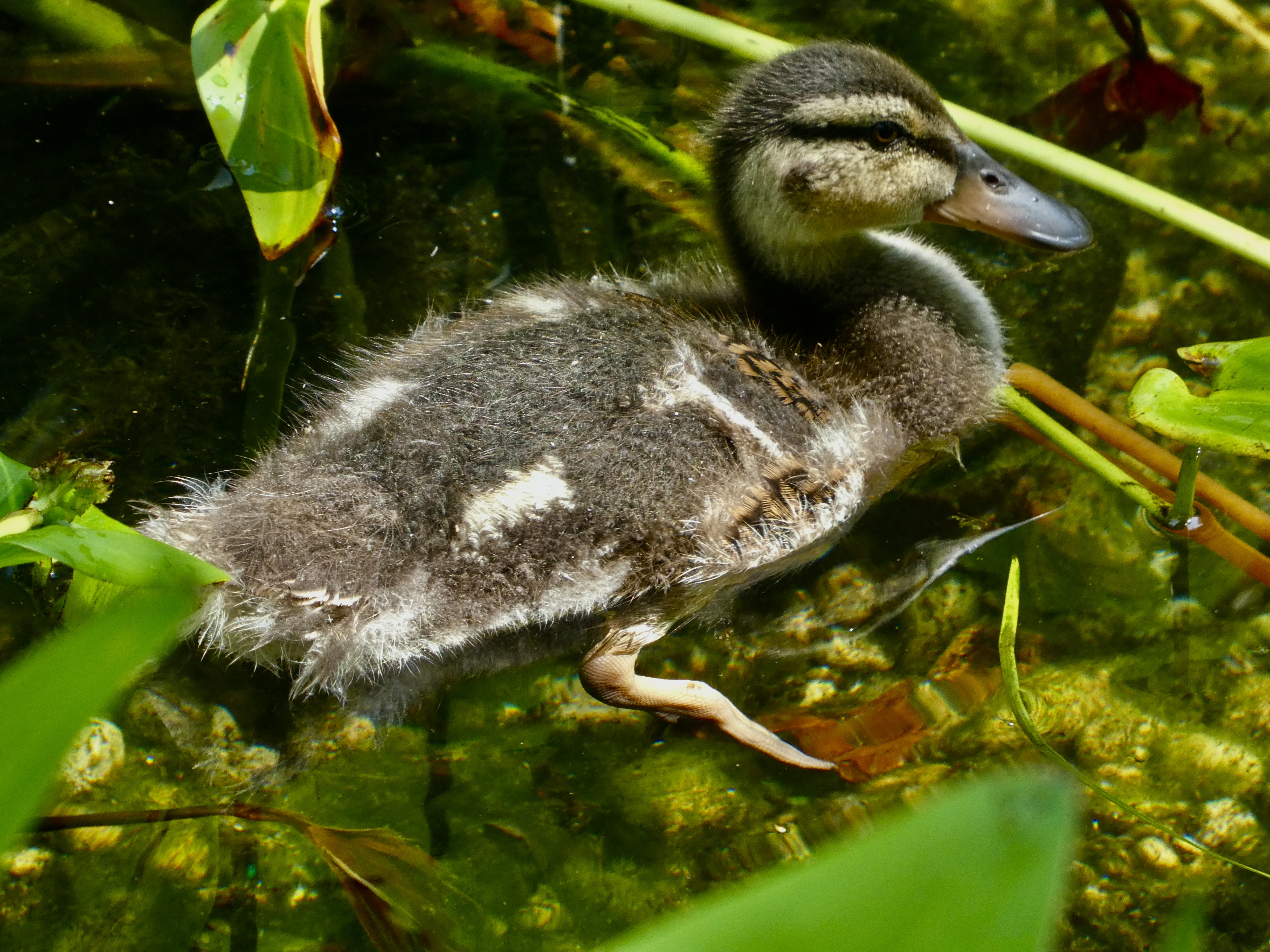
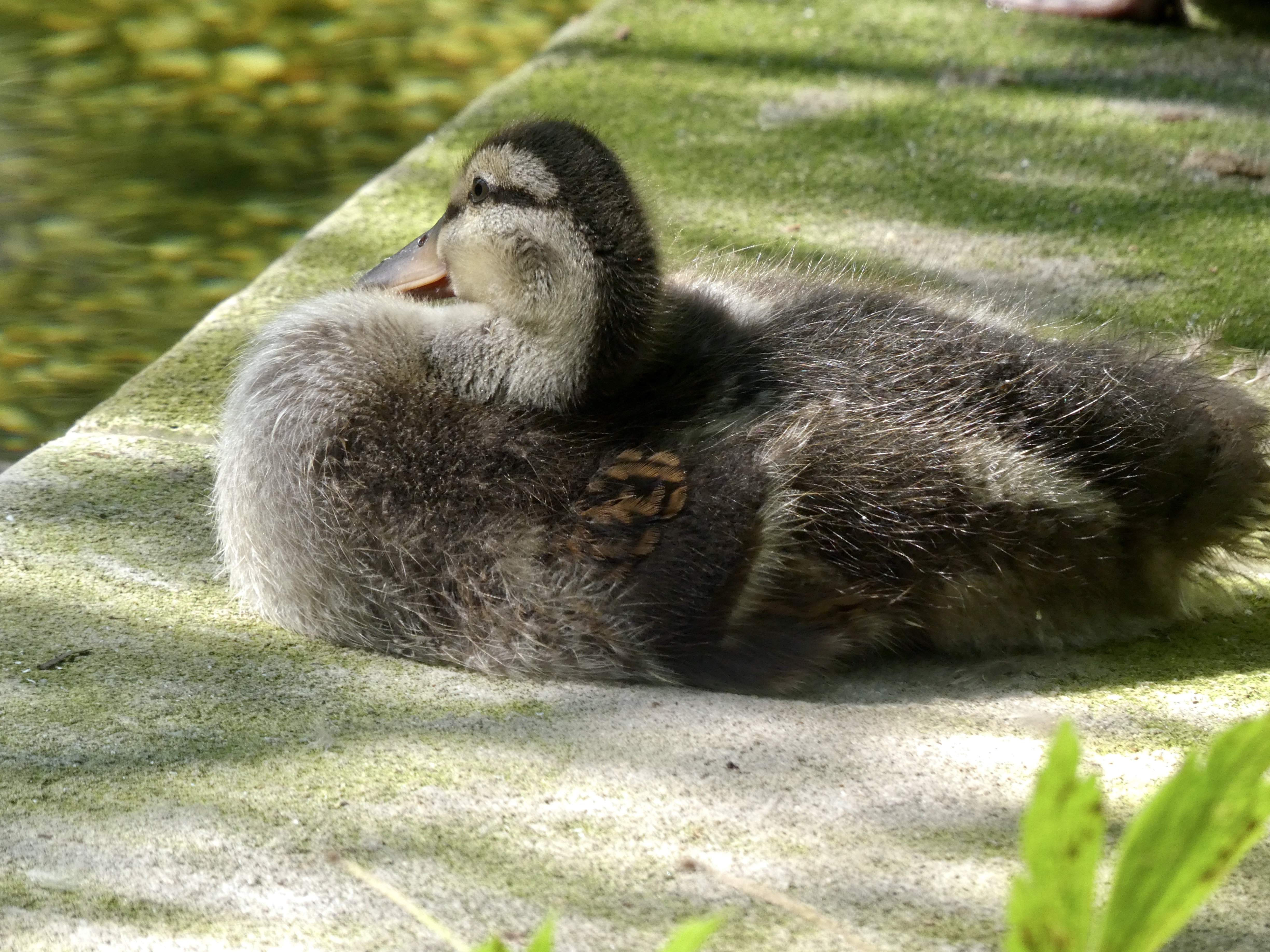
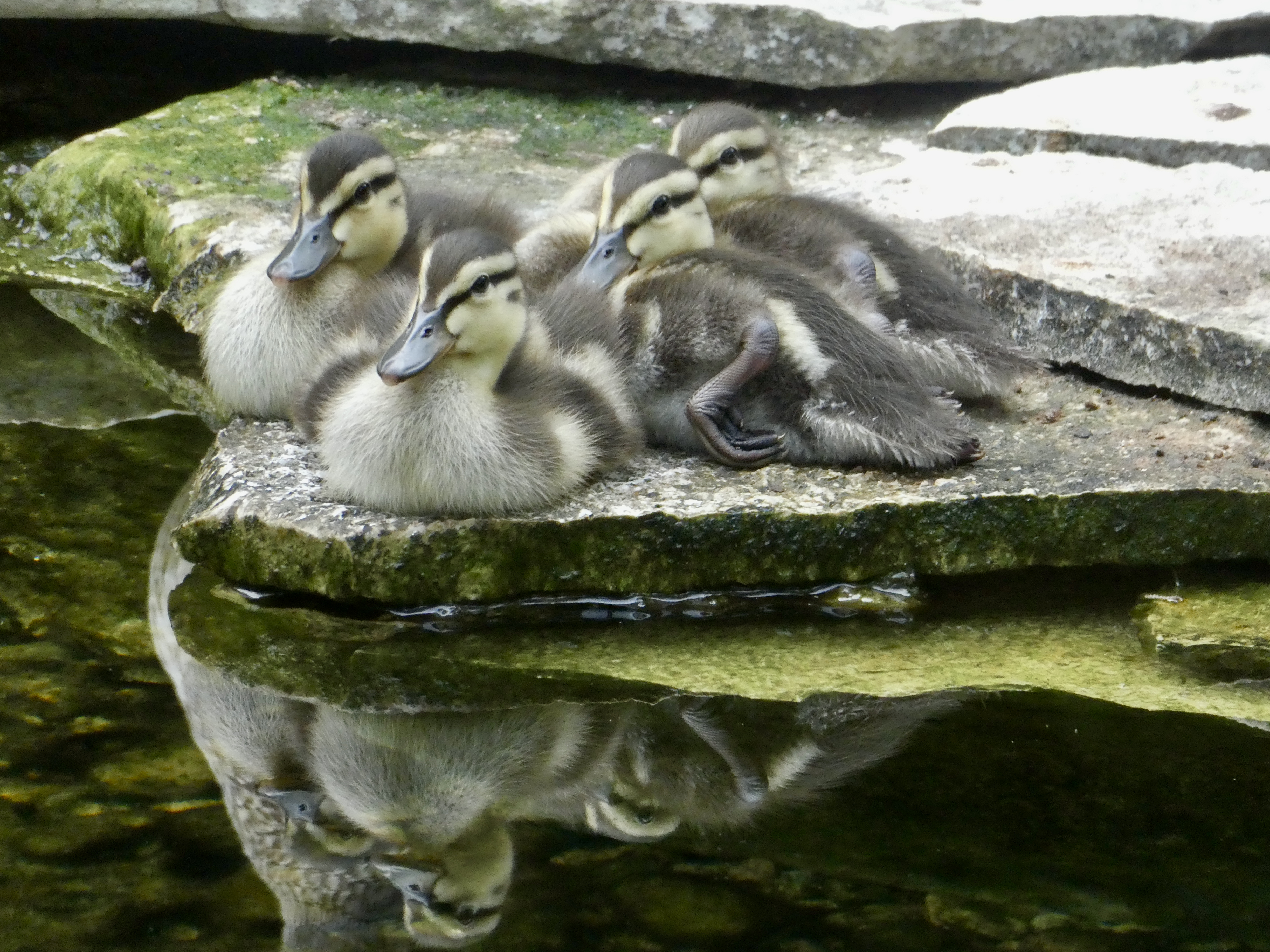
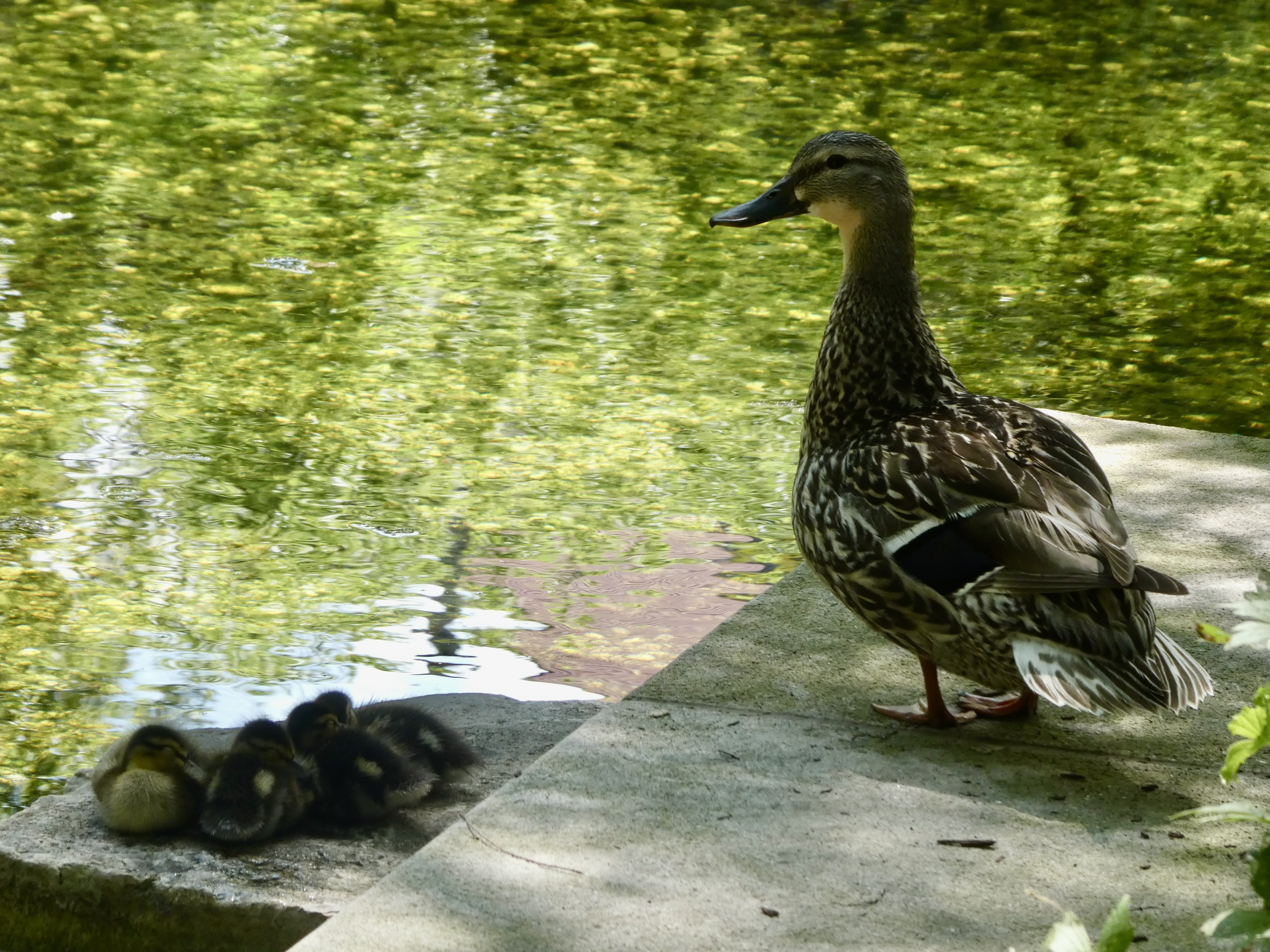
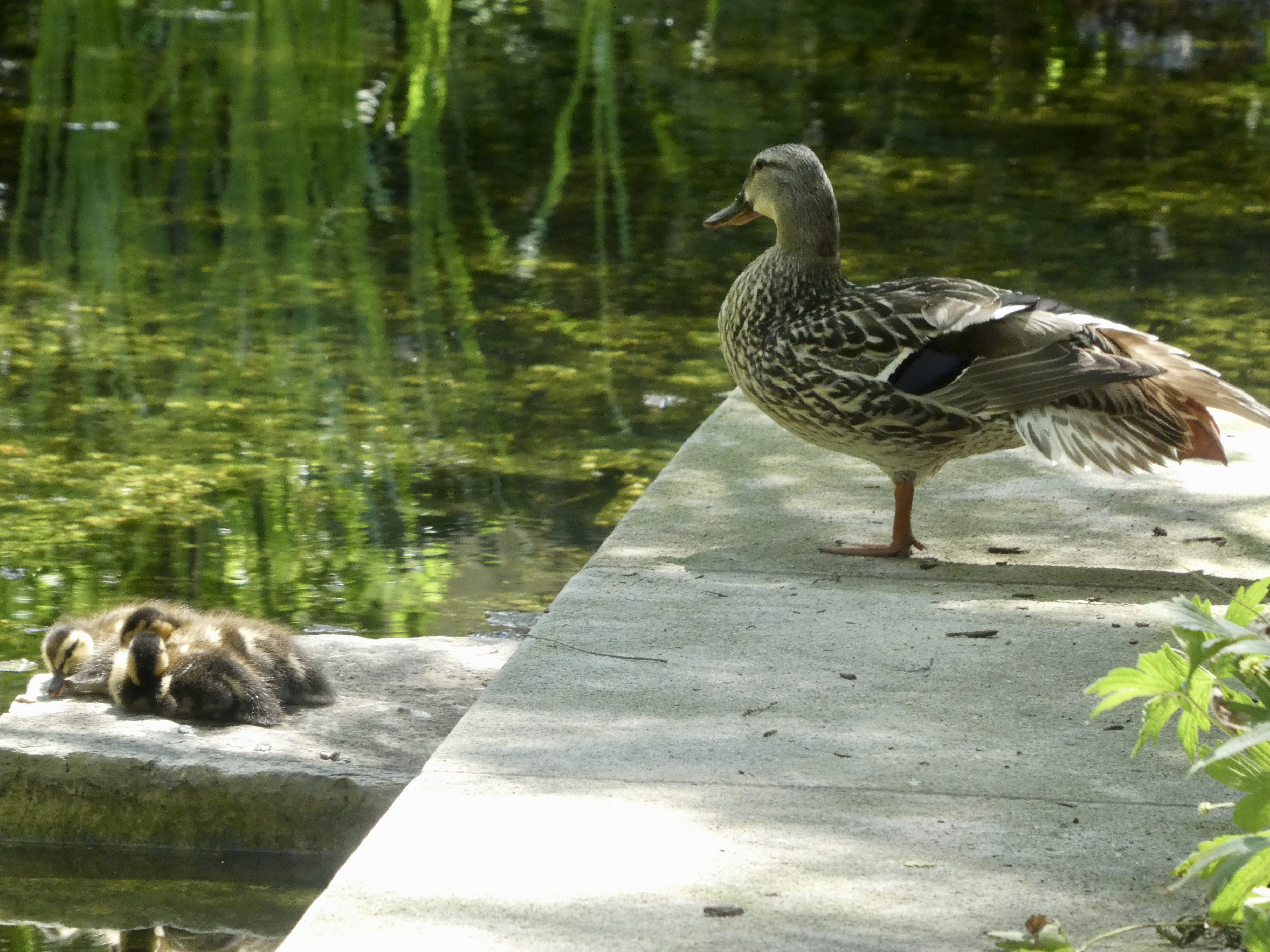
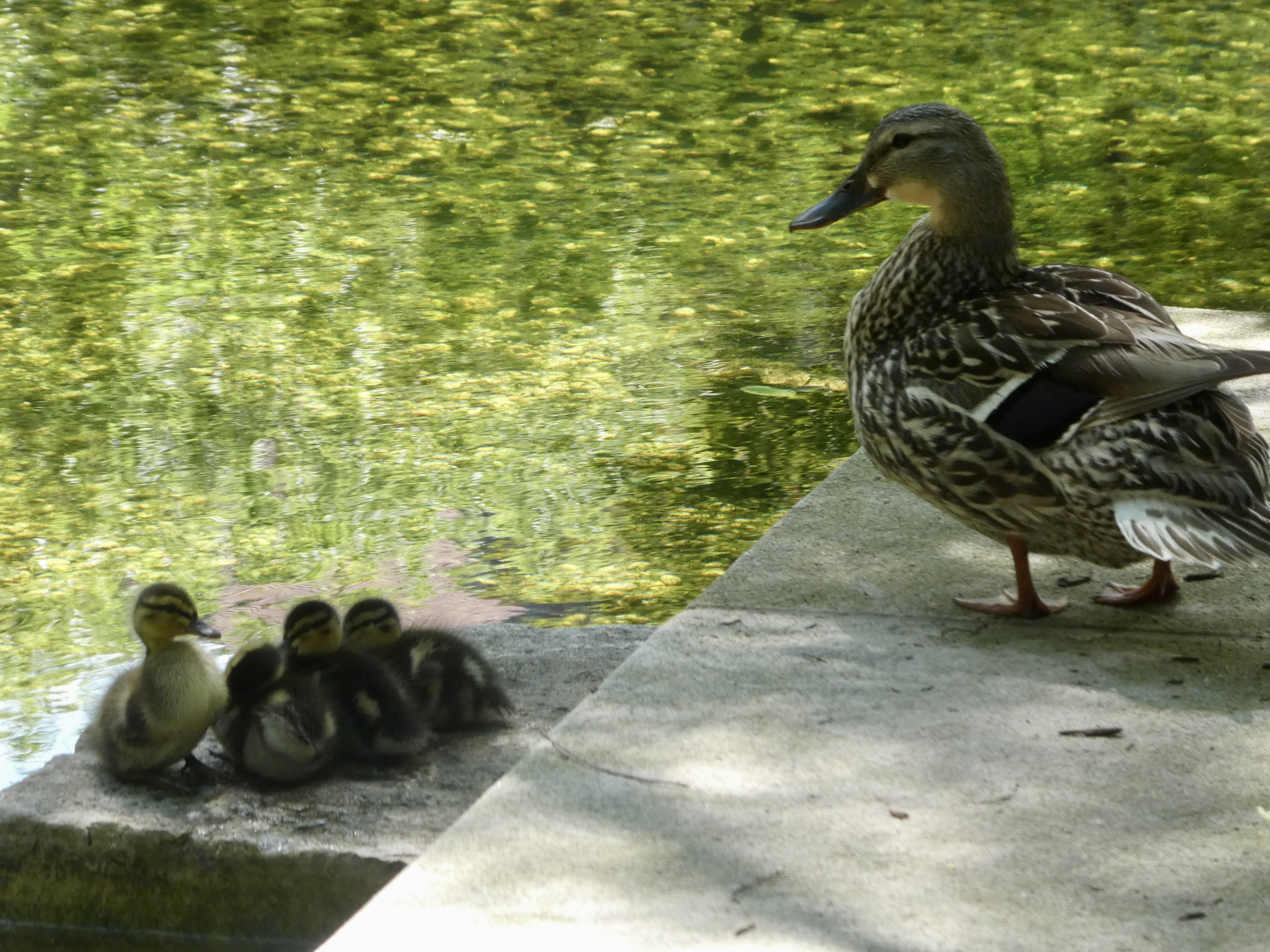
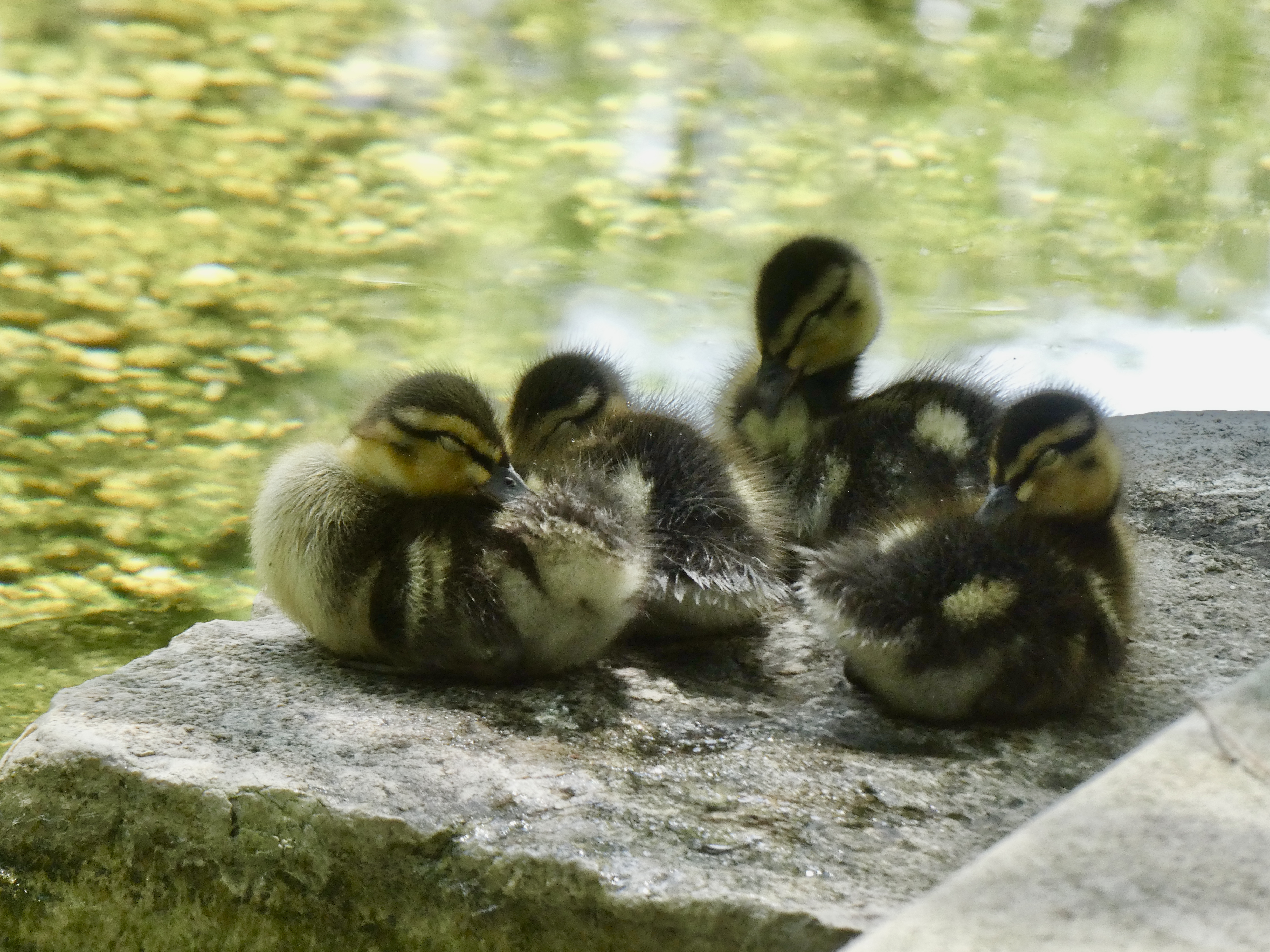
This is part of the sadness attendant on duck-tending. But at least most of that brood will be okay (they’ll supposedly get surrogate moms), and we did fledge Esther’s six ducklings, which flew the coop after I was overseas. In memory of Esther and her brood, then, here are what I think are the three best photos from the last duck season. We needed more broods!
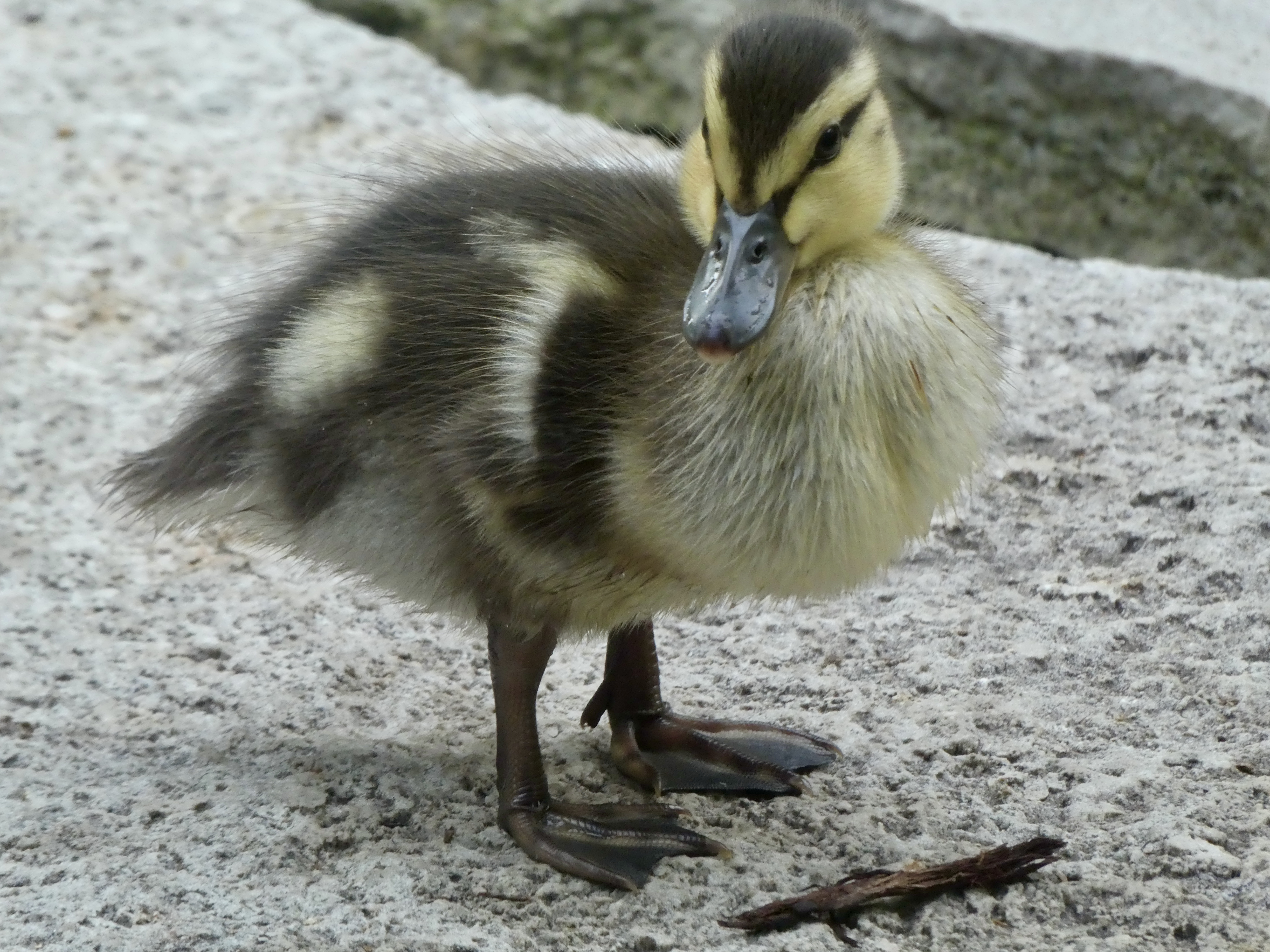
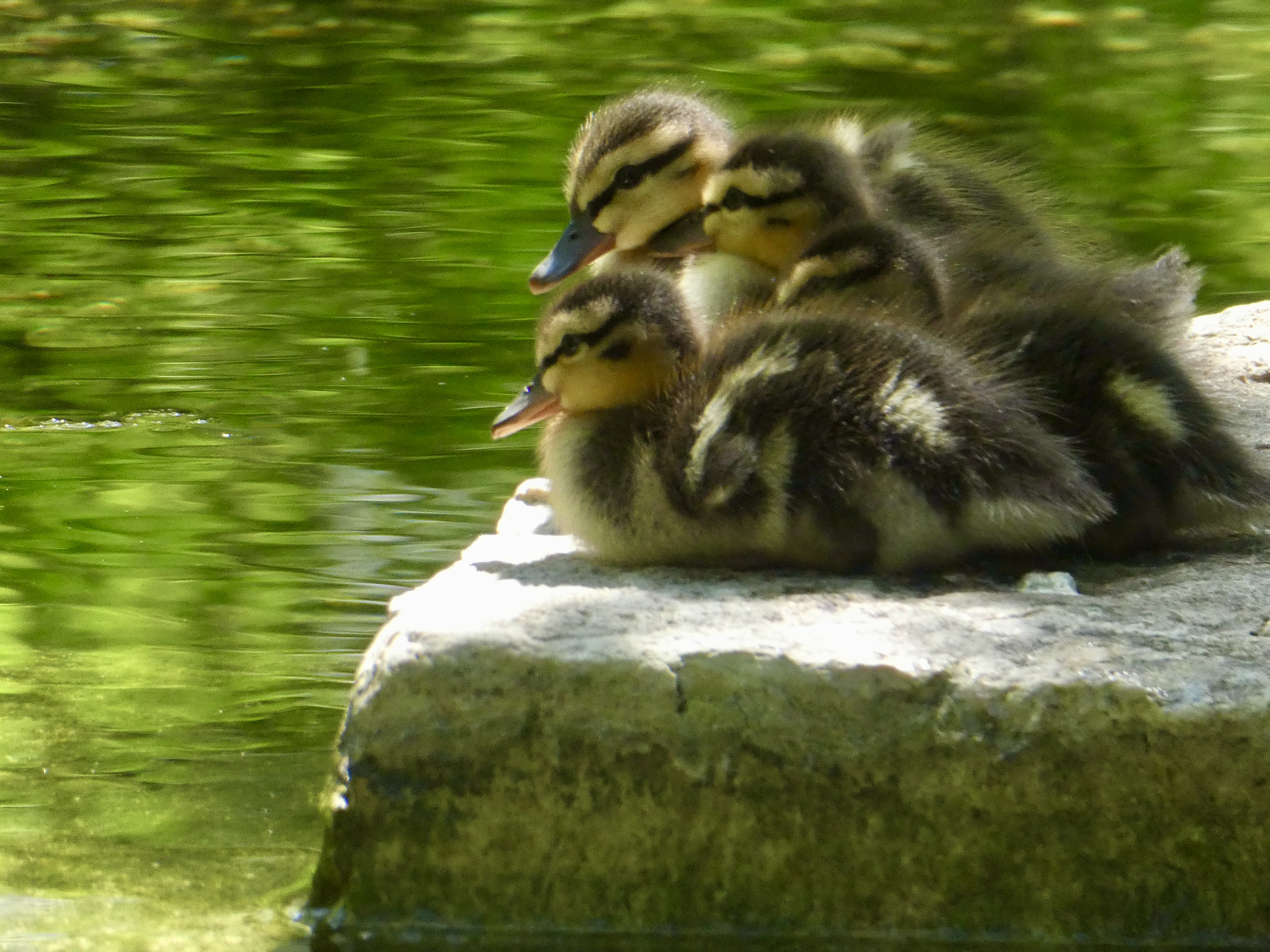
First, Esther and her seven (remember, one disappeared the first night) only a few minutes after they hit the water. You may recall that she was our first hen to incubate her eggs on the grounds—the usual behavior of mallards. Facilities put a plastic fence around her nest to keep interlopers away.
Esther was an excellent mother.
A marching duckling from that brood, a bit older:
And my favorite photo of the season, “Smiling splashing duckling” (yes, this is one of the babies all grown up):
I couldn’t resist putting up this 2.25-minute video, as it convinced me that the two ducklings who disappeared on July 4 actually flew away and didn’t waddle off or were taken by predators.
This was filmed yesterday after Esther and her remaining four ducklings had a light lunch (they eat less now because they’re dabbling). And after lunch is play/swim/flap/dunk/dive/fly time. This video shows considerable proficiency in flying, which begings about 13 seconds in and involves every mallard. Note the U-turn at 18 seconds.
Be sure to watch all the way until the end, because another bout of flying, again involving all five, begins at 1:25.
They are clearly ready to fledge, and I’m told that they do so at roughly 50-60 days after hatching. May 7 (the day the brood hit the water) until July 4 is 58 days.
There will be no Caturday Felid report today, though I have several incomplete versions in draft. Instead, I need to bring you up to date on Esther and her brood.
I am sorely behind in reporting on the “ducklings”—if you can call them that at their size—and tender this report showing the duckling and Esther up to July 1. I have some good pictures and videos that will probably have to wait until my return, as adding them here would make the post too long. Some of them show the ducklings making some of their first flights, and I have one of those below.
But I’ll bring you somewhat up to today. Two of the six ducklings apparently flew away yesterday; their wings and flight feathers are certainly large enough to enable them to do that. After searching all around the area for the two errant ducklings, I’ve concluded that they’ve heeded the call of the wild and went off to live their lives as free ducks in Nature. It makes me sad—somewhat, I suppose, like a parent whose well-brought-up child has left for college. Or, as a friend says, I had the ducks “only on temporary loan from Nature.”
There are four left now, plus Esther, who may fly away too, but I”m hoping she’ll decide to stay and molt in the pond, renewing her feathers. That will render her flightless for a month, but at least she’ll be safe, well fed, and I might be able to see her when I return. So here we go. . .
First, an artsy photo of flowers reflected in the pond, taken on June 18:
Mother Esther, one of the best duck mothers I’ve known. Never once did she leave her brood alone in the pond, and was always watching and monitoring them. I will miss her. Perhaps she’ll return next year: I have photos of her bill pattern that I can use to identify her.
The brood, June 20. Six ducklings, with Esther out of the frame to the right:
The brood follow Esther by a “plant cage,” where reeds, water lilies, and water lettuce are sequestered under the assumption that the ducks would eat them if they were available:
Look how big they’ve become!:
There is a singleton hen who hangs around the pond and has become tame enough to approach me after I feed the brood. scarfing up whatever food I’ve spilled. Her vacuum-like behavior has inspired us to name her “Hoover”. Esther and her brood don’t like her and chase her out of the pond if they see her. I feel sorry for her as she’s obviously not nesting (she’s around most of the time), so I try to give her a good feed on her own. Here she is, recognizable by her very dark bill:
A video of some ducklings nibbling grass on June 21. They seem to like some of the greenery around the pond, and you can see one duck pushing away an interloper:
One duckling standing. He (the olive-green bill suggest that it’s a male) is nice and plump, just the way I like them (note; they are not fat, but this is right after lunch):
One duckling sitting, resting its bill on its food-stuffed crop.
Starting about June 15, the ducklings were often flapping their wings, either for the joy of flapping or to exercise them for flying (the latter suggests that the experience is pleasurable, so it’s probably both). Here are two of the brood flapping away:
The video below shows Esther and the brood (she’s the light-colored one) walking along the pond, along with a bit of duckling wing-flapping. The “babies” are as big as mom.
Ducklings zooming and flapping: the first steps in flying. They’re also diving.
Semi-successful flight (sort of), the duck who can really take off is Esther, but I suspect she’s setting an example, prompting the ducklings to try their hand at levitation. You can see several of the brood actually lifting their bodies out of the water, so zooming has created a bit of lift:
Here’s a photo from June 18 of three ducklings “dabbling”, scouring the shallow bottom for food. (Yes, their naughty bits are showing.) Since they’ve started doing this, they don’t eat as many duck pellets, though they retain their great love of mealworms. I’m certain that part of what they’re eating on the bottom is the algae that gives the green color fo the pond.
Mallards are “dabbling ducks”—they feed in the water by tipping forward and grazing on underwater plants. They almost never dive. They can be very tame ducks especially in city ponds, and often group together with other Mallards and other species of dabbling ducks.
A group of dabblers. It’s hard to catch them all tipped forward at once, but it happens. They tend to congregate in small areas where the pickings must be good:
From June 29, a video of preening, dabbling, and grabbing at a leaf (latter at 0:31). I’m not sure whether that duck actually wants to eat part of the leaf or is just playing.
And we’ll end with more “artistic” reflections. More to come, though it may have to wait until I return.
Our “ducklings” have grown up now, and they’re as big as their mother Esther. Although their wings aren’t yet of full size, they can still fly a bit, flapping across the pond about a foot above the water. Yesterday one even made a U-turn and flew back. It won’t be long till they’re accomplished flyers and, sadly, I’ll probably be in the Arctic when that happens. In fact, they may be gone for good when I return in a few weeks, though Esther has yet to begin her molt, which takes about a month and renders her flightless as she sheds and regrows her wing feathers. (All ducks molt once a year, and hens do it after the babies are grown.)
I have a ton of photos and videos, including incipient flying, and will post them in time. I’ll try to do one tomorrow and one when I return. In the meantime, yesterday afternoon, when it was hot, the brood was splashing, diving, flying, and dunking, and here’s one “duckling” who looks quite happy after a good dunk in the water. (Click photo to enlarge it.)
It’s Sunday: time for a duck report. The babies can’t be called “ducklings” any longer as they’re nearly the size of Esther!
These video and photos were taken on two days: June 16, and 17, so I’m a bit behind schedule. But I have photos and videos taken since then, and eventually all will be posted. Yesterday’s zoomies, for instance, show that the ducklings flap their growing wings while scuttling across the pond, and even were able to take off a bit, like a Wright Brothers plane. Soon they’ll be airborne, and I’ll be a proud parent.
First, though, here’s Esther, a fantastic duck mom. Below she’s flapping her wings and cleaning herself in the pond,
And a video of her ablutions. You can hear her quack: Esther’s voice! And remember, only female ducks (“hens”) can make the classic duck quack. Males (“drakes”) make a low sound that is not very quack-like:
Esther playing flamingo by standing on one leg:
Two more of Esther quacking and preening on The Rock, a flat rock in the middle of the pond where the ducks like to stand. First, she quacks:
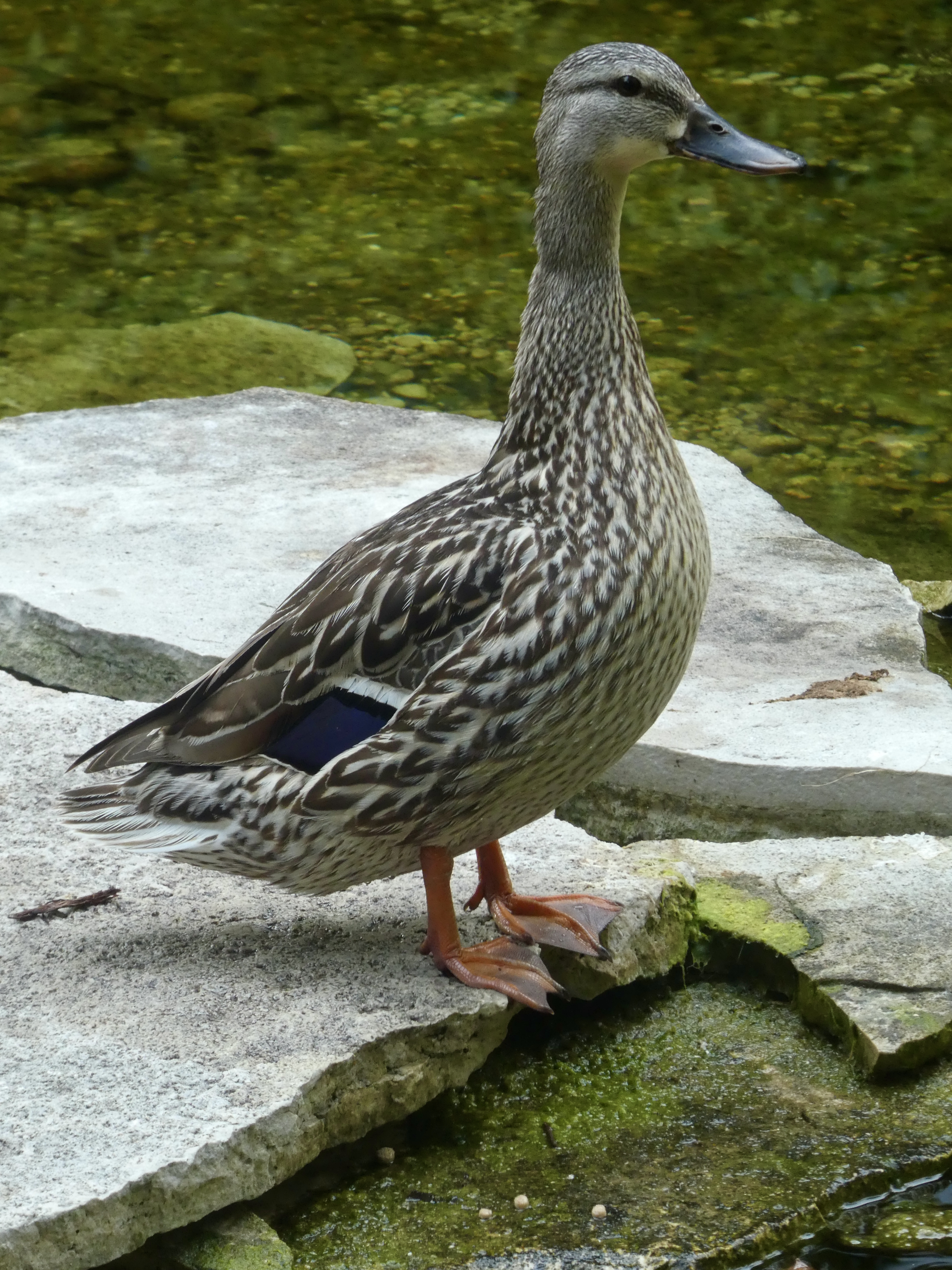
Then she shakes herself dry (below). The blue feathers with white edges are called the duck’s speculum. Both males and females have the ornamentation, and I don’t think we understand why it evolved. My own view is that it helps ducks recognize other members of their species, and that’s what the Wingtrip site says, too:
So why have a speculum? Obviously being flashy in coloration is important to ducks, otherwise it wouldn’t be such a prominent, genus-wide trait. Both sexes have sepeculums, which could lead us to believe that this color wasn’t generated by sexual selection. And this would be a decent assumption, as it’s broadly accepted that speculums are there for signaling between birds in the air, aiding in important flocking behavior.
Birders and ornithologists know we don’t usually see Anas ducks on their own. Just think about it yourself, how often do you see a lone Mallard? Infrequently, as they are usually paired up, raising ducklings, or in flocks. These gregarious birds need to keep track of each other for a variety of reasons. Safety in numbers (and in homogeneity of flocks) during movements being paramount, the speculum is likely the ticket (along with vocalizations of course). In air it’s out there, flashing reflections all over the place for all to see. On the ground it’s tucked away, allowing mothers to stay hidden on nests and studly males to not be too conspicuous.
That sounds about right to me.
When you hang around ducks you realize that they really are beautiful, with the males all decked out by sexual selection with green heads, yellow bills, and white neck rings, while the females, who must be cryptic on the nest and when shepherding their ducklings, are mottled brown, blending perfectly with the ground and foliage when they’re on land. And there are, of course, those lovely speculums (specula?). I still have a few speculum feathers from Honey, for mothers in the pond molt after their babies fly, losing all their feathers and growing new ones. (They lose them gradually as they grow new ones, so they don’t go bald!) Feathers are crucial, but also subject to a lot of wear and tear in the air and water, and so a new set is regrown each year.
The ducklings always play around after lunch and dinner, but are more quiescent at breakfast. After playing (see below), they will preen in the water, and continue the preening as they repair to the pond ledge to sun themselves and dry out (below):
Here they are playing (if it is “playing”!). I often wonder whether they enjoy this, or are driven by impulse to behave in ways that will be adaptive in the wild. Of course, if there is some sort of duck “fun,” then that would prompt them to do stuff like this, stuff that could help them take off from the water or escape predators. So let’s just assume they are enjoying this!
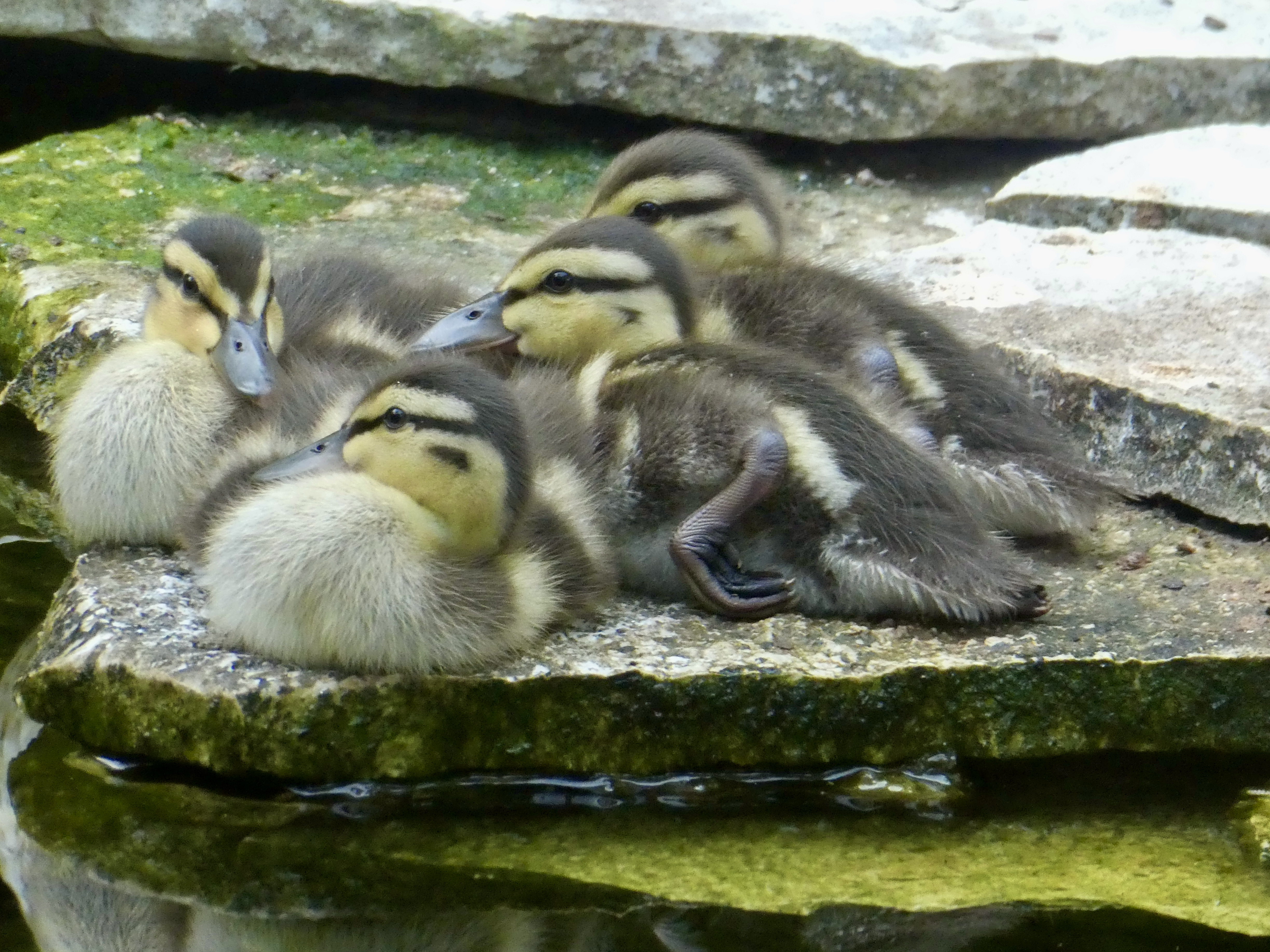
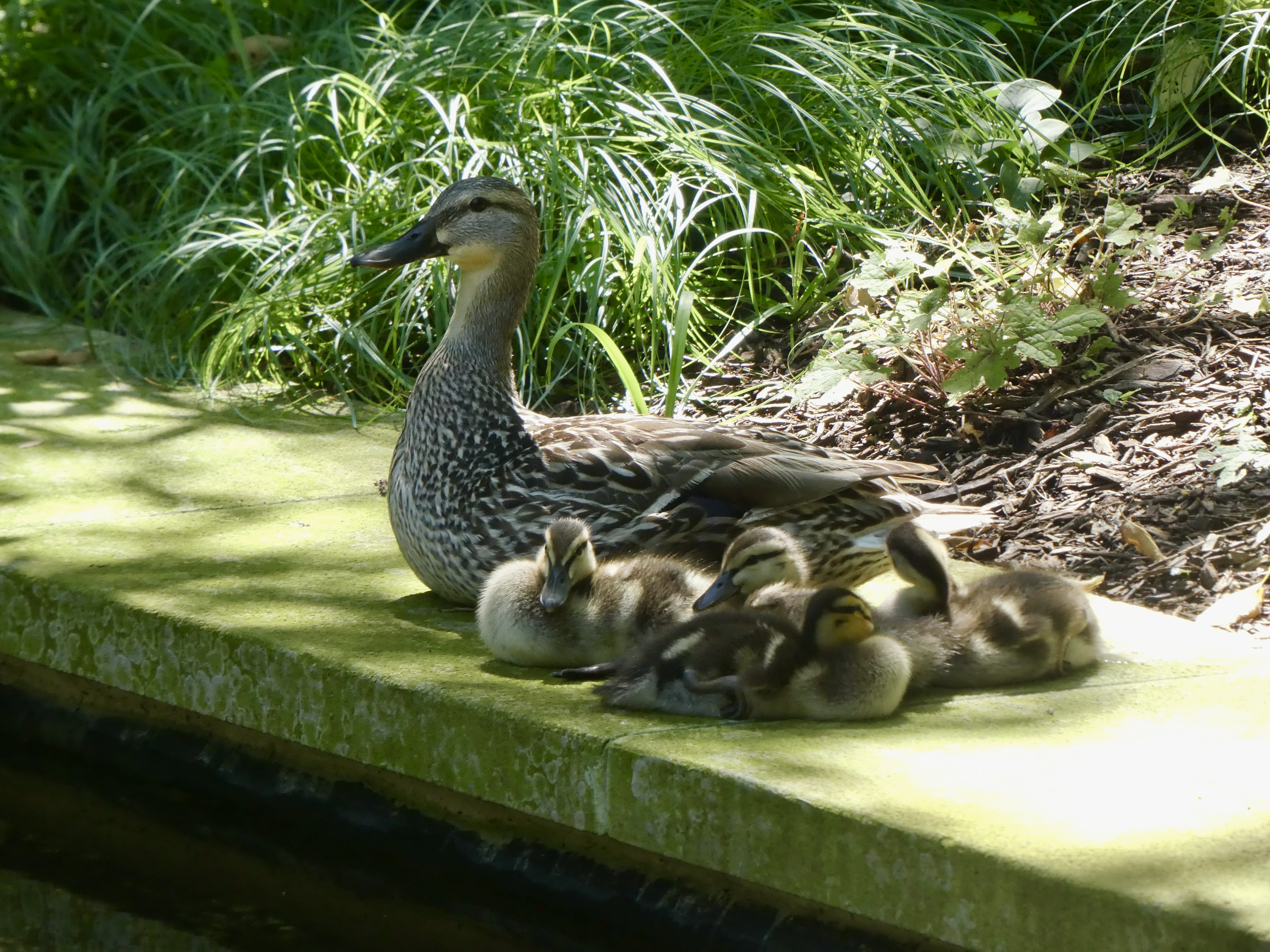
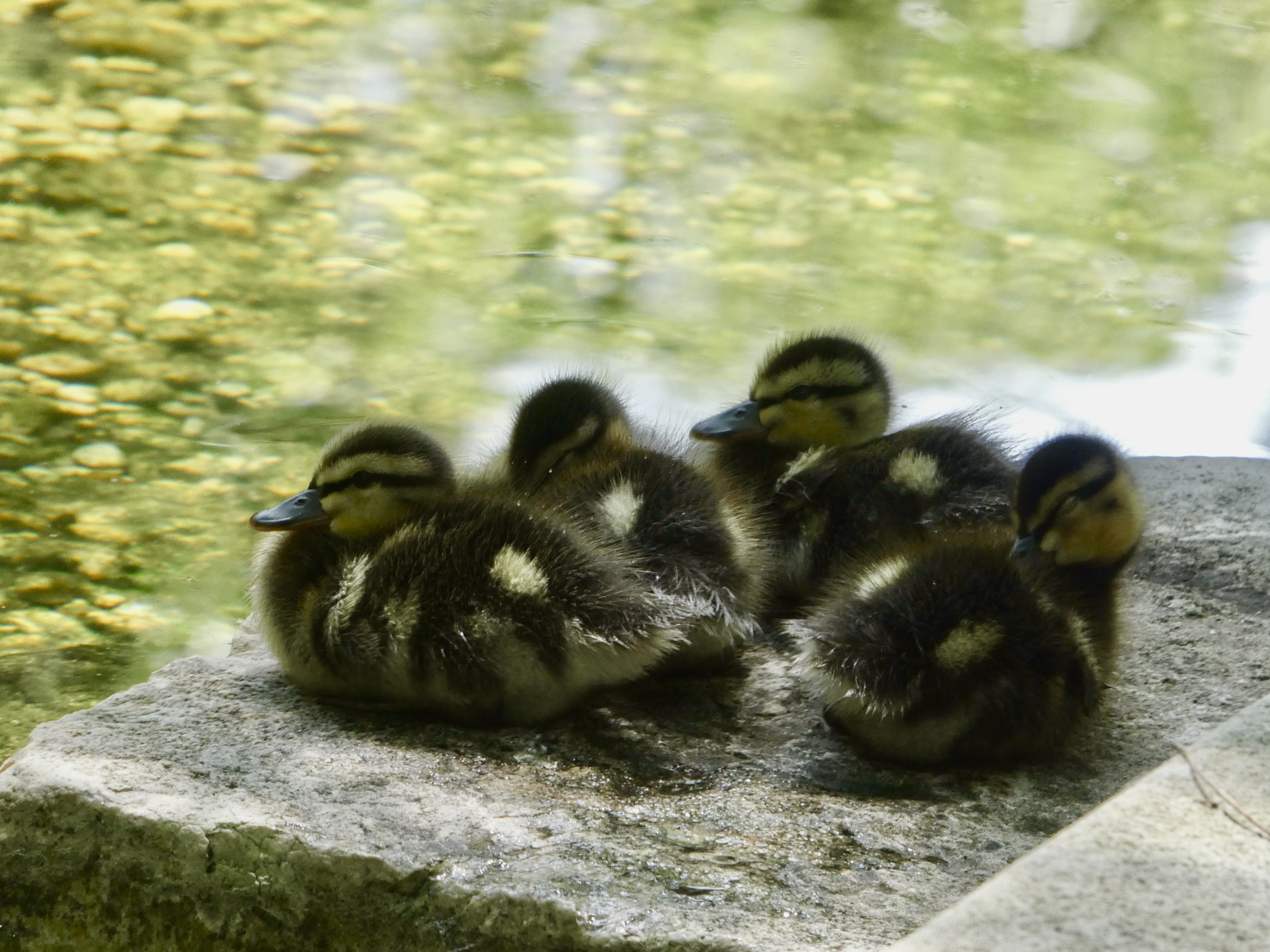
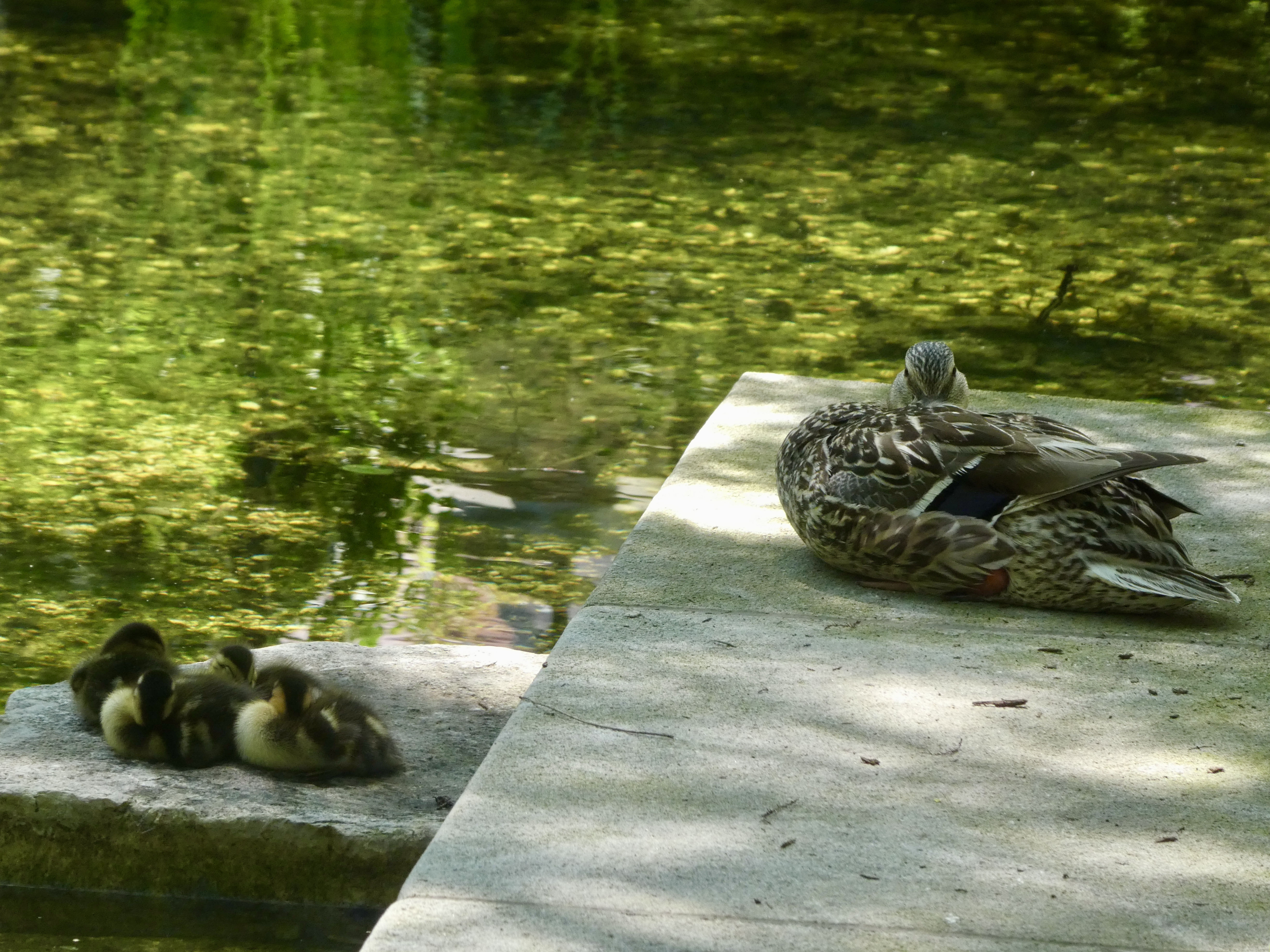
After eating, zooming, and preening, they often form a pile o’ ducklings, though this is less common when it’s hot (remember, they are wearing down jackets). Below is one pile o’ ducklings. Notice that they like to stay close to their brothers and sisters. Esther, of course, is keeping watch over them, standing on the right side of the frame.
Pile o’ ducklings:
Yes, they look chubby, but they really aren’t. They are just healthy and well fed, and their crops are full of duck pellets that they’ll digest later.
Zoomies! This is the best part of duck tending. They get all excited for reasons unknown, and this happens almost invariably after the afternoon meal. Then they have drag races across the pond, or dunk themselves like donuts in coffee, or swim underwater. It all makes for a great show, and we have to tell people nearby to watch the ducks, as this happens spontaneously and is over quickly:
More diving, dunking, and zoomies. Be sure to watch at the end (starting about 1:30( when Esther kicks off the action by flying. I wonder if the ducklings zoom to imitate her. Notice how some of them flap their wings as they zoom:
Getting out of the pond for preening and napping:
Here’s a duckling about to take a nap. Notice that they have two coverings for their eyes. His/her eyes are open in the first picture, but then covered by the nictitating membranein the second. Shortly this duckling will close its eyes using the main eyelid and head to dreamland.
We of Team Duck always have all our ducks in a row. Note Esther, who always stands at the end to oversee the brood while they nap (she naps, too, but not as often):
And just to remind you: here’s the brood photographed on May 7, shortly after they first entered the water. In only seven weeks they got to the size above. (Note that there were seven. One disappeared the first evening, but we’ve had six ever since.)
The link to this “uchicago” Instagram post is here, and this lovely video highlights Esther and her brood, as they are the only brood the renovated pond has harbored. I’m sure this video was taken by the University photographer, who did a great job. I’m also delighted that the video (and thus the University) recognizes the value of the ducks to the pond and to the people who come to the pond to chill out.
Oy, how the ducklings have grown! Remember, today has been only 40 days since they hatched on May 6. In all respects save their inability to fly, they are slightly small adults, though they still hang together as the Brood of Six. Here are some photos and videos taken over the last two weeks.
The pictures and videos below are presented chronologically, and were taken on four days: June 1, 5, 7, and 11. You can see the change in the ducklings over a period of only ten days: they’ve lost most of their fuzz and are mostly feathered, and their wings are getting larger.
Mother Esther, June 1:
More “babies”, if they can be called that. Esther stands on a plant pot and watches her offspring:
On June 1 the ducklings were growing feathers, most notably on their wings.
A video of ducklings leaving the water on June 1 for a postprandial grooming session and then a nap. They are able to leave the water and jump on the pond edge very easily now.
More preening on the same day:
And, after preening, they often form a clump o’ ducklings, keeping warm and together. Esther, as you see, is always nearby. They’re also nibbling at the grass:
A single duckling giving itself a thorough cleaning.
By June 6, the ducklings had developed more extensive feathering, especially on their breasts. They look to me like little dinosaurs, which of course they are:
And they look quite plump after feeding, often with their craws hanging over the edge of the pond. We call these “Dali ducks”. But they are not fat.
The babies dunking themselves on June 6:
Father Mordecai, who hasn’t been around for a few days:
After dining, swimming, diving, and preening, the ducklings plop themselves down for a nap. I love the plopping:
On June 7 we had a bout of postprandial zooming:
Esther the Queen:
Esther always does thorough ablutions, for as mom, she has to be in good condition. (Soon she’ll molt and gradually lose her feathers, replacing them with shiny new ones. This process is gradual so she is not of course bald!)
Meanwhile, Mordecai, when he was there, would drive other ducks out of the pond. Here he subtly but insistently forces Haman the Evil Duck out of the pond:
By June 11 the ducklings had gotten almost all of their feathers, but their wing feathers are small and they can’t yet fly. They’re also a bit smaller than Esther, but not by very much. Here’s one sunning on a rock:
Duckling ablutions:
Dabbling. They seem to get some food from the pond, and I’ve seen them slurping down algae. Here they all seem to have homed in one one area:
Homing as Esther watches:
A big-time case of the zoomies:
A duckling. It’s now hard to tell them from mother, and at a distance you have to concentrate on color (Esther is lighter) rather than on size. There’s just a bit of fuzz near the tail, but otherwise they are fully feathered. I predict they’ll be flying in two weeks.
As a reminder, here are two of them the day they hit the water: May 7:
Here I am hand-feeding a stray hen, who we call “Hoover” because she comes right up to us when we’re sitting and cleans up all the duck food spilled on the ground at feeding time. I felt sorry for her and gave her a handful of food, which she quickly grabbed, one pellet at a time. I don’t really want to feed her, but when a duck looks straight at you with their beautiful faces and liquid eyes, it’s hard to resist. I am not feeding these stray ducks much at all, and they are often gone (eating elsewhere, I hope). Photo by Elsie Holzwarth: