
Glory be! I got two batches of wildlife photos yesterday, so we’re set for today and Tuesday. The rest of you reprobates—get to work!
Today’s batch comes from our regular contributor Mark Sturtevant. Mark’s captions and IDs are indented, and you can enlarge the photos by clicking on them.
Here is another set of critter pictures from two summers ago. That time is the measure of my back-log in processing these images. There will first be spiders.
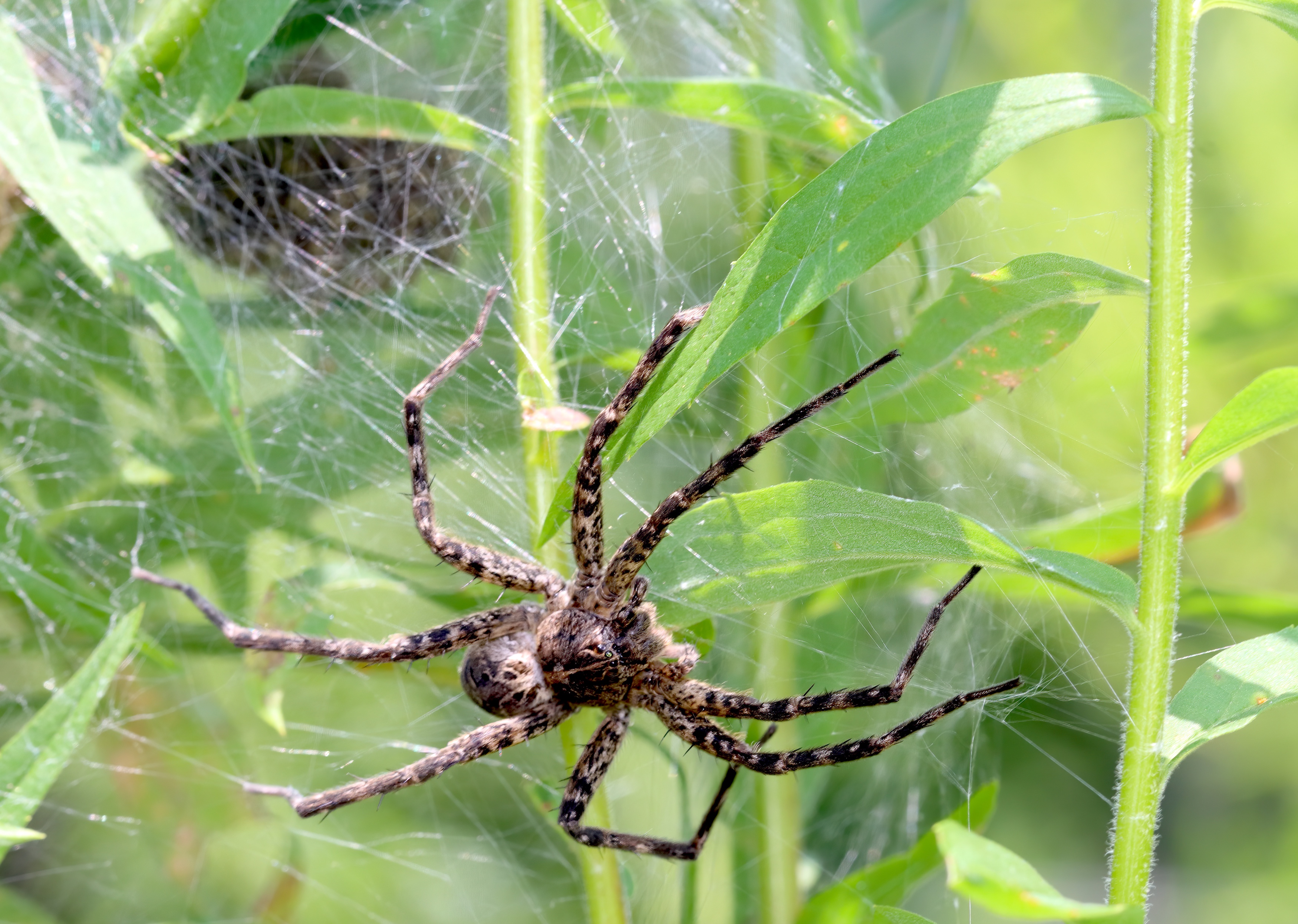
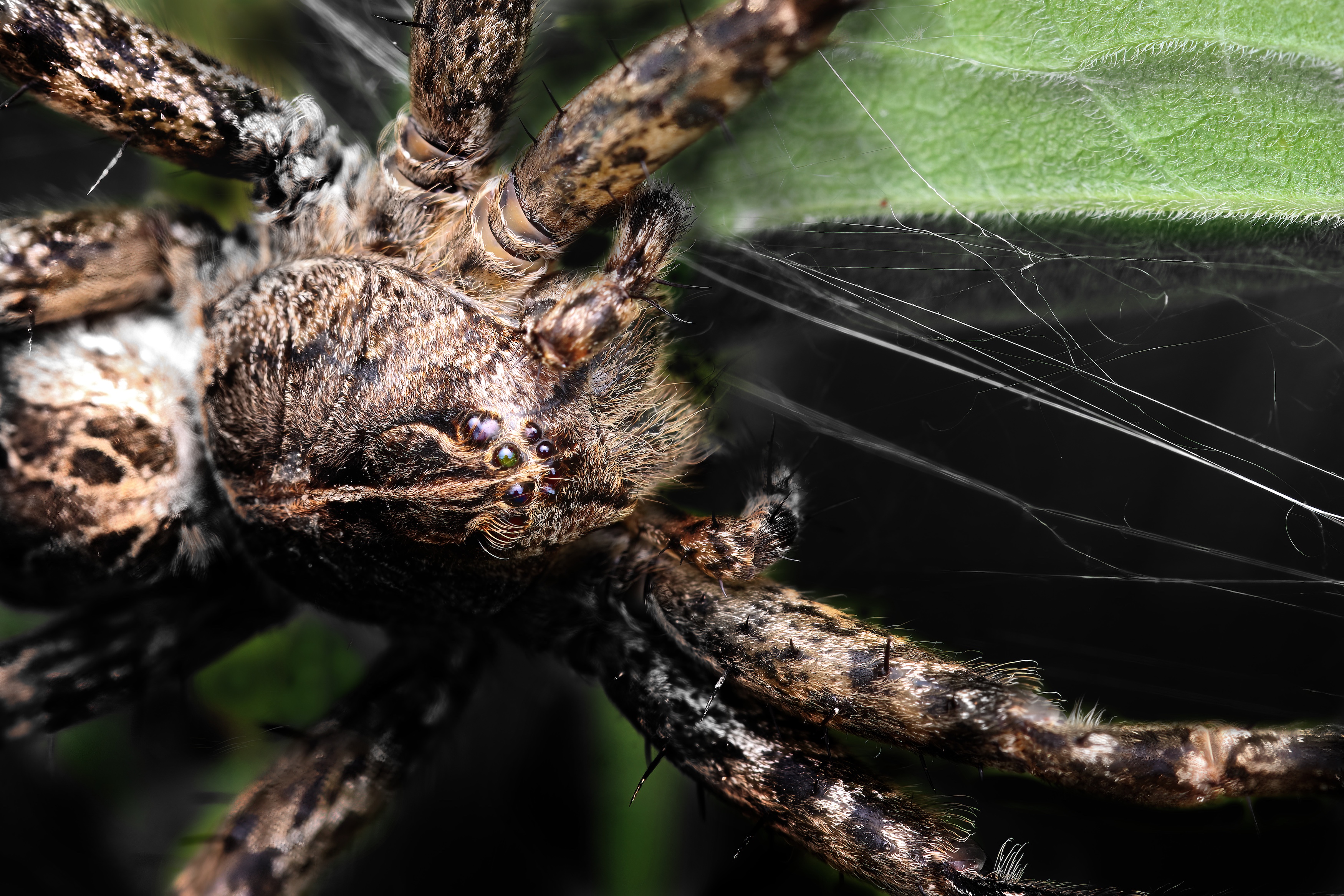
It is always exciting to come across the spider shown in the first two pictures, because it is of a size that would easily cover the palm of your hand. This is one of two very similar species of Fishing Spider in the area, and right now I am thinking Dolomedes scriptus, though I wish I’d taken clearer pictures of the abdomen to be sure. Females in this group haul their egg sac to the top of a plant and build a web “nursery” around it. The newly emerged spiderlings stay in their nursery for a time while the female guards them, and that is when it’s pretty exciting to find one of these scary-big girls just hanging there at eye level, plain as day. You can see the dark mass of spiderlings in the background of the first picture. The females usually barely react to my attentions other than moving to the other side of their plant, but this one repeatedly lunged at the lens when I got close:
Next up is a Long-jawed Orbweaver (Tetragnatha sp.). These spiders use their extra-long chelicerae and fangs to pluck small insects from their web. To us, though, they are as fragile and benign as a piece of fluff:

Lastly, we have one of the larger orb weavers that are very common in certain parks: the Furrow Orbweaver (Larinioides cornutus). They are typically well hidden inside a messy silken retreat near their web, but here I coaxed this one out for pictures:

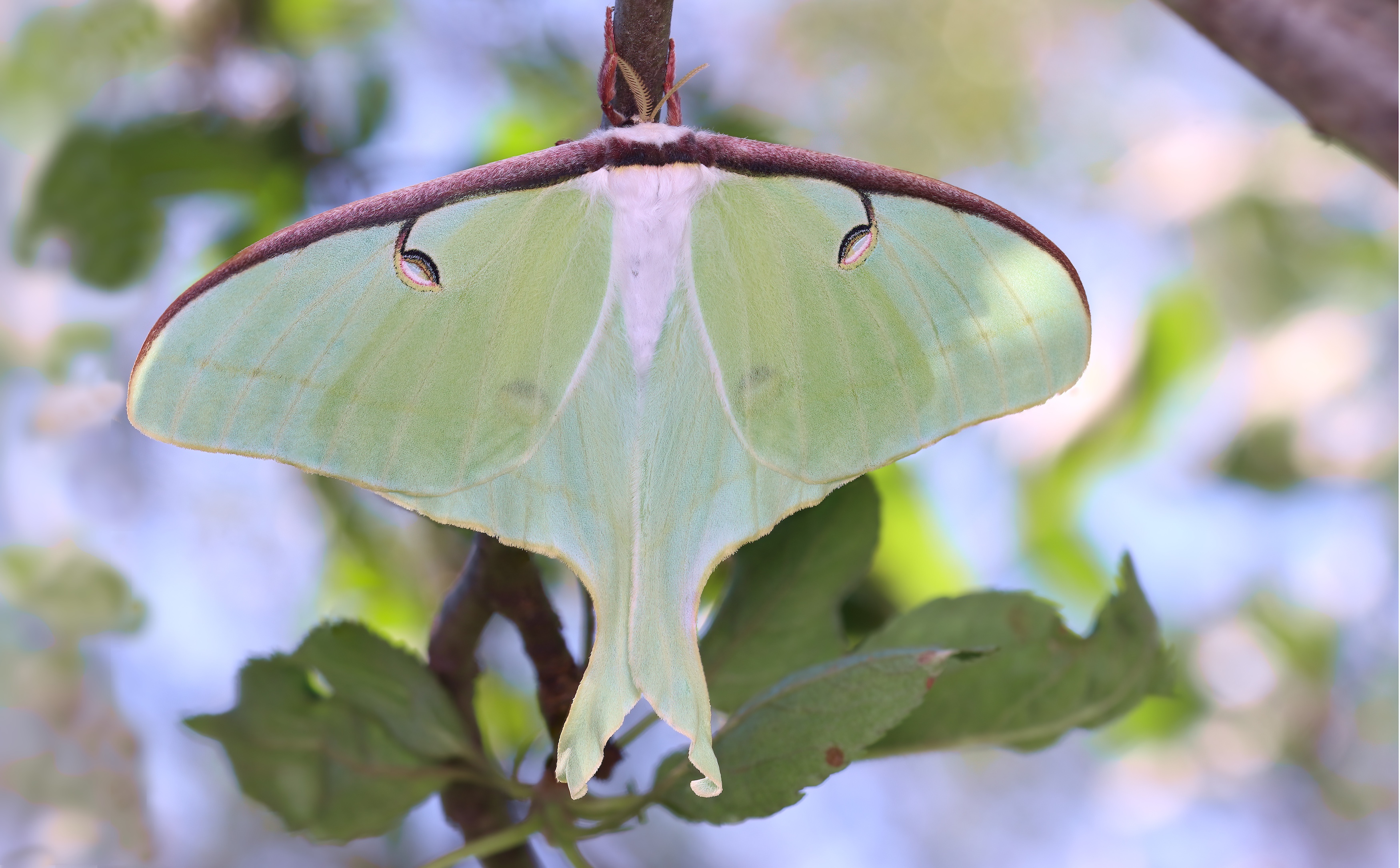
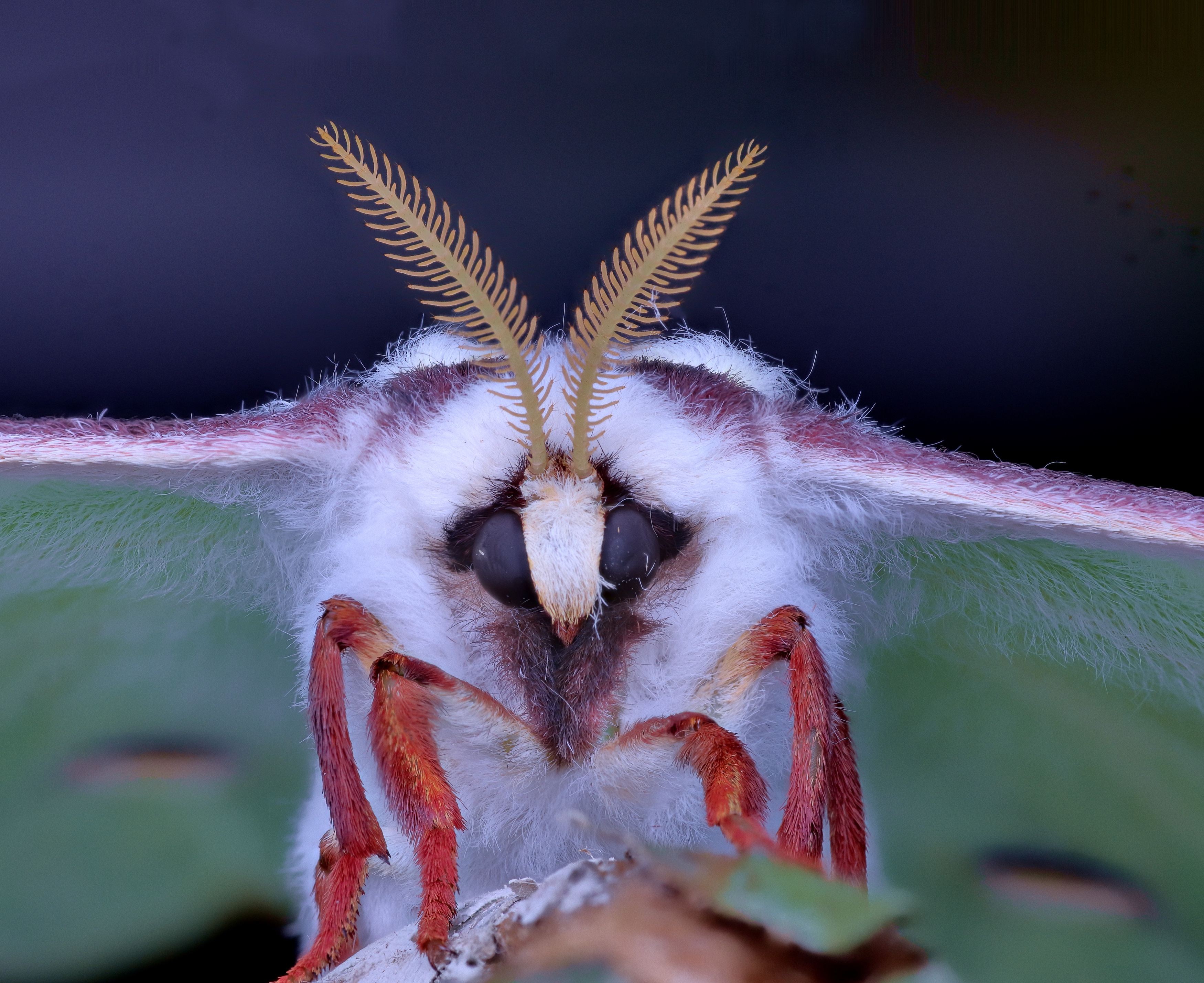
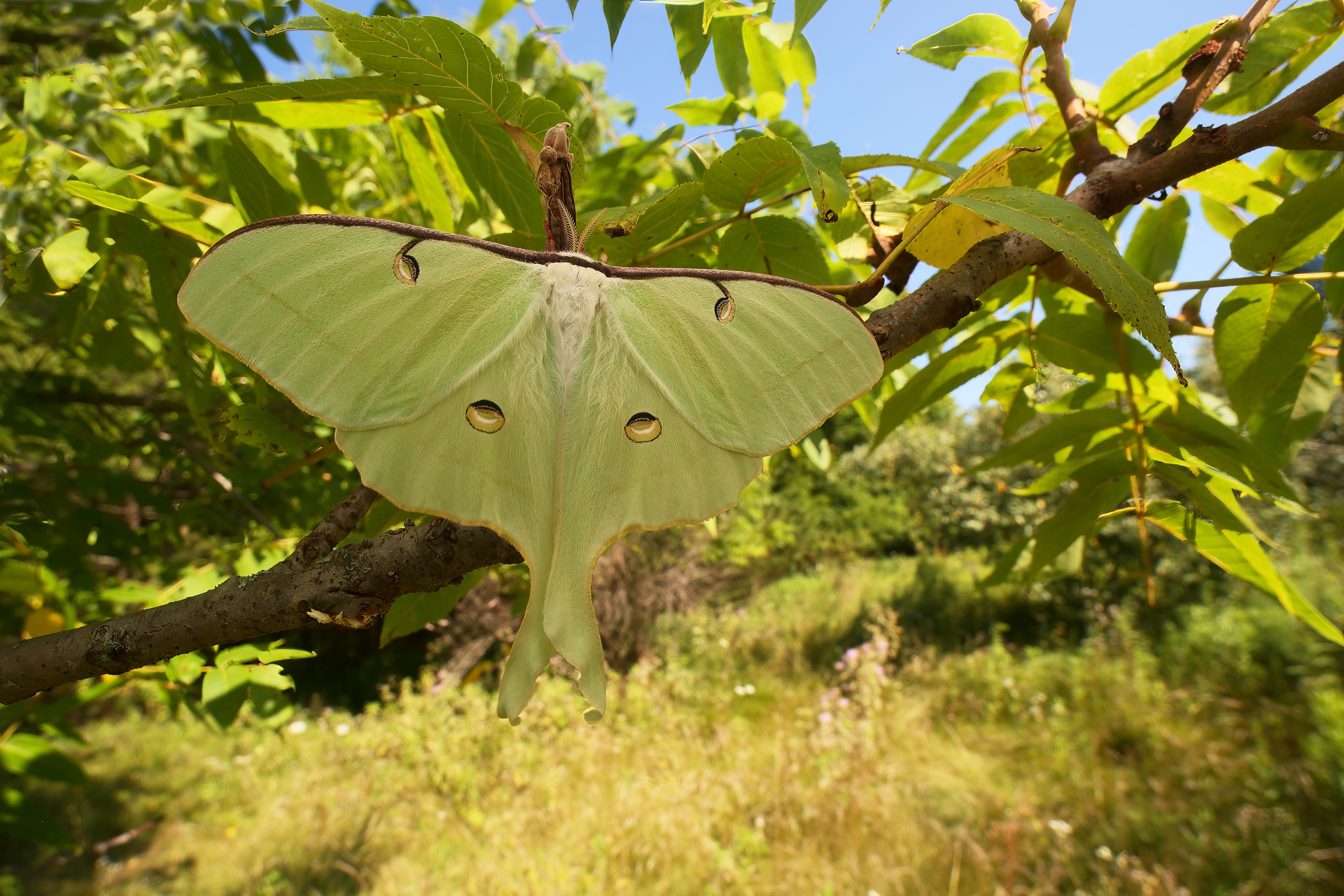
It was during this summer that I came across a mature Luna Moth caterpillar (Actias luna). These of course develop into one of our largest moths, so naturally I had to take it home for pictures. But that very same day it started to spin its cocoon, so I had to wait for the moth to emerge. Fortunately, this was the first generation, so I did not have to wait long. When a moth or butterfly emerges, there is a period of several hours after their wings are expanded when you can take pictures with little risk of it flying off. I took full advantage of that here, as shown in the next three pictures. The last picture was taken with the 15mm Opteka wide-angle macro lens. Wide-angle macro is growing in popularity because it combines both close-up and wide-angle perspectives, and more photographers are discovering the unique look that this can provide. There exists a bit of a scandal with this lens, however. I bought a copy shortly after it appeared on the market because it was inexpensive, and I wasn’t willing to shell out hundreds of dollars for the better-known alternative lens. Then it came out that Opteka was being sued for infringement because their lens was seen as a blatant copy to that other lens! The Opteka lens virtually disappeared from the market, but it is still manufactured and sold as an “unbranded” wide-angle macro that can be found on other markets like eBay for a little over $100:
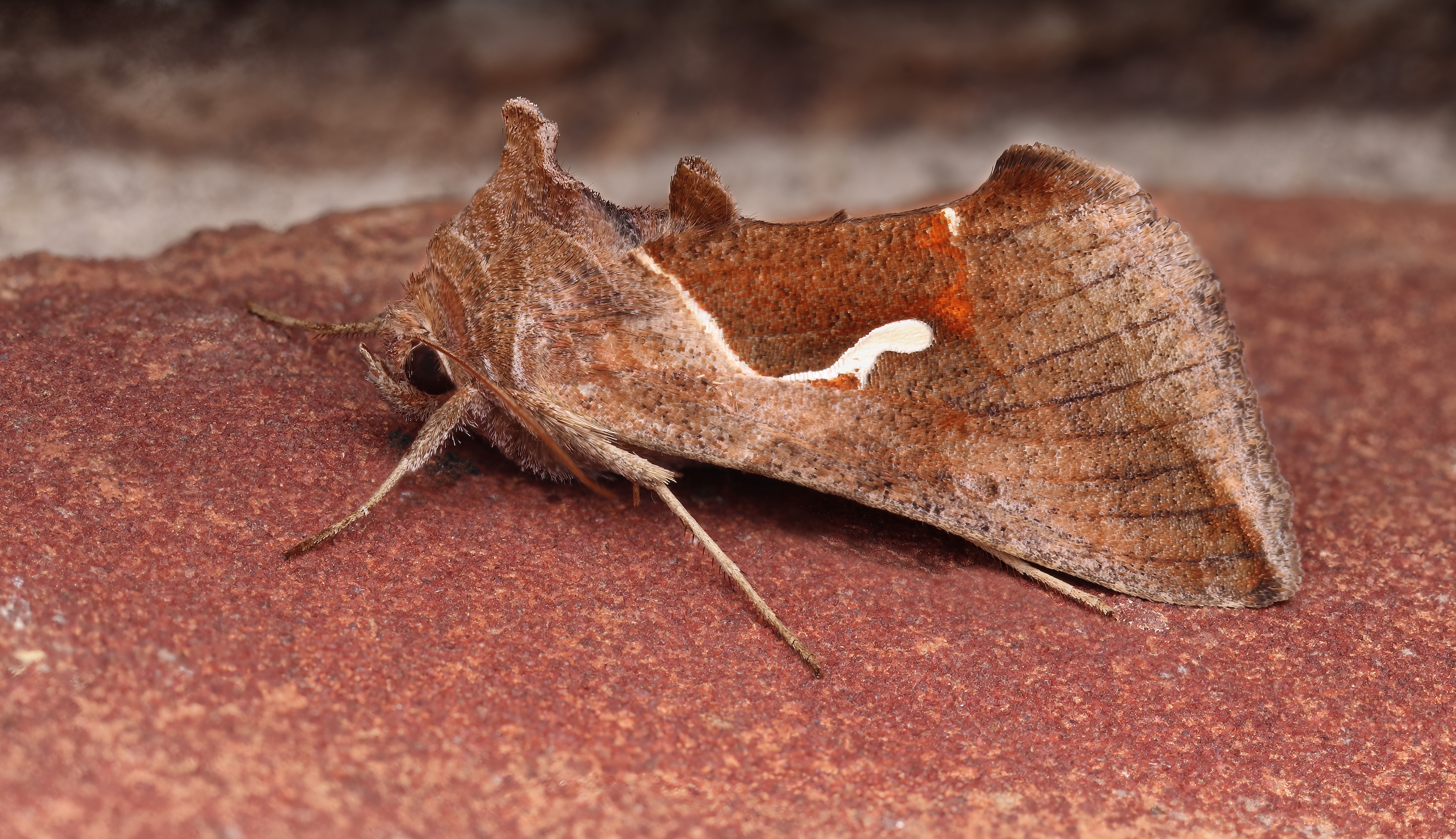
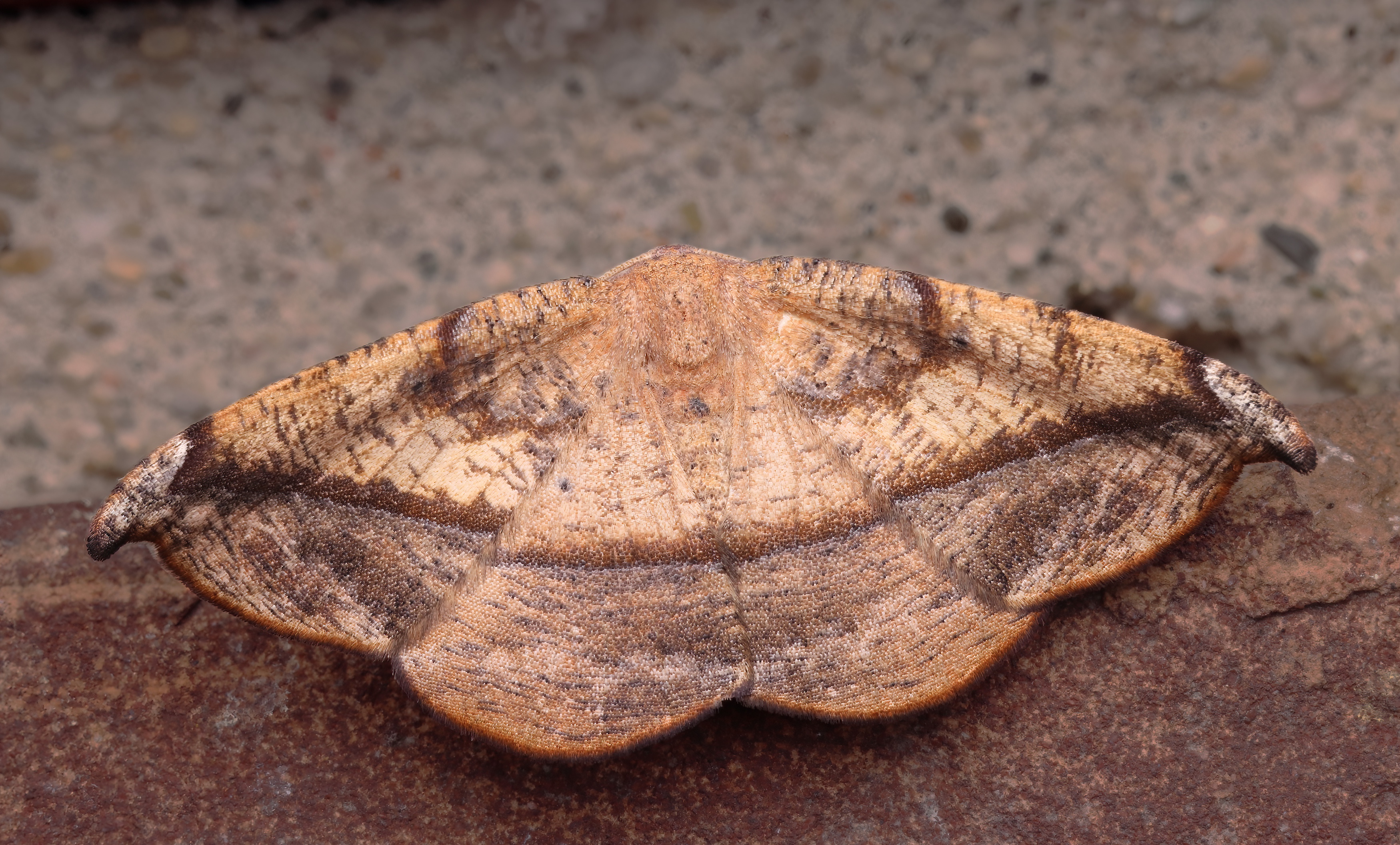
Moving on. The next three pictures are of some of the arrivals to my porch lights. The first is a Celery Looper moth (Anagrapha falcifera), followed by a rather cool-looking moth called the Juniper-twig Geometer (Patalene olyzonaria). The third picture is a lovely leafhopper (Gyponana sp.).

The final picture shows an encounter with Jagged Ambush Bugs (Phymata pennsylvanica) that I had never seen before. These little insects are in the assassin bug family, but they are specialized sit-and-wait predators on flowers. It is well known that they can handle dangerous prey many times their size, and so I am frequently drawn to the flower garden in our backyard, in large part just to see what these weird little bugs might be up to. Here I was photographing a mating pair, where the female was meanwhile feeding on a small bee. That in itself was not at all unusual, but then a second male approached from across the flower. As the female was already engaged, as it were, the second male proceeded to also feed on the bee. The other two did not seem to mind:

Nice photos, and discussion! Thanks!
Outstanding!
Beautiful photos! The picture of the luna moth’s face is incredible.
Beautiful pictures! When we lived in rural southwestern Virginia, it was always a thrill to see Luna moths appear in the lights. Beautiful creatures.
Their tails seem longer down there as well.
Thank you for sharing nature’s wonders with us.
The luna moth is incredible. What great photos. The last photo of the 3 is unbelievable. That a catch.
Thanks so much!
Thanks! As an arachnophiliac, my favorites here are the spiders. That Fishing Spider is one fierce Momma!
The Furrow orbweaver resembles a jack o’ lantern.
Wow these are amazing!!!