Today is the third and last set of photos sent last week, so I am of course in need of more. Send ’em if you got ’em!
The photos today come from reader Jan Malik. Jan’s IDs and notes are indented, and you can enlarge his photo by clicking on them.
In August I had to go to one of Mexico’s southern states for work (the usual story of Americans taking the jobs of hard-working Mexicans). The 12-hour shifts left little time for photography, and only toward the end of my assignment did I manage to spend a full three hours in a small nature preserve. The preserve is maintained by a certain state-owned company with an effective monopoly on oil exploration and processing in Mexico. Soon after entering, I realized that the preserve might well have been a money-laundering enterprise, but nonetheless, I went ahead trying to find interesting arthropods.
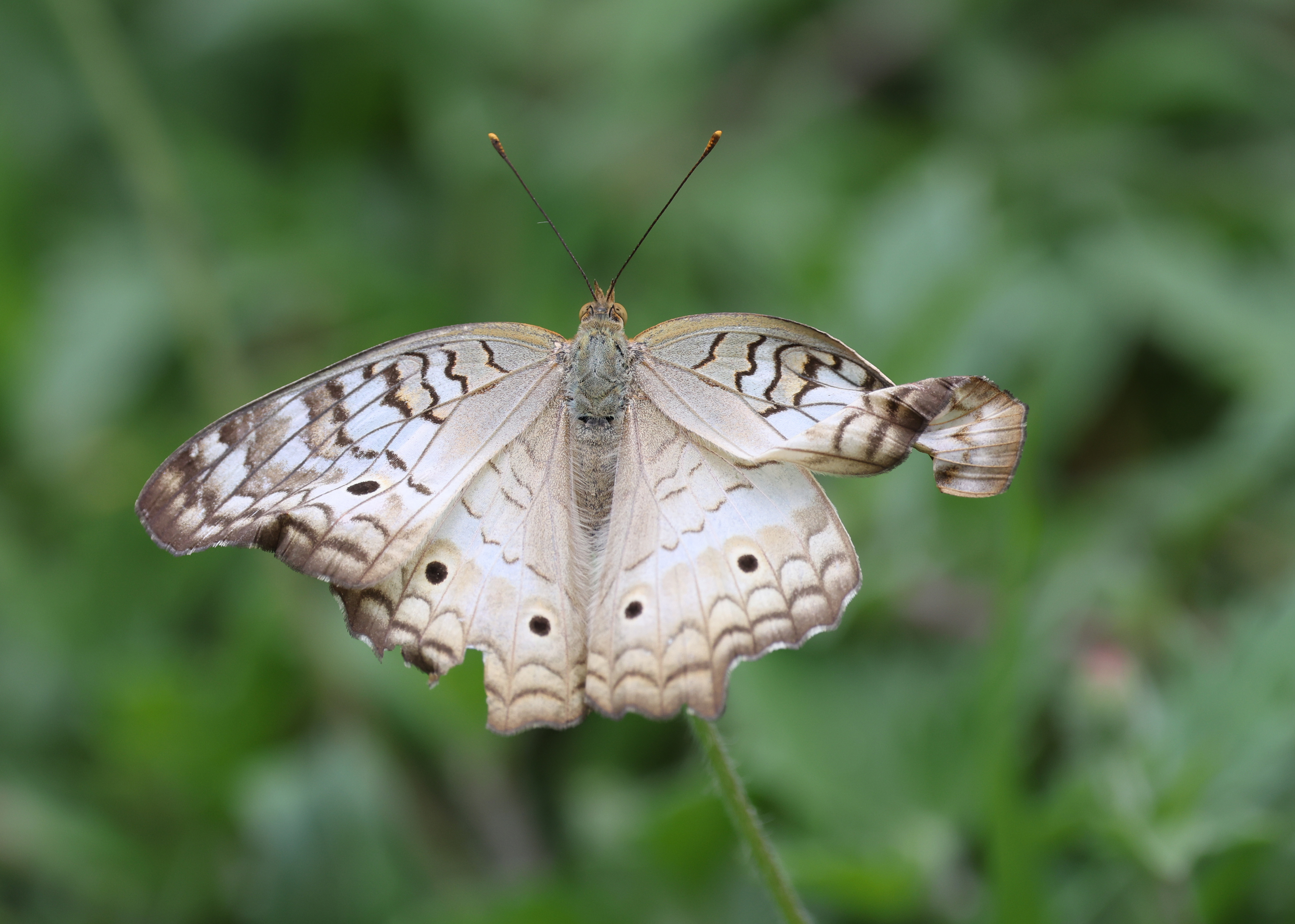
The white peacock butterfly (Anartia jatrophae), with a damaged wing, which probably occurred during a not quite successful pupation or immediately after, when the wings are soft and pliable and can get entangled in the exuviae or vegetation:
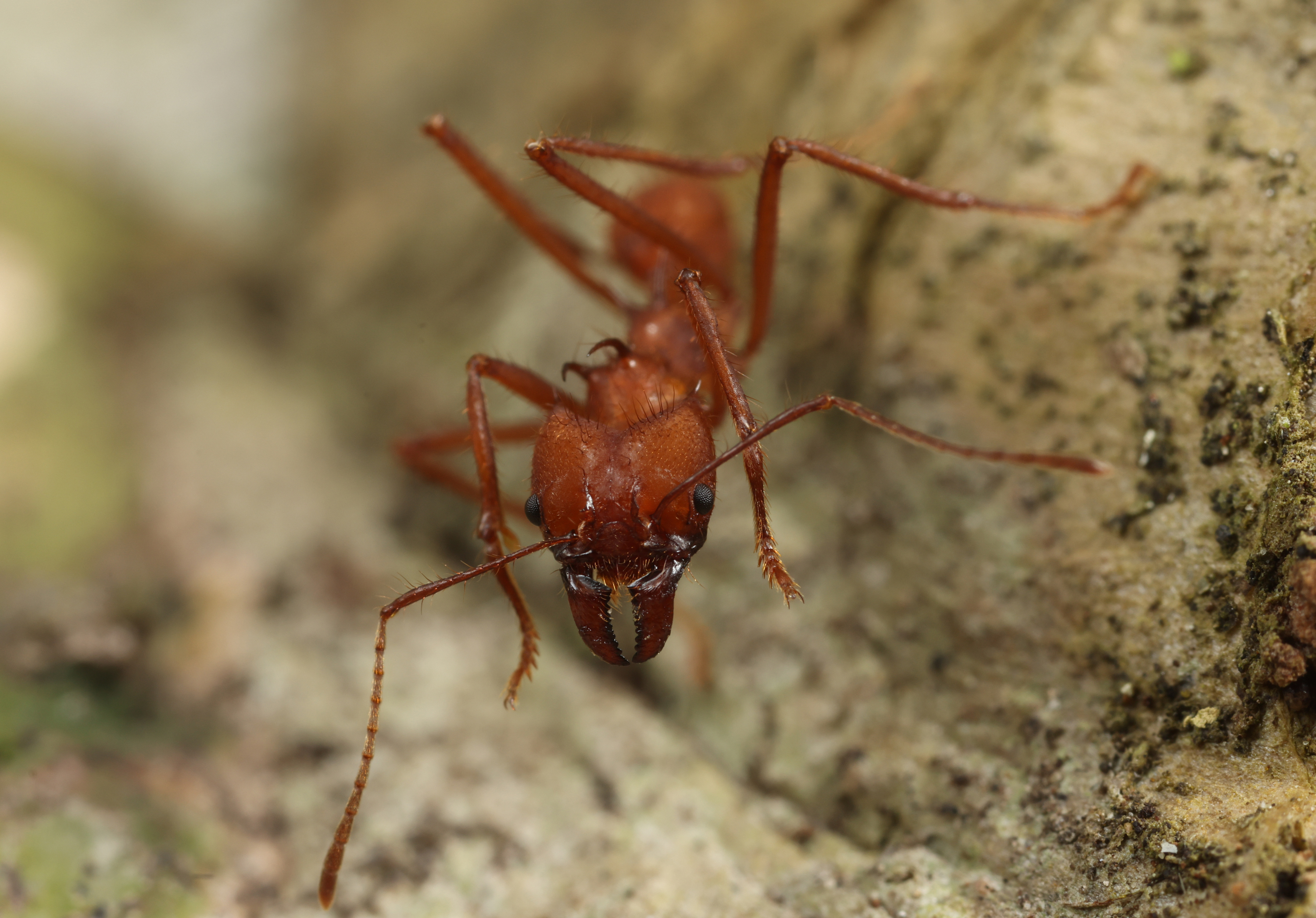
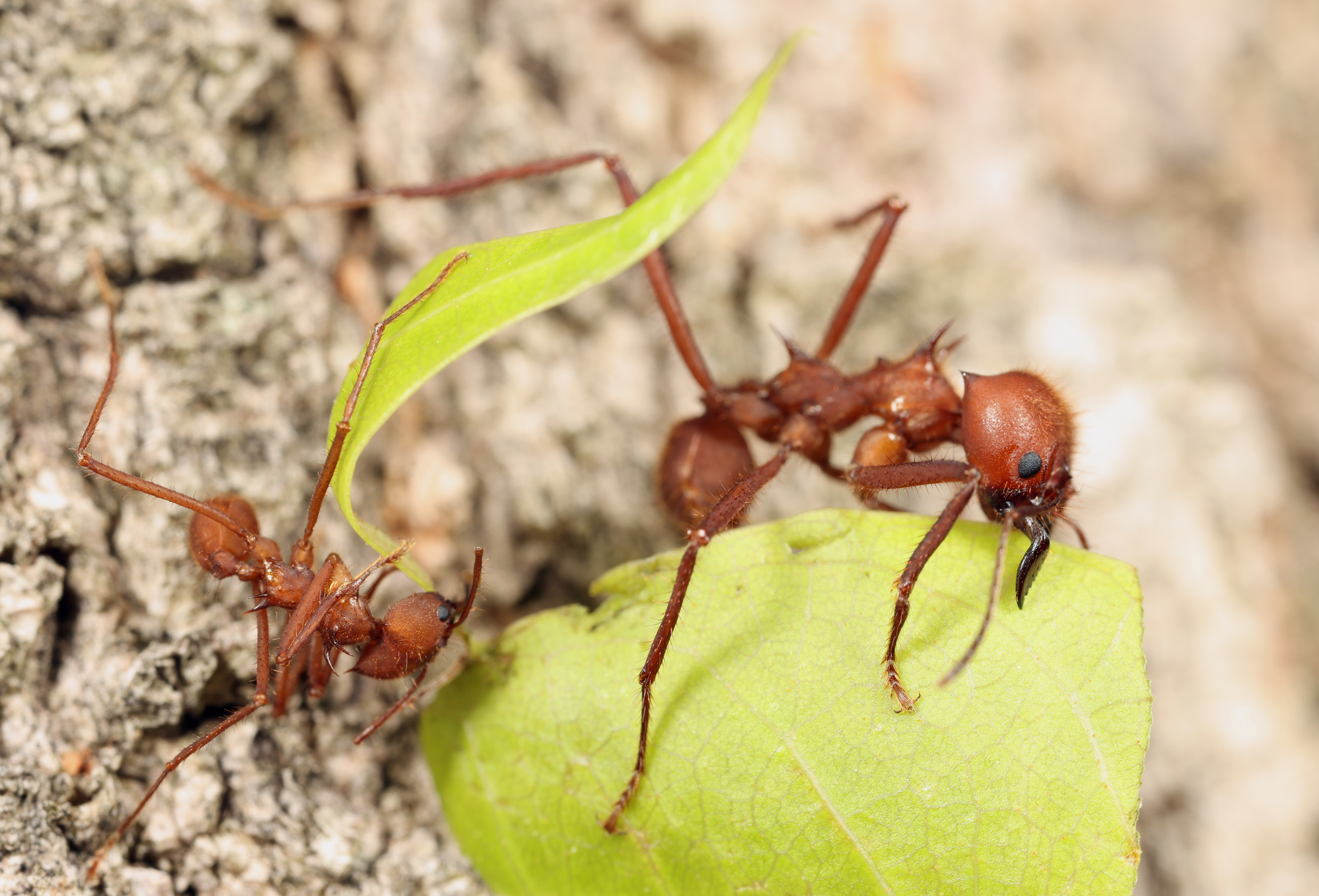
A leaf-cutter ant from the genus Atta—as evidenced by the sharp spines growing from its thorax. This may be Atta mexicana:
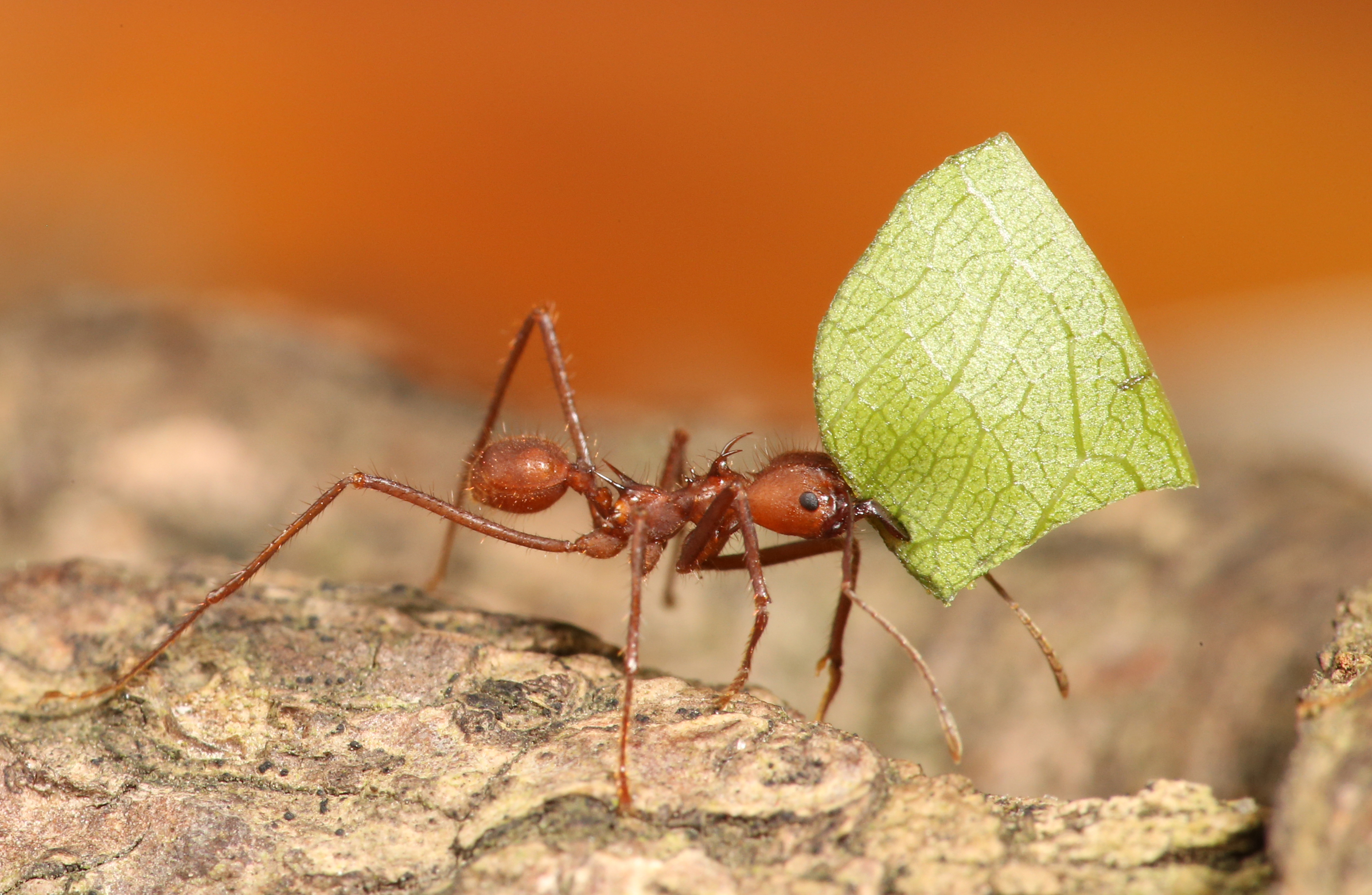
They were busy stripping bare a nearby ficus tree, which from my observations is one of their preferred foods, with supple leaves and twigs that are easy to cut:

More precisely, ficus is not the ants’ food, but raw material for their underground gardens, where they farm and tend to a fungus growing on plant matter, then eat the special tissue produced by the fungus. The fungus (Leucoagaricus gongylophorus) has lost the ability to thrive on its own and depends entirely on the ants for survival. In fact, a leaf-cutter ant’s nest is a consortium of at least three symbiotic organisms—ants, fungus, and bacteria growing on the ants’ exoskeleton, which secrete antifungal compounds to protect the garden from parasitic infections:
These ants are vegetarians (and often dreaded agricultural pests), but occasionally they may collect other arthropods, like this unfortunate caterpillar, which is being carried to an underground nest to be used as fertilized for the fungus:
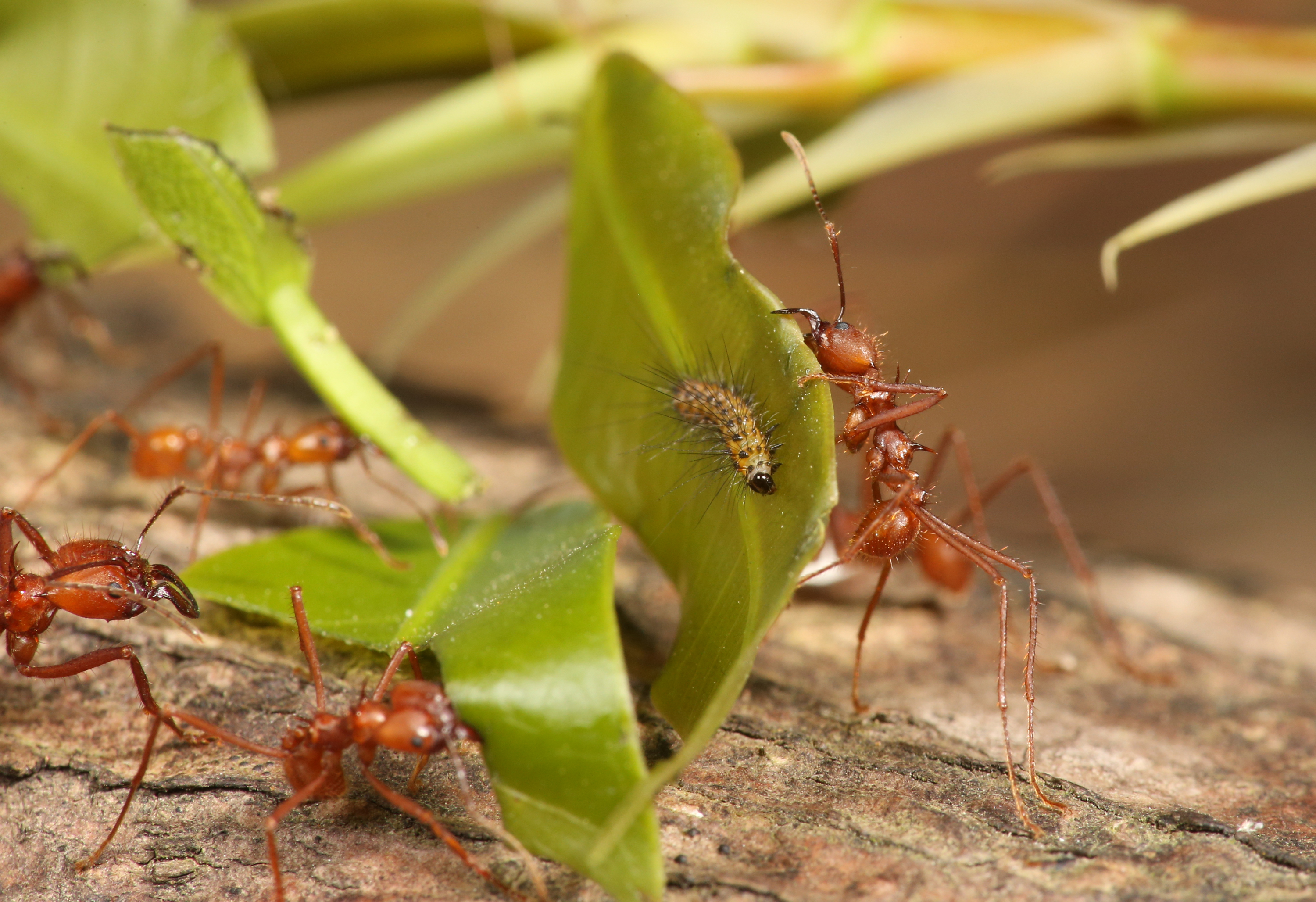
I first became interested in the small creatures that live unnoticed under our feet after reading, decades ago, a popular science book by Bert Hölldobler and Edward O. Wilson, “Journey to the Ants,” which I highly recommend. The same team also wrote “The Leafcutter Ants: Civilization by Instinct,” which is still on my reading list. Perhaps that book contains the clue to this picture – how two or more ants with such tiny brains can organize their work so they can carry items to their nest together:
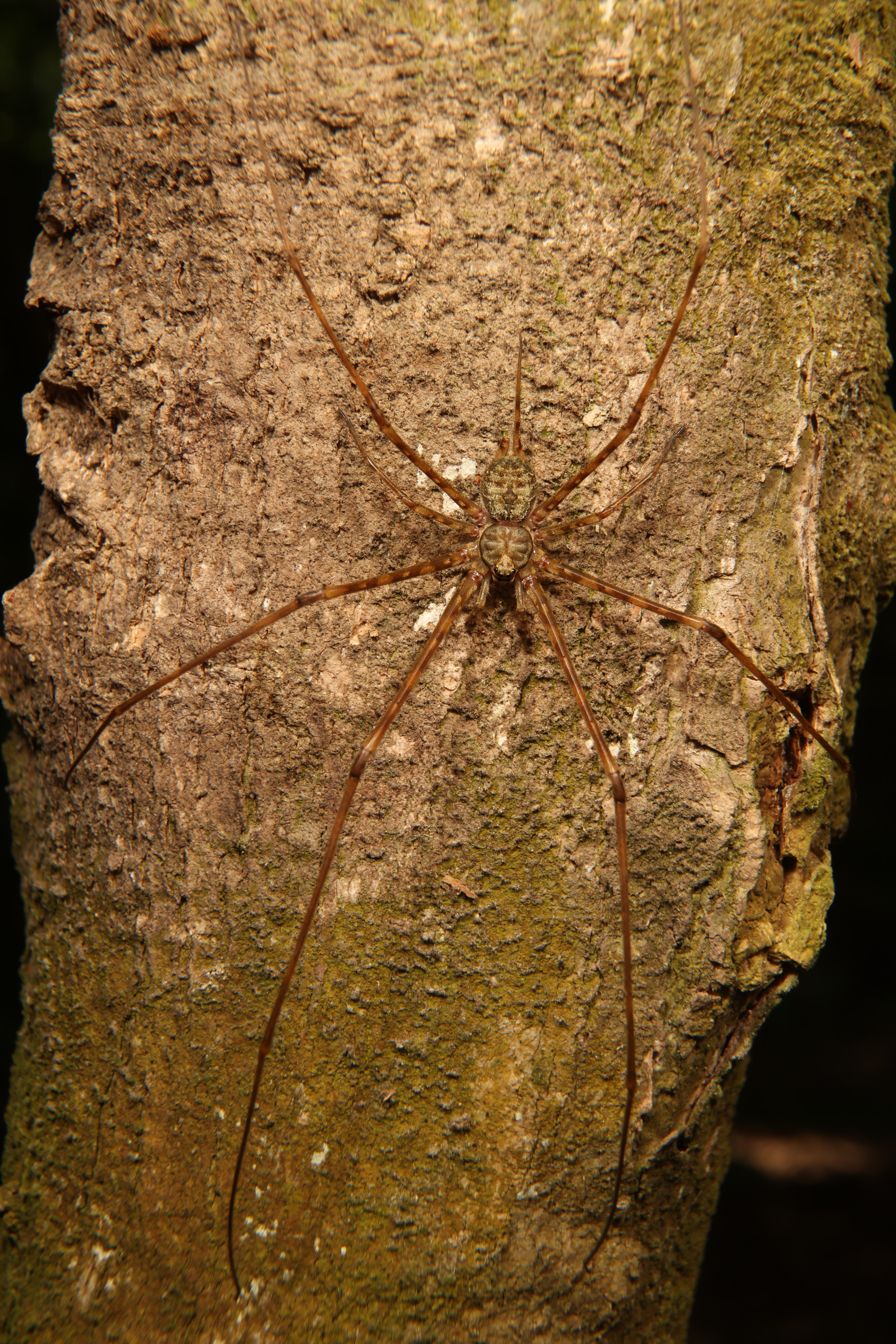
Leaving the ants alone, I went deeper into a subtropical grove, where by accident I spotted a supremely camouflaged tree trunk spider (family Hersiliidae), possibly from the genus Neotama. It was perfectly flush with the tree trunk; in fact, after looking away from it for a moment, I had trouble spotting it again. Normally it would have two “tails,” actually elongated spinnerets, at the end of its abdomen, but one of them had broken off on this individual:
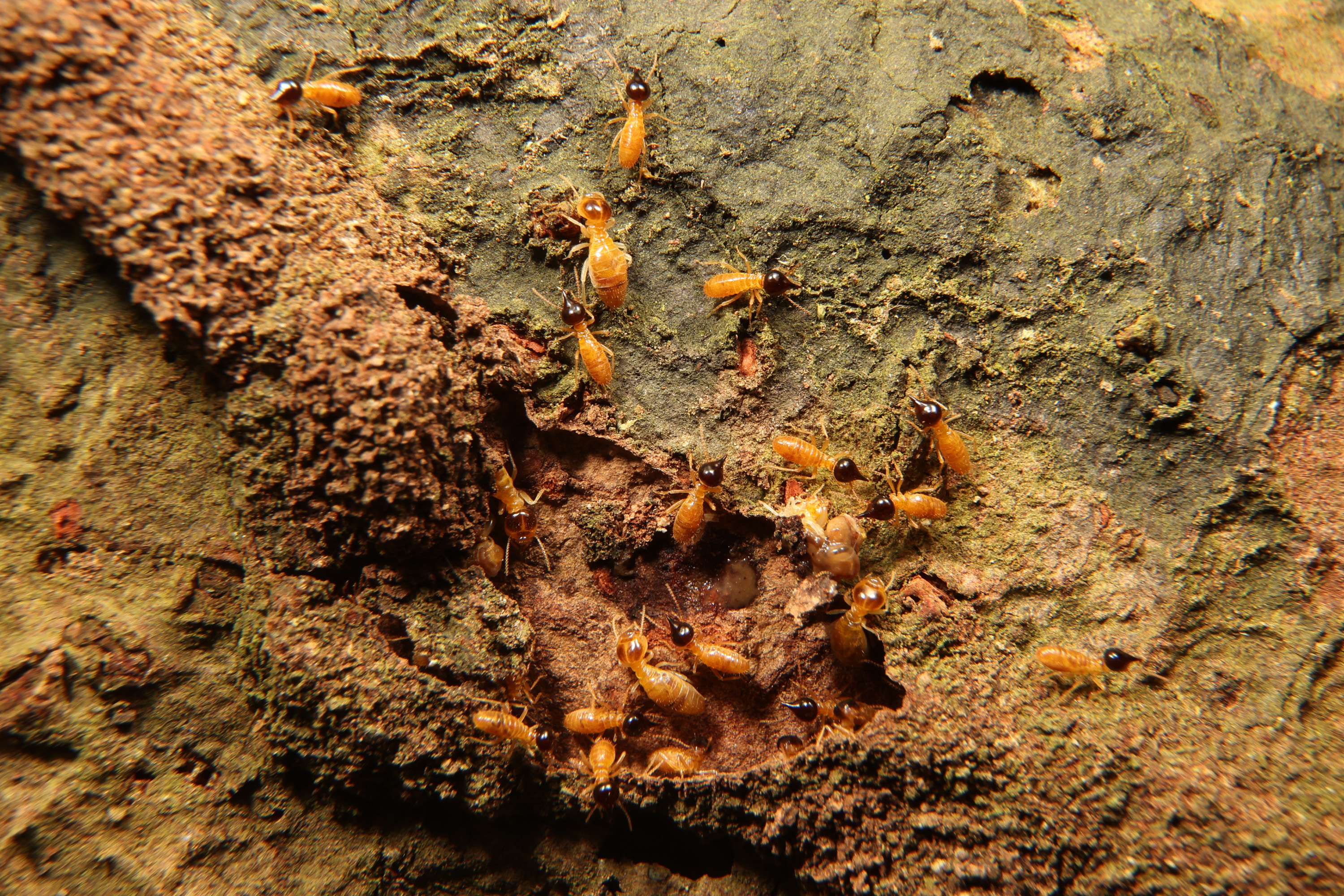
Trying to photograph the cryptic spider, I brushed against another tree nearby and something—I thought moss or dirt—broke off. But, seeing several insects milling about around that spot a moment later, it turned out to be an encased termite tunnel, a section of which I had just destroyed. By the look of these nasute soldiers, they are from the genus Nasutitermes (spinning the taxonomic roulette wheel, it may be Nasutitermes corniger). They are completely blind and the first to lay down their lives in defense of their nest, trying to squirt a sticky liquid from their nozzle-like heads to ensnare invaders:
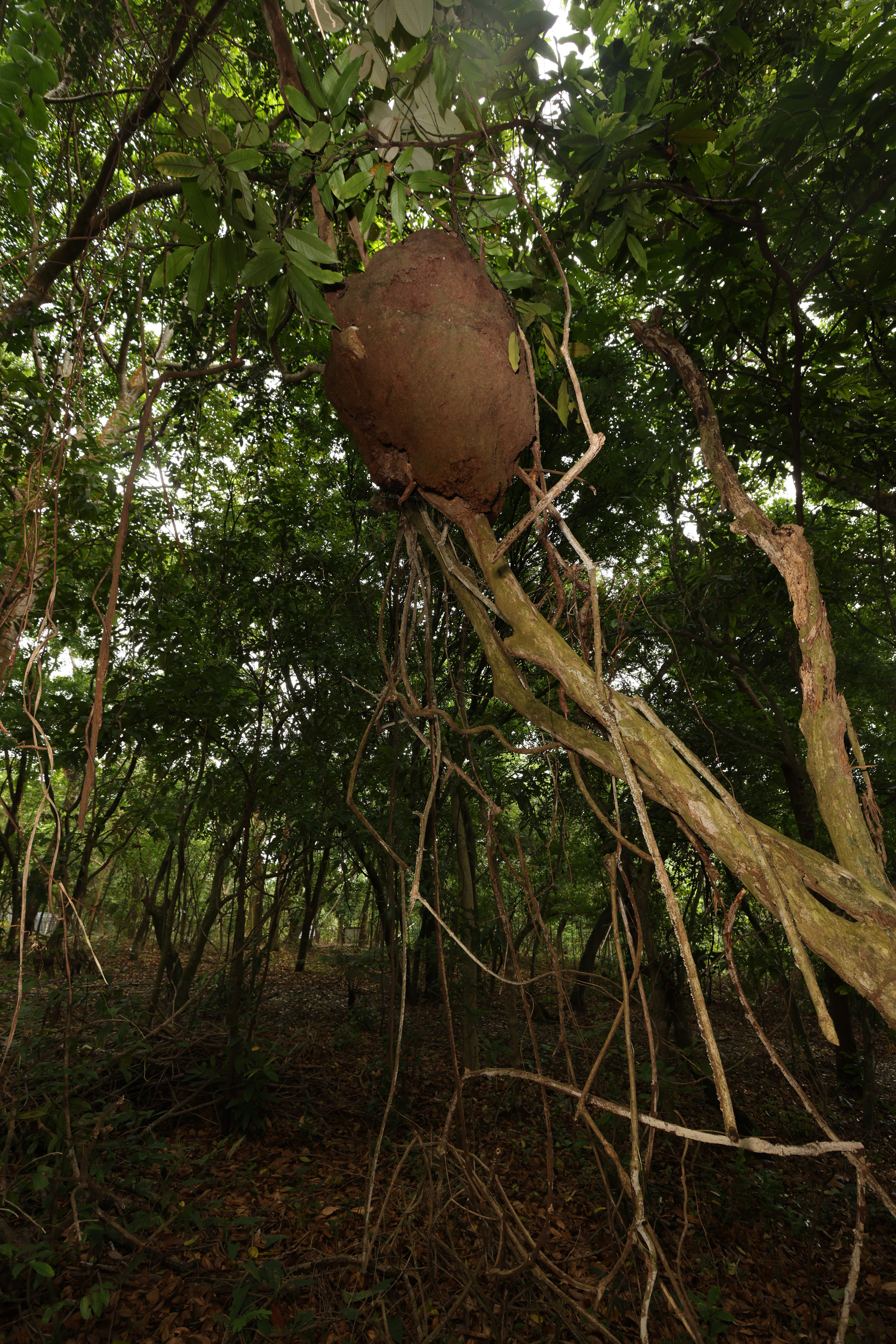
The termite tunnel led to a large bulbous nest. Some birds, like trogons and parakeets, use these structures for nesting—they breach the relatively fragile walls constructed from chewed plant material, saliva, and feces, then let the insects do the hard work of sealing the broken internal runways, thus acquiring a climate-controlled, safe nesting place:
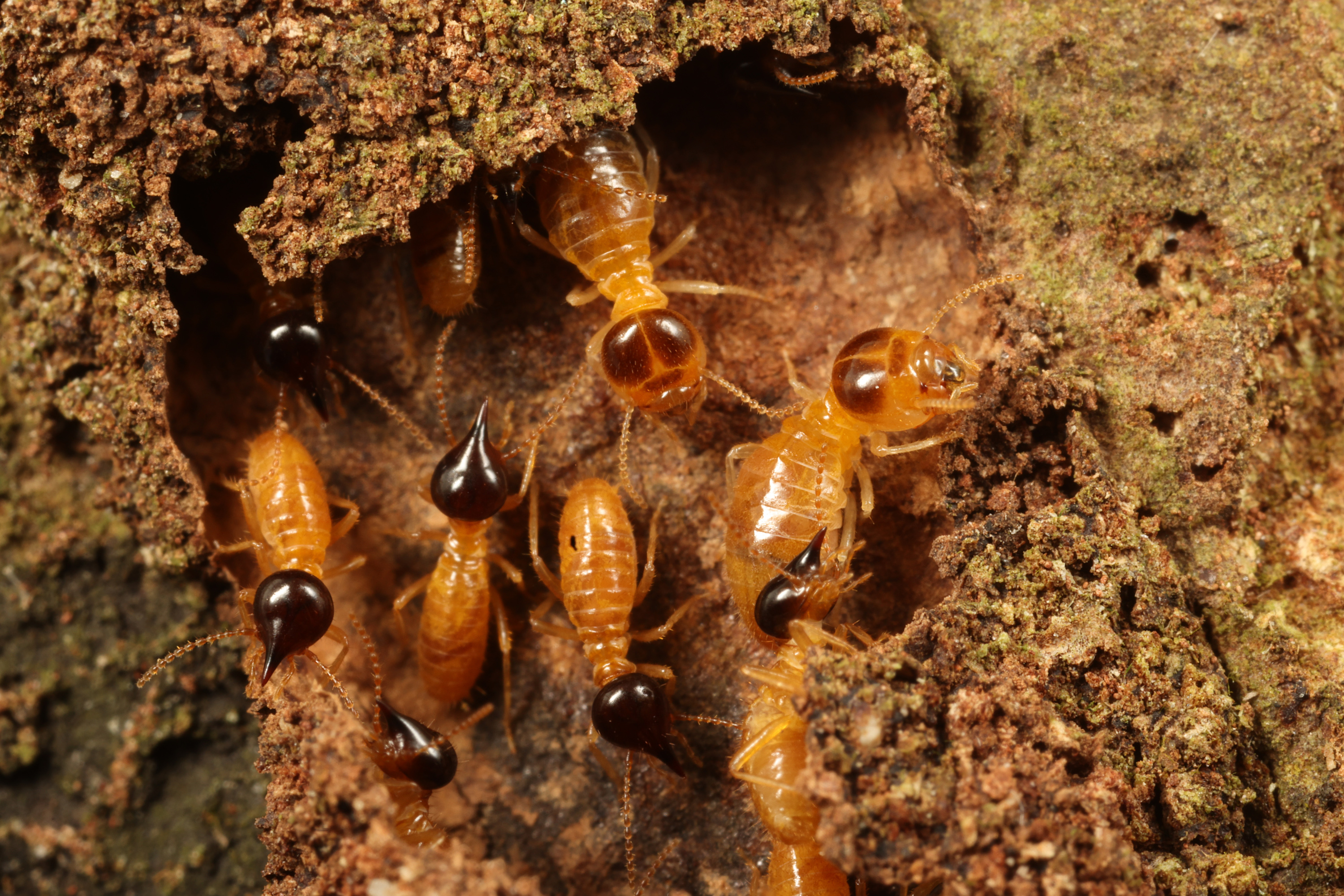
Looking closer, there were two termite castes that appeared at the breach in their fortified tunnel: nasute soldiers, the bodyguards of the colony, and workers, here visible with lighter-colored heads and functional mandibles, trying to mend the breach. They must do it quickly, or marauding ants will invade the nest. Usually, after a breach in the defenses is mended, some straggler soldiers are left outside to die:
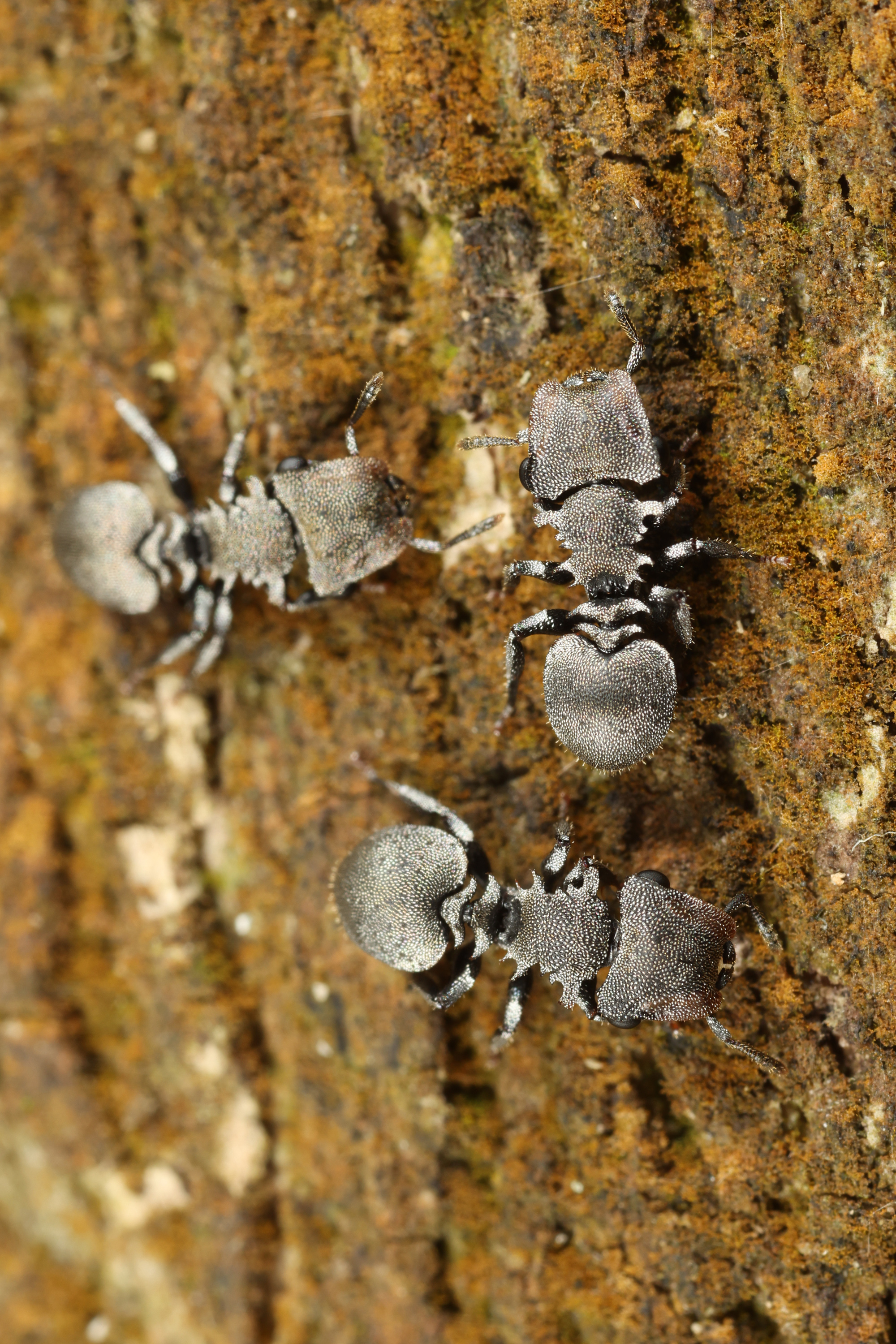
There was no shortage of ants in that neighborhood, for a few trees away I saw some turtle ant workers (genus Cephalotes, but I don’t know the species). They acquired the moniker “turtle” because of the soldiers’ flat, armored heads, which they use to block the entrances to their tree nests. They seemed to proceed with their business more deliberately, not in the feverish hurry expected of ants:
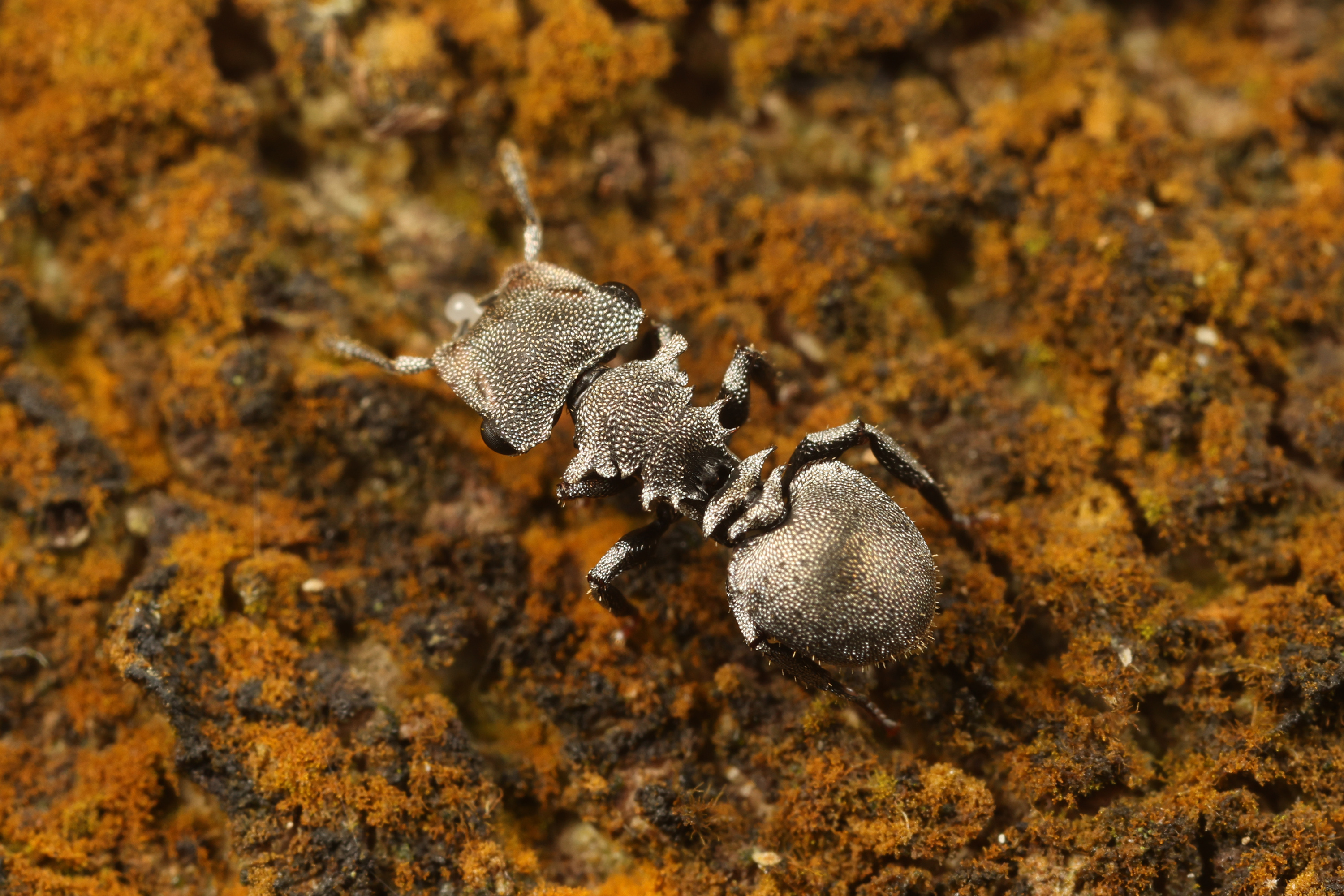
Some of them appeared to be carrying their larvae or pupae in their mandibles. These arboreal ants can reportedly control their fall to land back on the tree trunk and safely stick the landing:
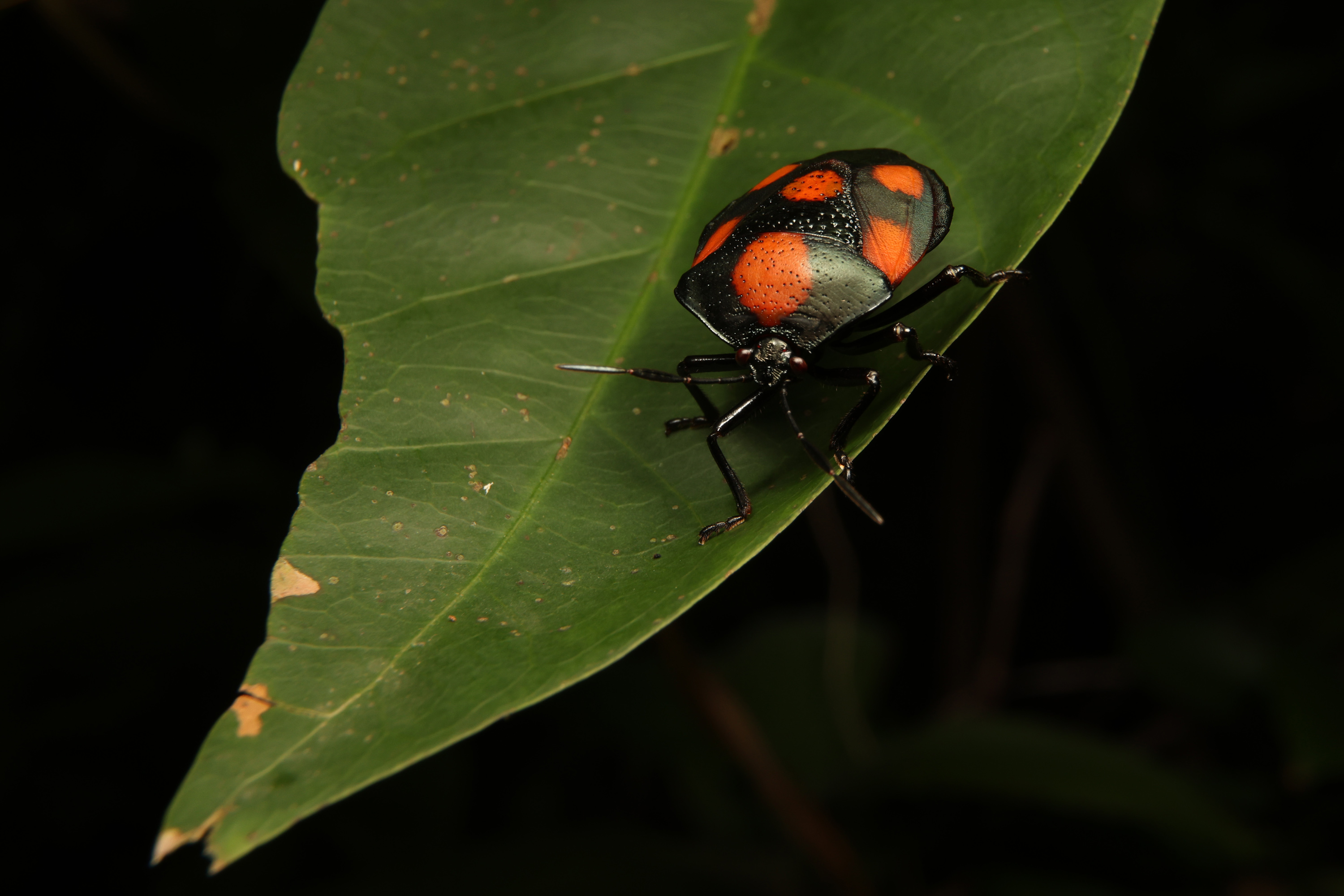
This is possibly the spotted red bug (Pachycoris klugii), but they are highly variable so I may be wrong:
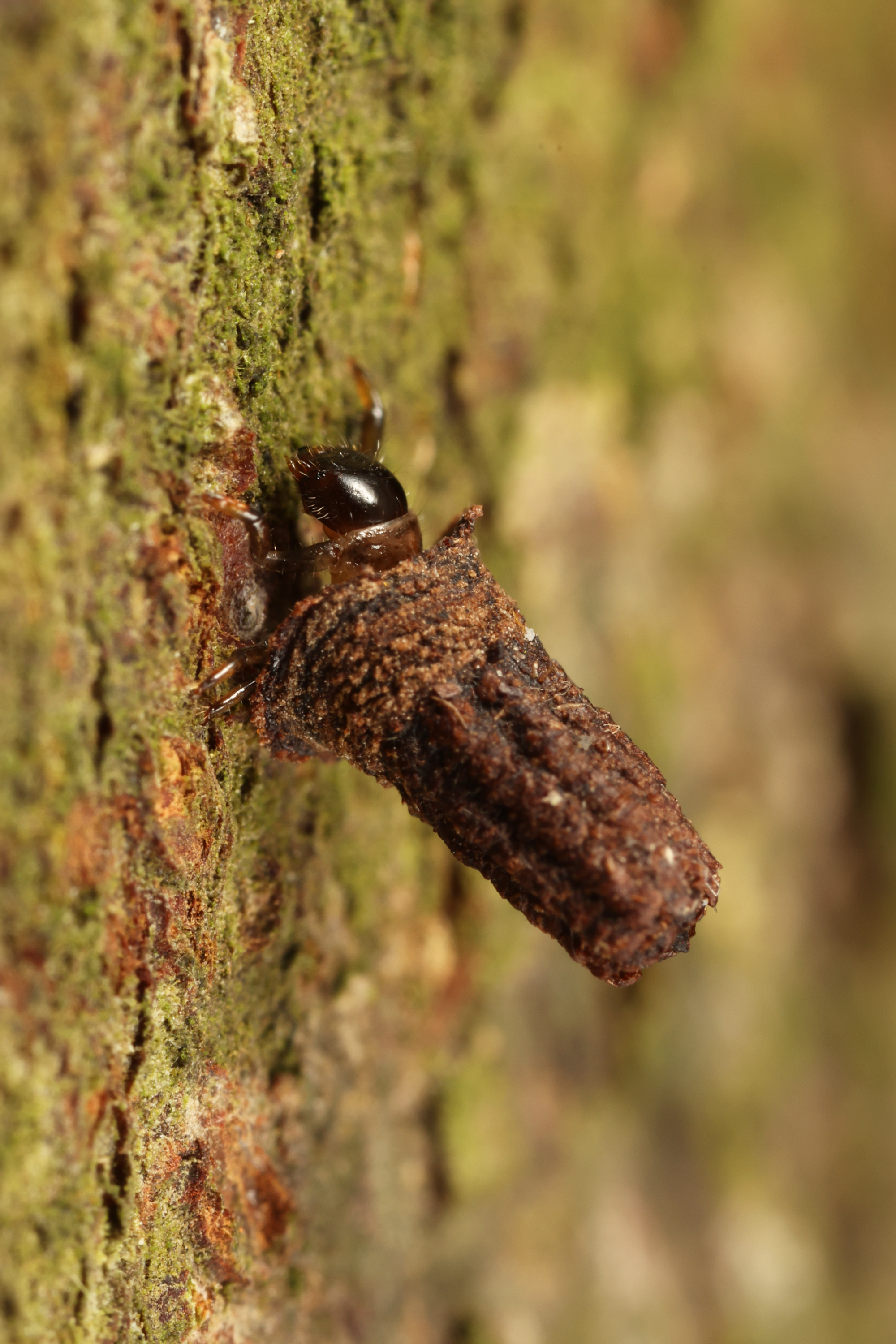
This tiny (about 5 mm) larva is probably a species from the bagworm family (Psychidae), which if everything goes well pupates into a small moth. It was crawling slowly, turning its armored head around, searching for anything palatable. The protective case is made from its own silk and plant debris. Adult males are winged, but females of many species stay inside their protective cases for life:
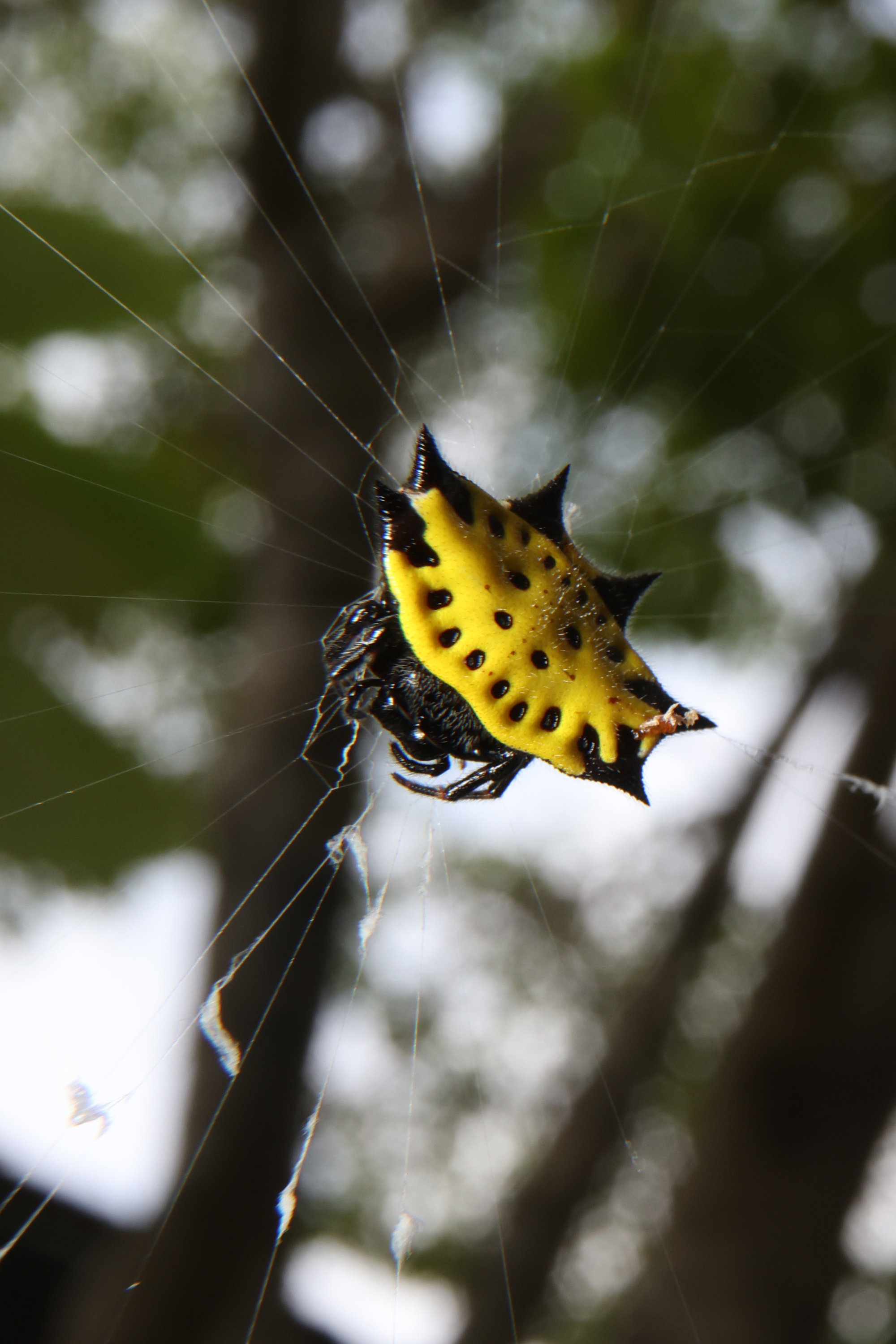
Another arthropod was a common spinybacked orbweaver (Gasteracantha cancriformis). I might have seen this species in New Jersey, but definitely in Texas. Unlike many squishy spiders, this one has a tough carapace and spines, making it a difficult morsel to chew or swallow whole. Its bright color may be an honest, warning signal to predators not of a foul taste or toxicity, but of the risk of choking or throat damage
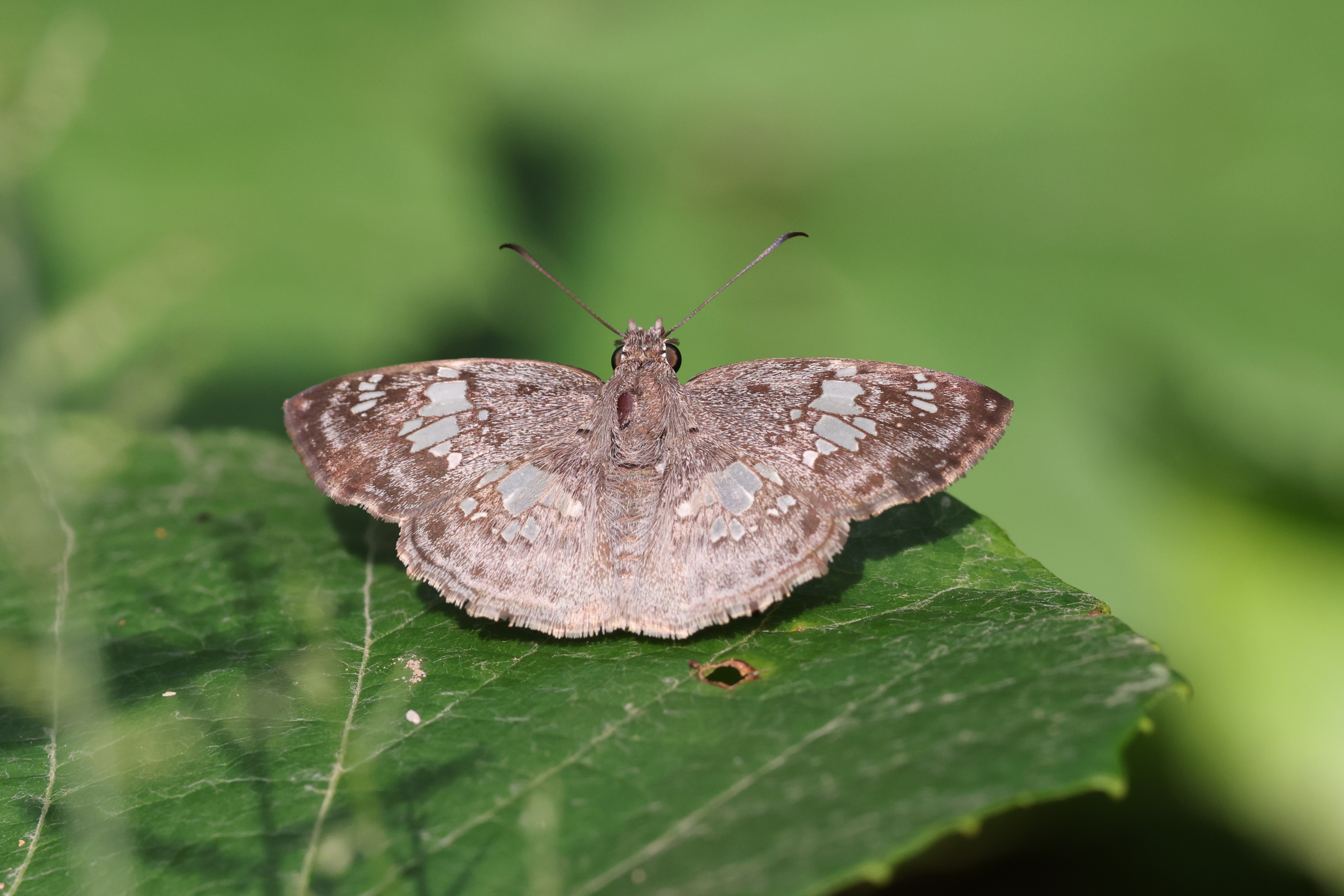
Leaving the preserve, I spotted this butterfly, which could be a glassy-winged skipper (Xenophanes tryxus). The whitish spots on its wings are actually semi-translucent: