
Across the morning sky, all the birds are leaving. Ah, how can they know it’s time for them to go?
Yes, the birds of Botany Pond have left, and by that I mean Miss Duck’s brood of four ducklings have taken wing and flew away to who knows where. The good news is that they all fledged, even though the “good” mother had abandoned the brood over a week beforehand,—when the young weren’t yet flying. The ducklings were zooming and even taking off a bit, so as long as I could keep them fed and safe, I knew they’d be okay. They clearly missed their mom, and weren’t eating as much, but they stuck together and, around September 14, three of the four were gone.
That left one duckling, whom I named Rupert. I don’t know if his wings weren’t yet fully developed, or he hadn’t learned to fly, but he stuck around looking forlorn and disconsolate, sitting on the bank of the channel. Here he is (the greenish hue at the base of his bill tells us he’s a male):
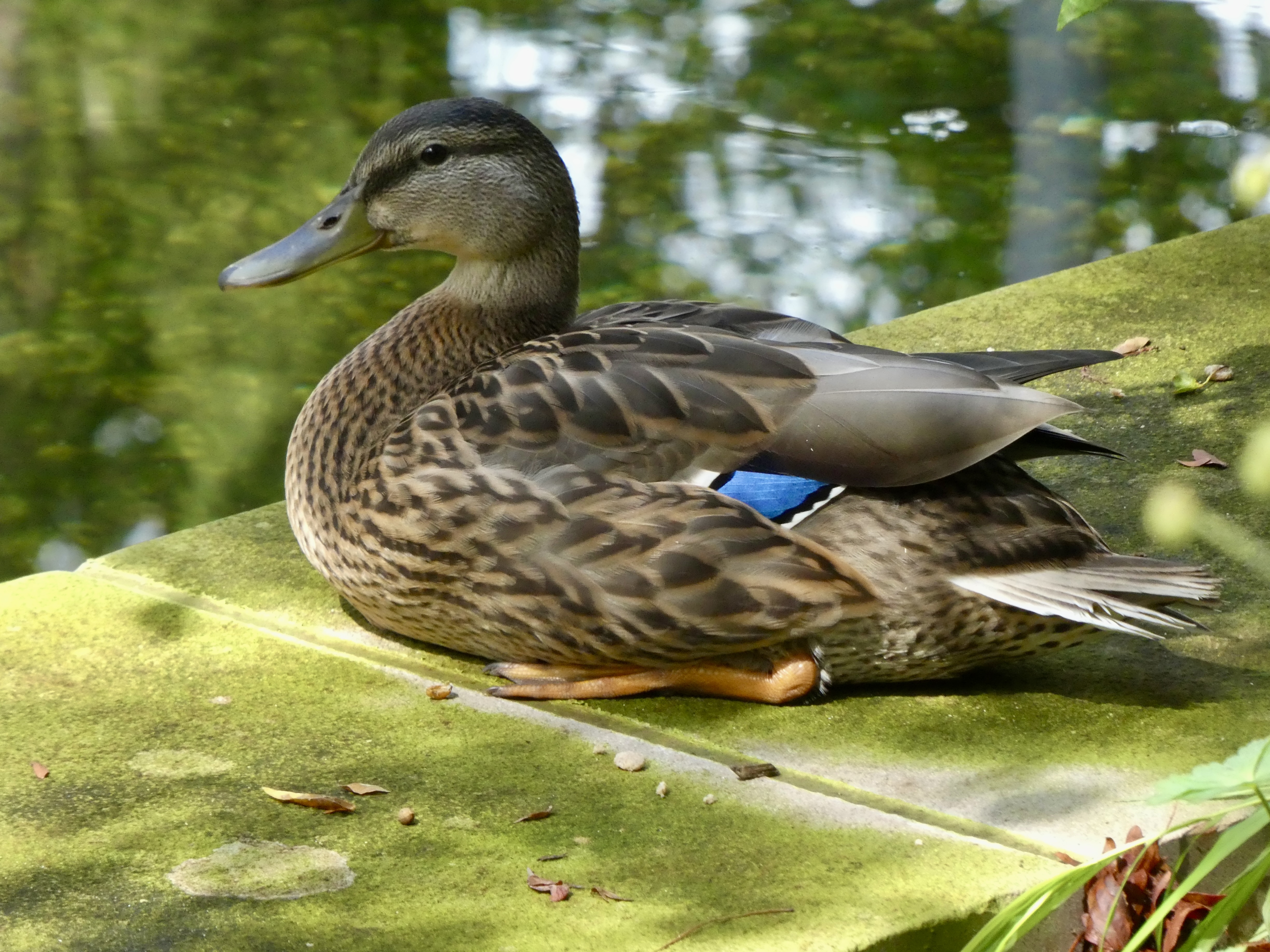
A sad duckling. He wouldn’t eat nor approach me, but mostly slept and rested on the bank of the channel.
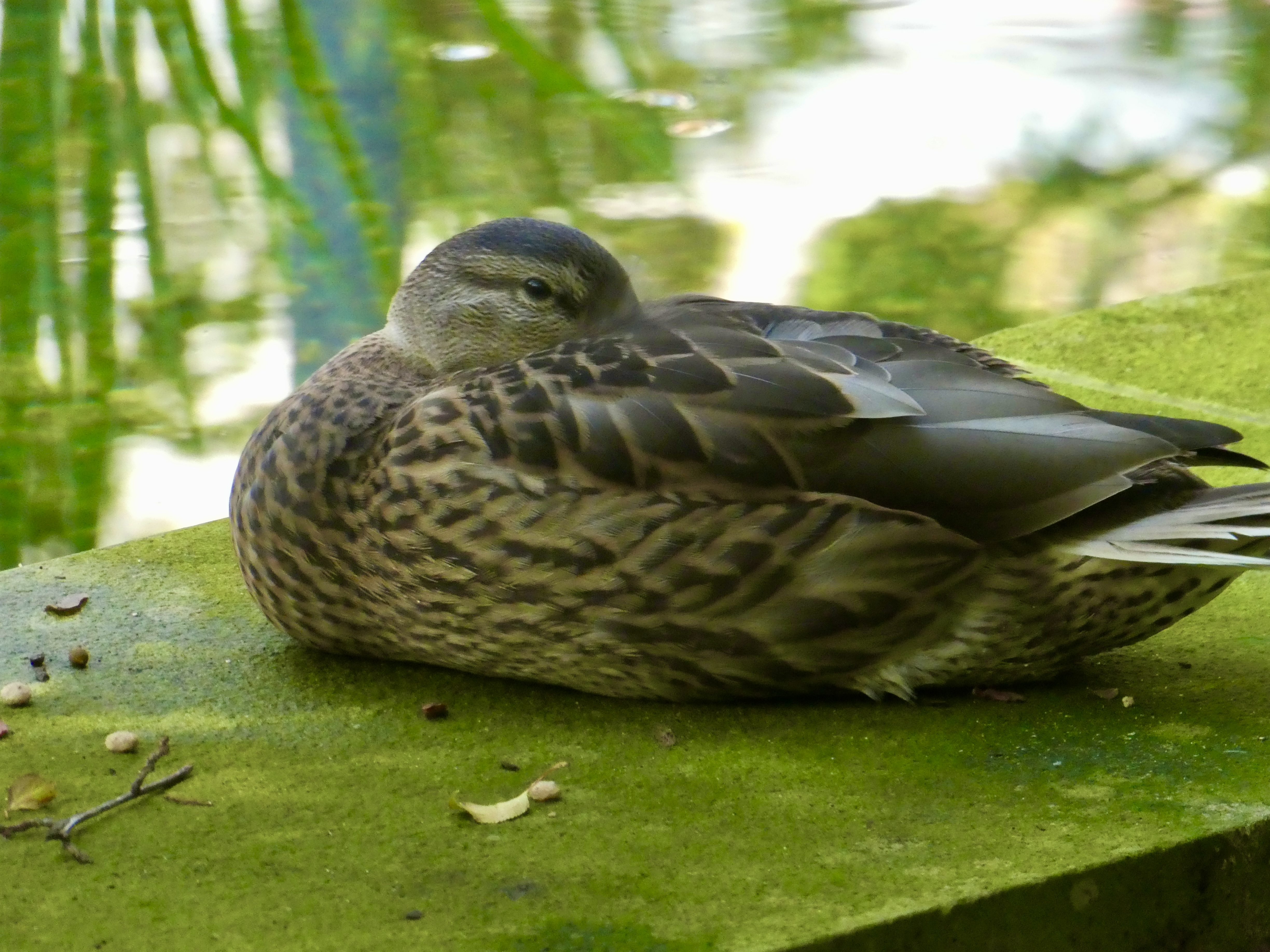
But around September 19, Rupert was gone. Hooray!
Of course I don’t know where they are, but I hope they found some other ducks who will migrate south with them. As for the wanton Miss Duck, if she ever returns she’ll get a stern lecture about staying with her babies until they fledge.
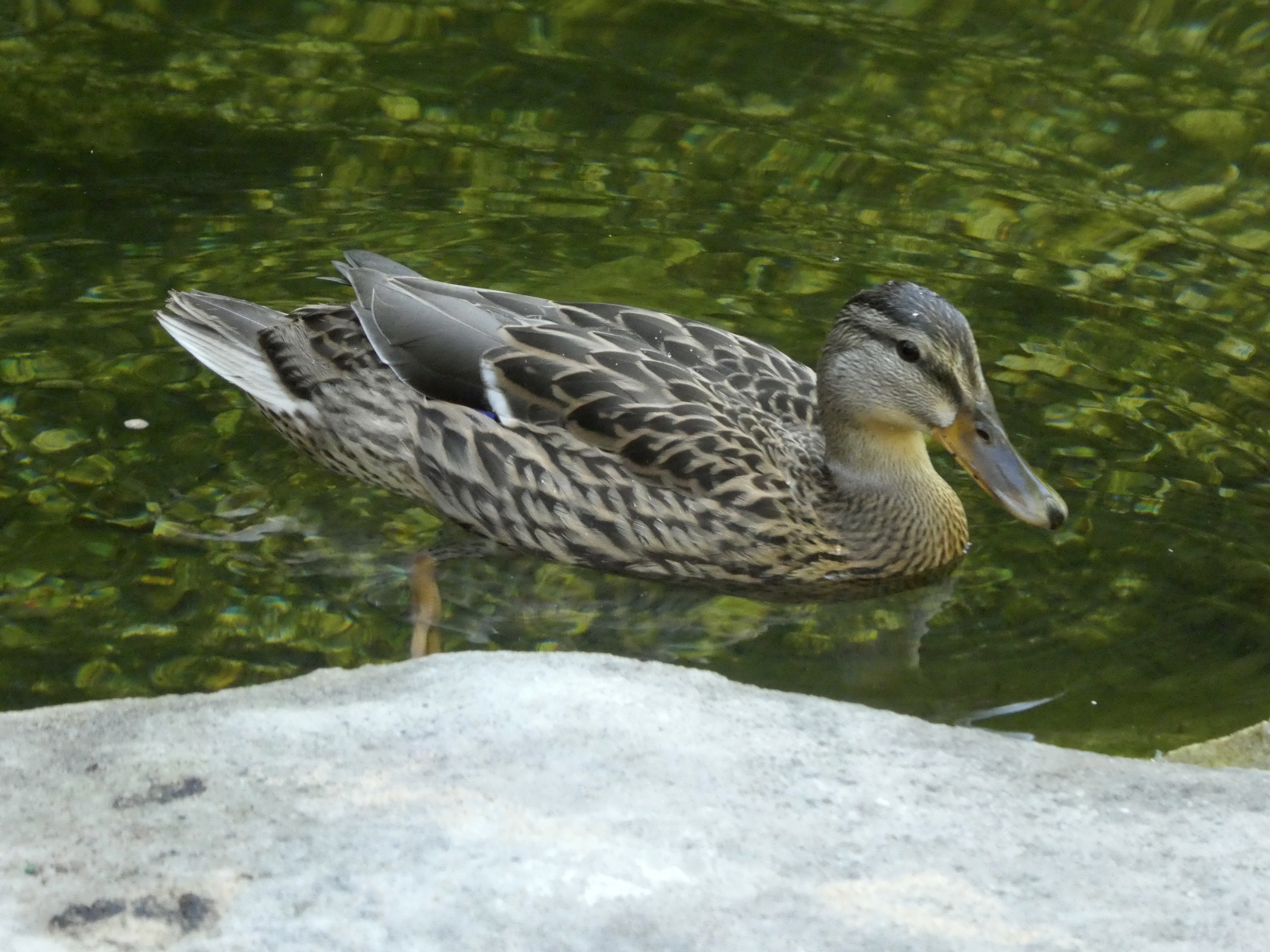
Here she is, with her long periscope neck and gray coloration. If Miss Duck returns, I will know her for sure (I also have close-up photos of her bill).

The brood a few days before they started leaving. I call this iPhone photo “Golden Slumbers” after the Beatles song:
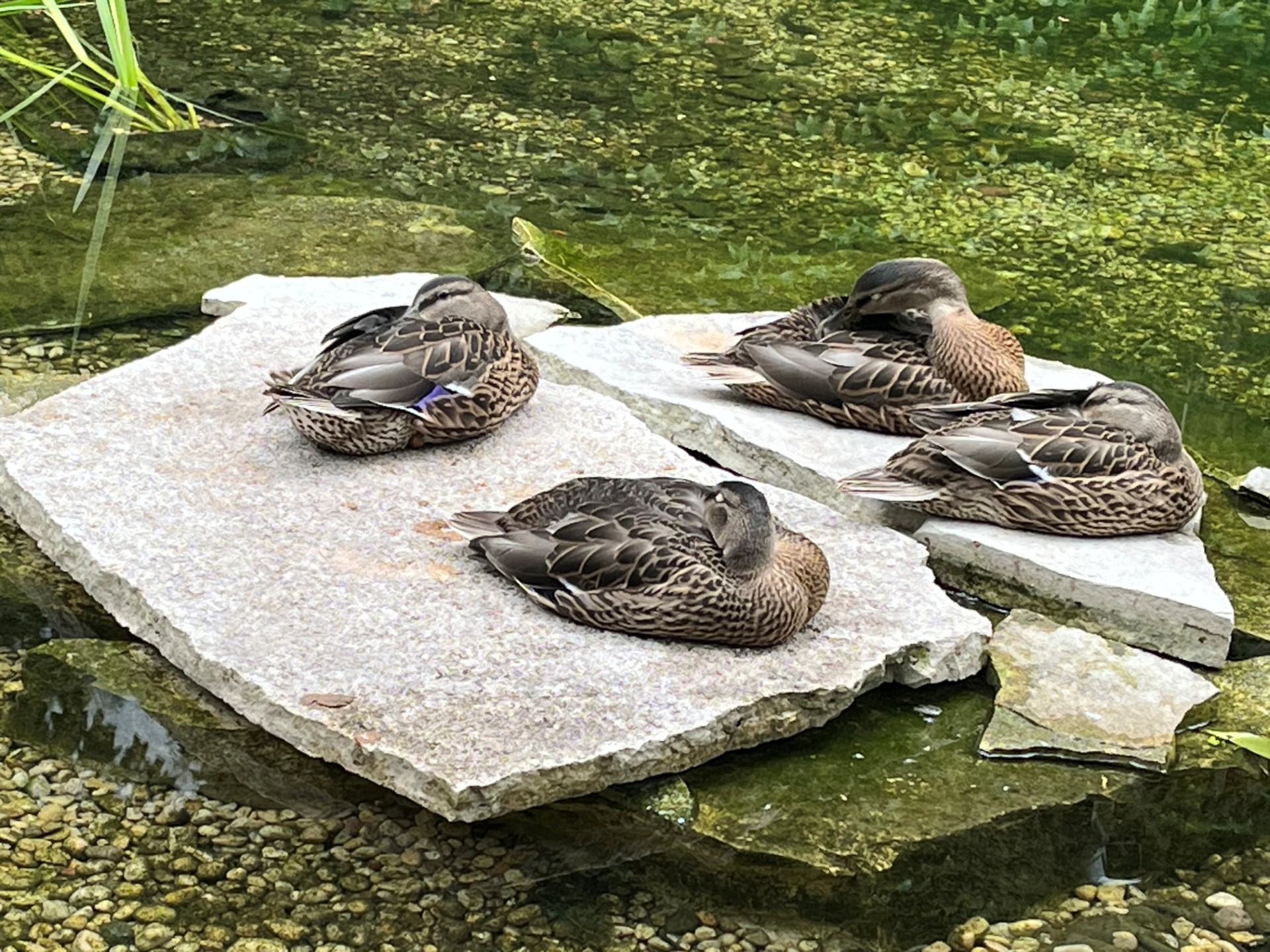
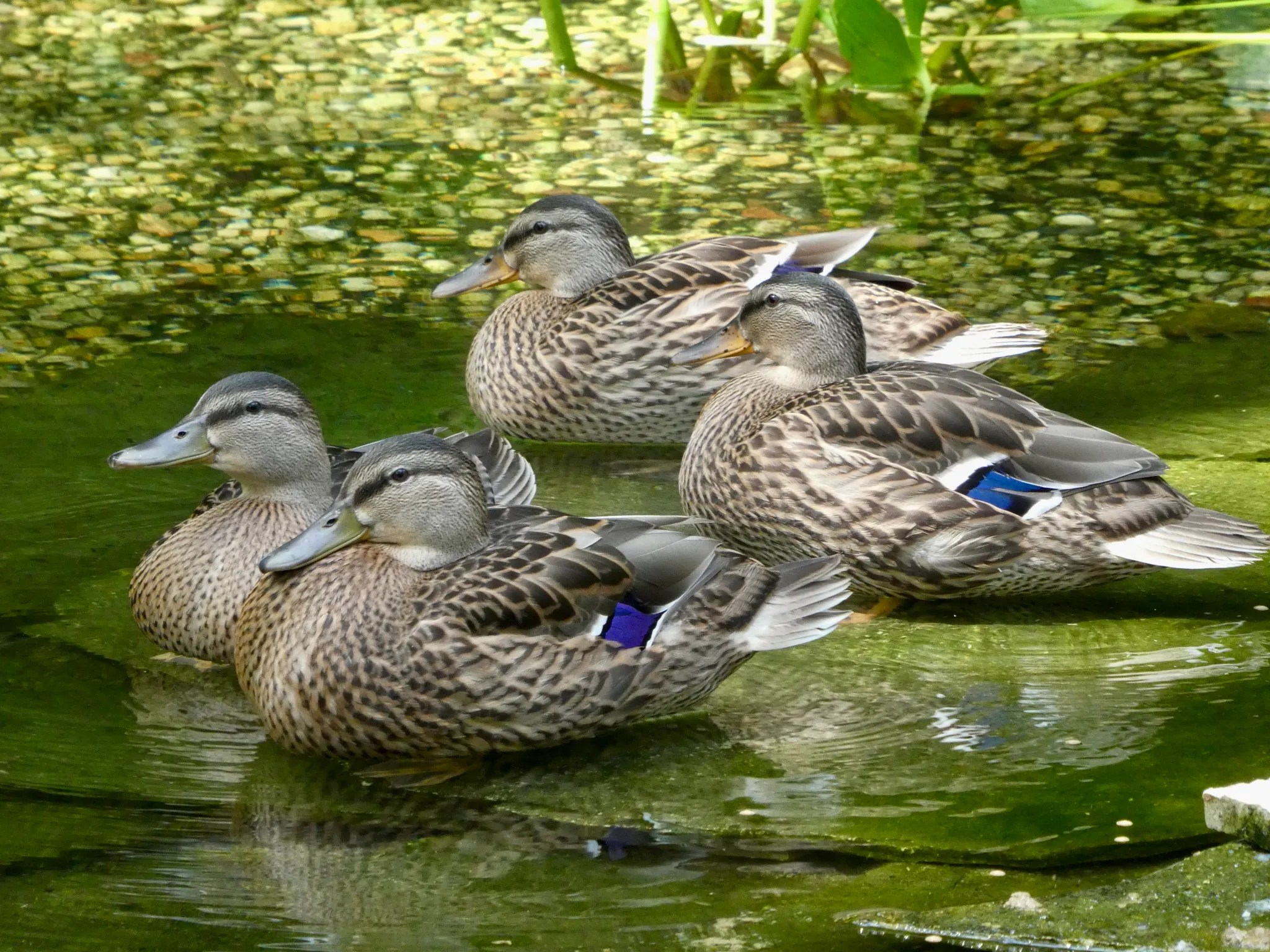
I call these “ducklings,” but they’re clearly adults: freshly minted mallards. Ba
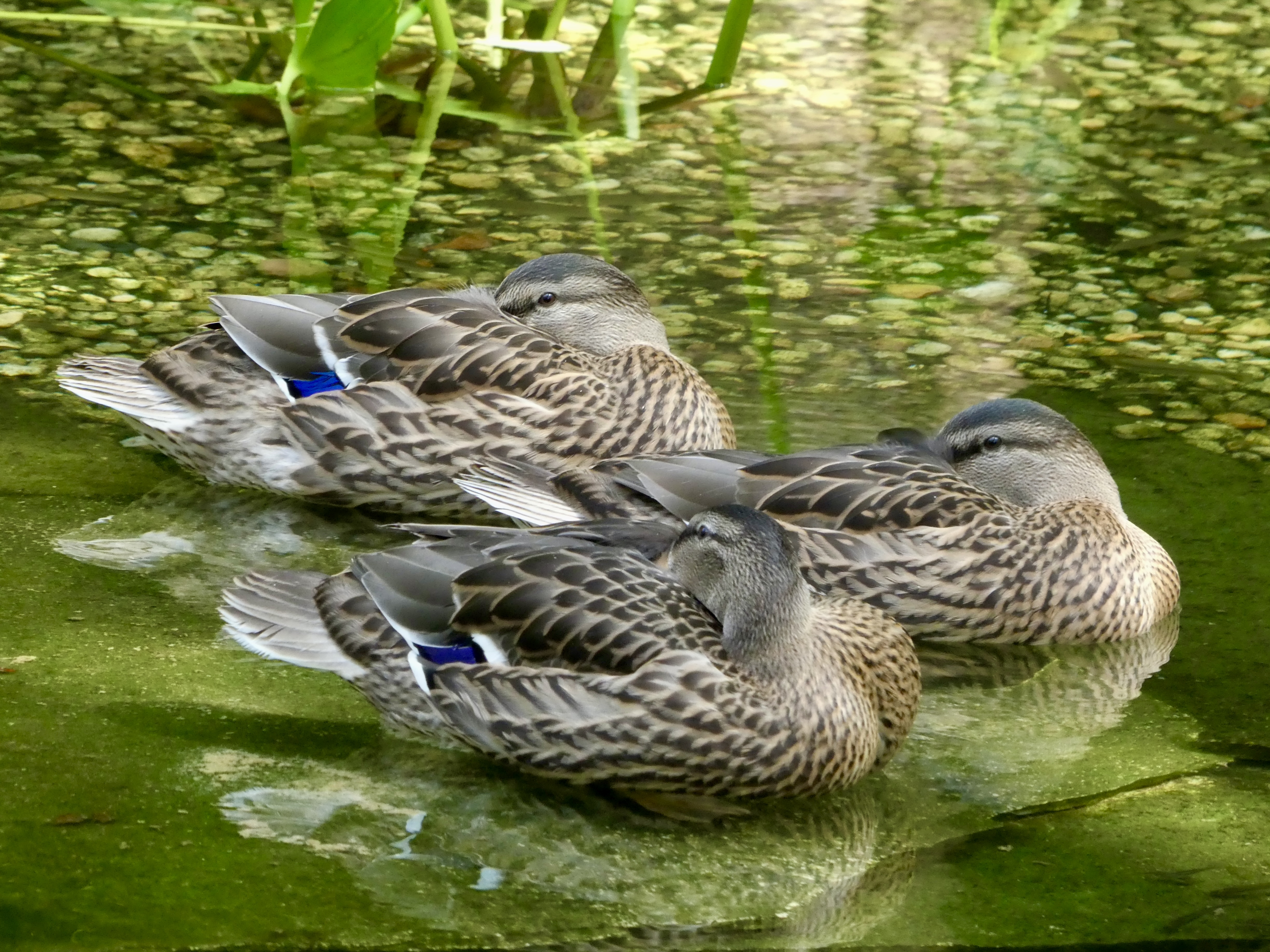
This one, with an orange hue at the base of her bill, is a female (a “hen”; the males are called “drakes”).
We had a bit of duck drama/trauma a few days before they left. When I came to the pond, one of the females (below) was quacking continuously, and nobody would eat. I didn’t know what was going on. I asked someone on a nearby bench how long the duck had been quacking, and he told me that a Great Blue Heron (Ardea herodias) had been standing in the channel a while back.
That was it! The young female (only female mallards make the classic “quack”) was freaked out by the heron, as these birds can prey on young ducklings. While herons can’t take a duck of this size, these ducklings had clearly evolved to react to a potential predator of the young. When I took the video below the heron was gone, but while I was watchingfor an hour it flew over the pond twice, and each time the female quacked loudly, and all the other ducks froze in place. They stayed freaked out for several hours after I drove the heron away.
I learned later that the different calls have different meanings, and that this is a specific alarm call for predators (the differences among calls are small, and inaudible to most of us). The ducks know how to distinguish predators from harmless birds. When a heron or Cooper’s hawk flies overhead, even high up, they quack and freeze. If a crow, an airplane, or a goose flies over, there is no reaction. The marvels of natural selection!
Note that her wings are raised, too, something that the other ducklings did. I have no idea what that means.
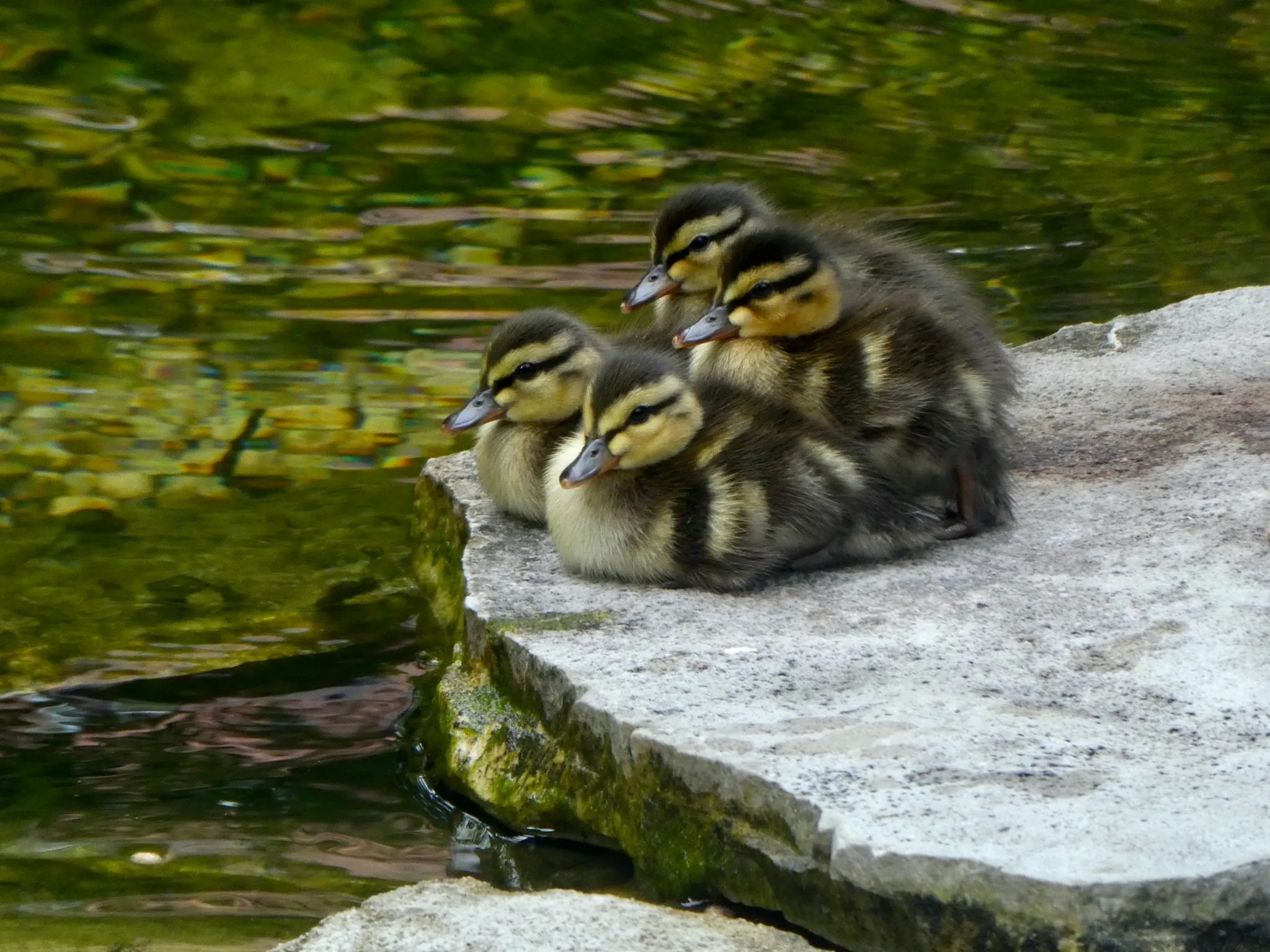
How fast they grew! I’ve reversed the second picture below so you can see the difference between the brood at 1 day old and a little less than eight weeks old.
Note the bill color. The two ducks in front with the grayish-green bill bases are drakes, the two behind, with orangish bills, are hens. (The drakes develop their color and patterns, including the green heads, while overwintering.) We had a 50:50 split this year.
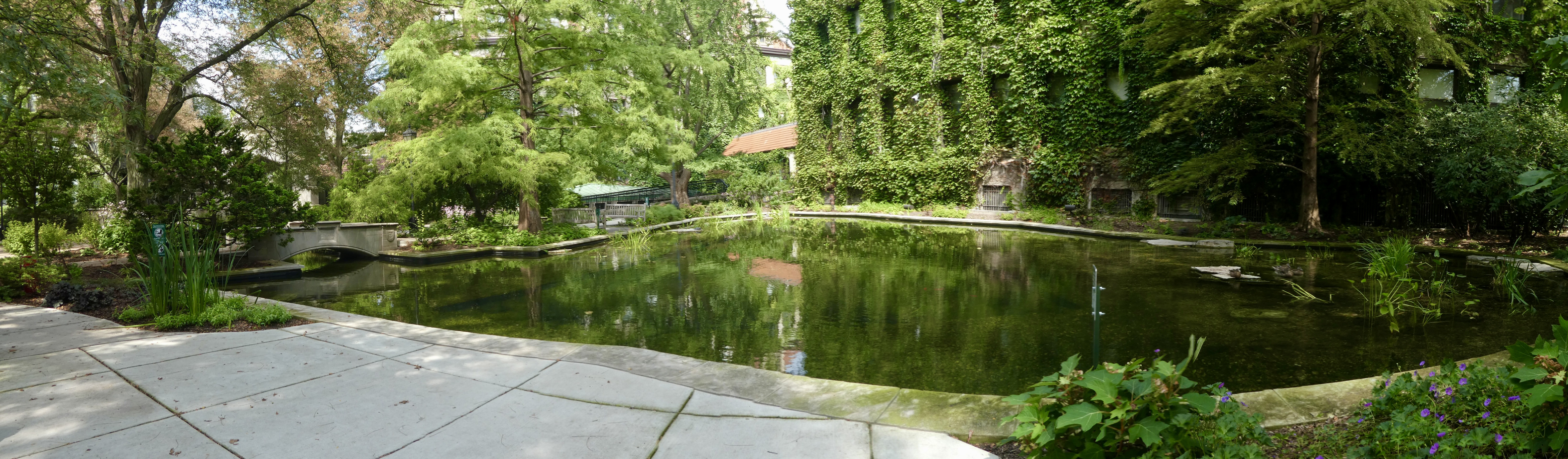
And a panorama of our summer home, Botany Pond:
We musn’t forget the other critters. We still have six turtles, since we lost one but two were added. Here’s one clambering painfully onto the rocks to get some sun. They are strong! (This took place during the heron-induced QuackFest, so you can hear some quacking in the background.)
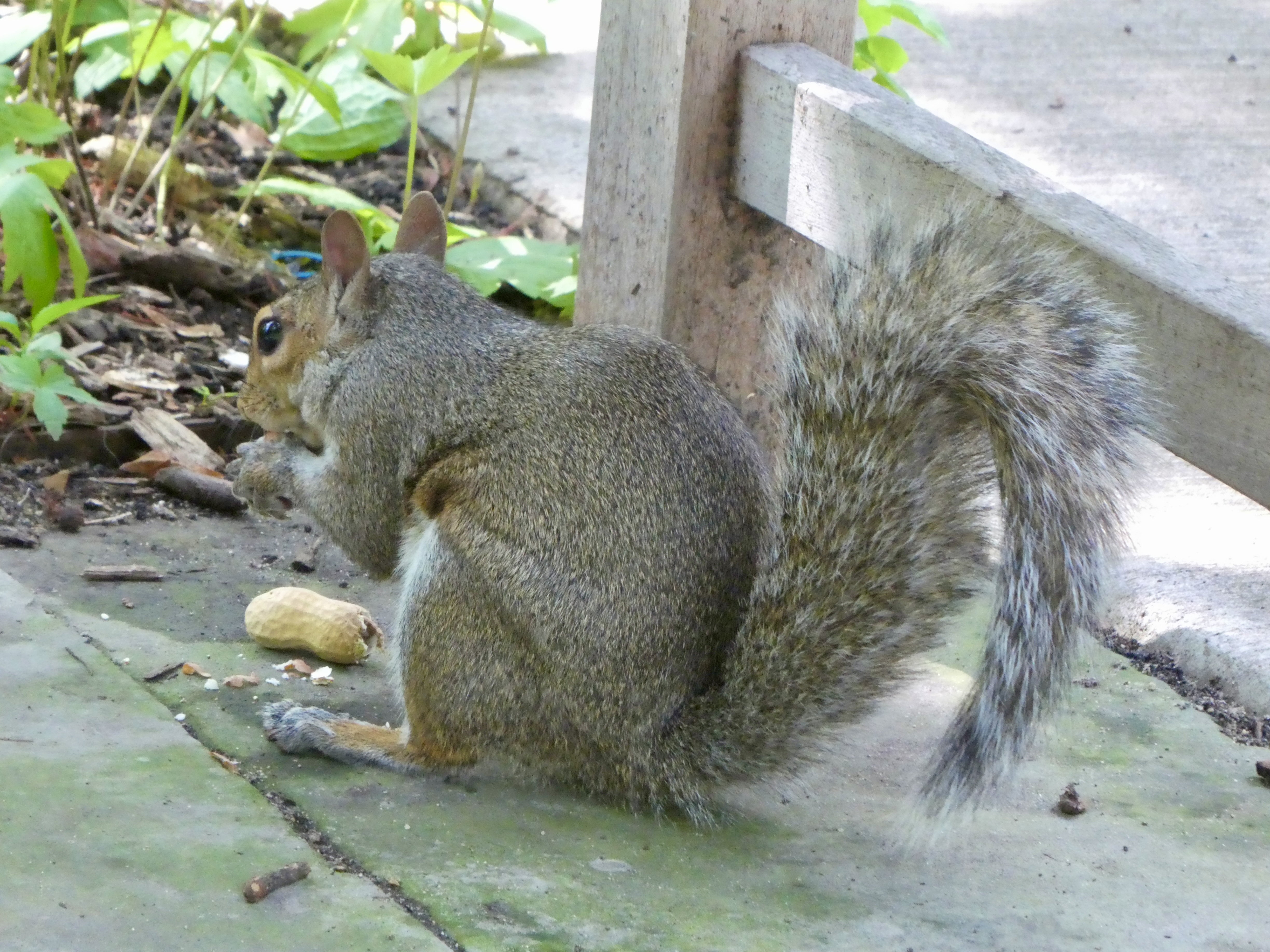
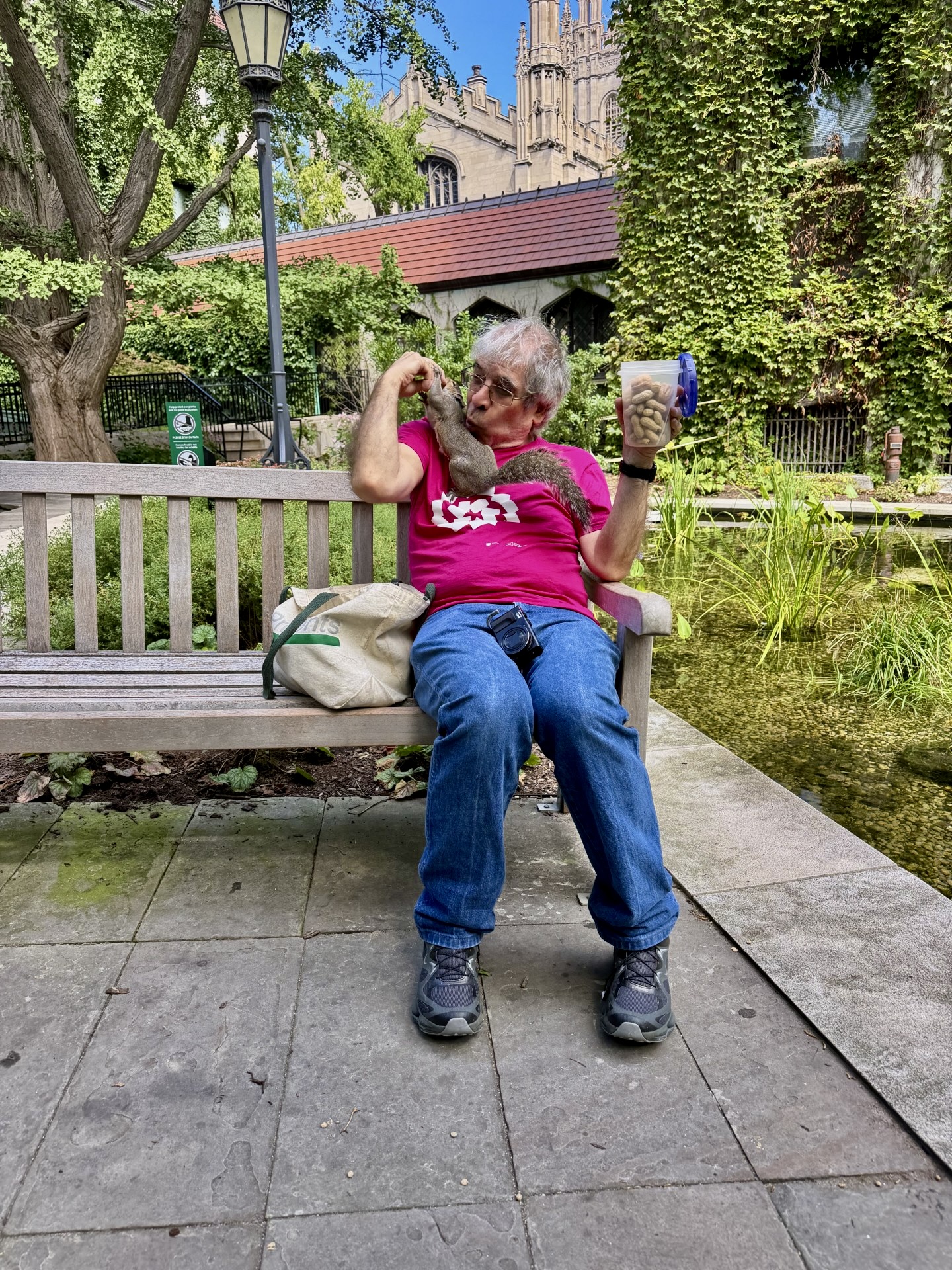
And my squirrels, who grew quite tame. They clambered onto me to get nuts, and several even let me kiss them. They will be here this winter, as will the turtles, but we won’t see the latter as they’ll be dug into the pond bottom overwintering.
A smooch:
And so the latest Duck Year drew to a close. We had five broods, two of which wandered away after harassment by horny drakes, one of which we captured with a fence below their nest, but had to take to rehab when we couldn’t capture the mother, and one of which got mired in the algae, with three ducklings drowning, while I saved five and sent them to rehab. It was depressing, but then Miss Duck had a late brood in July and allowed us to bring a brood up from hatching to fledging. (The drakes had left by then.)
All the birds are leaving—the Great Duck Migration south is beginning in the Midwest—but perhaps one of them will return. I won’t recognize them unless Miss Duck is the one who comes back. And she faces a talking-to!
When do the males develop that curly tail feather?
Looking at this story, I think you have my dream job.
Thanks for the update. I have been wondering about the ducklings.
You are a wonderful duck dad and gave these four a great start in life. Looking forward to next spring and your further adventures with the residents of Botany Pond.
I second that! Great job.
A splendid review –
Ooooo …
Ahhh …
Congratulations on your becoming an empty nester.
Parting is such sweet sorrow. They had to go off to start their new lives. It’s the way of the world and has been so for hundreds of millions of years. But as it has also been true for hundreds of millions of years, spring will come and the cycle will begin anew.
Great photo of PCC(E), I retweeted.
The ducks have gone now, boss. Time to get a dog?
hehehehe
D.A.
NYC
Look here, you.
I’m so glad they all made it. Now they’re off on their own. They spread their wings and took to the sky.
Hooray! Great happiness! Looking forward to the next brood. I hope that the news spreads fast in the duck world that the Botany Pond is the place to go if your are a duck.
I’m going off to learn about the meaning of different mallard quacks.
Those last two duck pictures are beautiful! Like paintings.
Why do they hold up their wings while alarmed? Heck if I know, but maybe it’s to keep the wings extra dry in case they need to launch into evasive flight in a hurry.
Despite the pain and the worry, it was a delight to see another year on Botany Pond. Appreciate the photos and the clips.
Poor Rupert.
As for the wing-spreading – maybe it’s a strategy to make themselves look larger, and thus less promising as prey.
Don’t be too hard on Miss Duck. She was a first time teen mother. The burdens of motherhood naturally conflicted with her youthful desire to sow her wild oats, and finally overcame her. But she’ll get that out of her system over the winter and return to Botany Pond next spring, older and wiser, and ready to be a model mother.
That’s my theory, anyway, and I’m sticking to it.
Yes, brilliant. That explains everything and leads nicely into our next duck season. Yay.
Glad to see this sweet & tender hearted post.
Congratulations, Duck Dad! And extra points for referencing the greatest female vocalist ever (IMHO).