
For this edition we include the Sun and Moon as wildlife, as Jan Malik reports on the solar eclipse of April, 2024. Jan’s captions are indented, and you can enlarge the photos by clicking on them. Oh, and Google “solar eclipse 2024” and see what you get!
The recent total solar eclipse in Europe reminded me of the Great North American Eclipse of April 8, 2024, which I had the opportunity to observe from the Adirondack Mountains of New York.
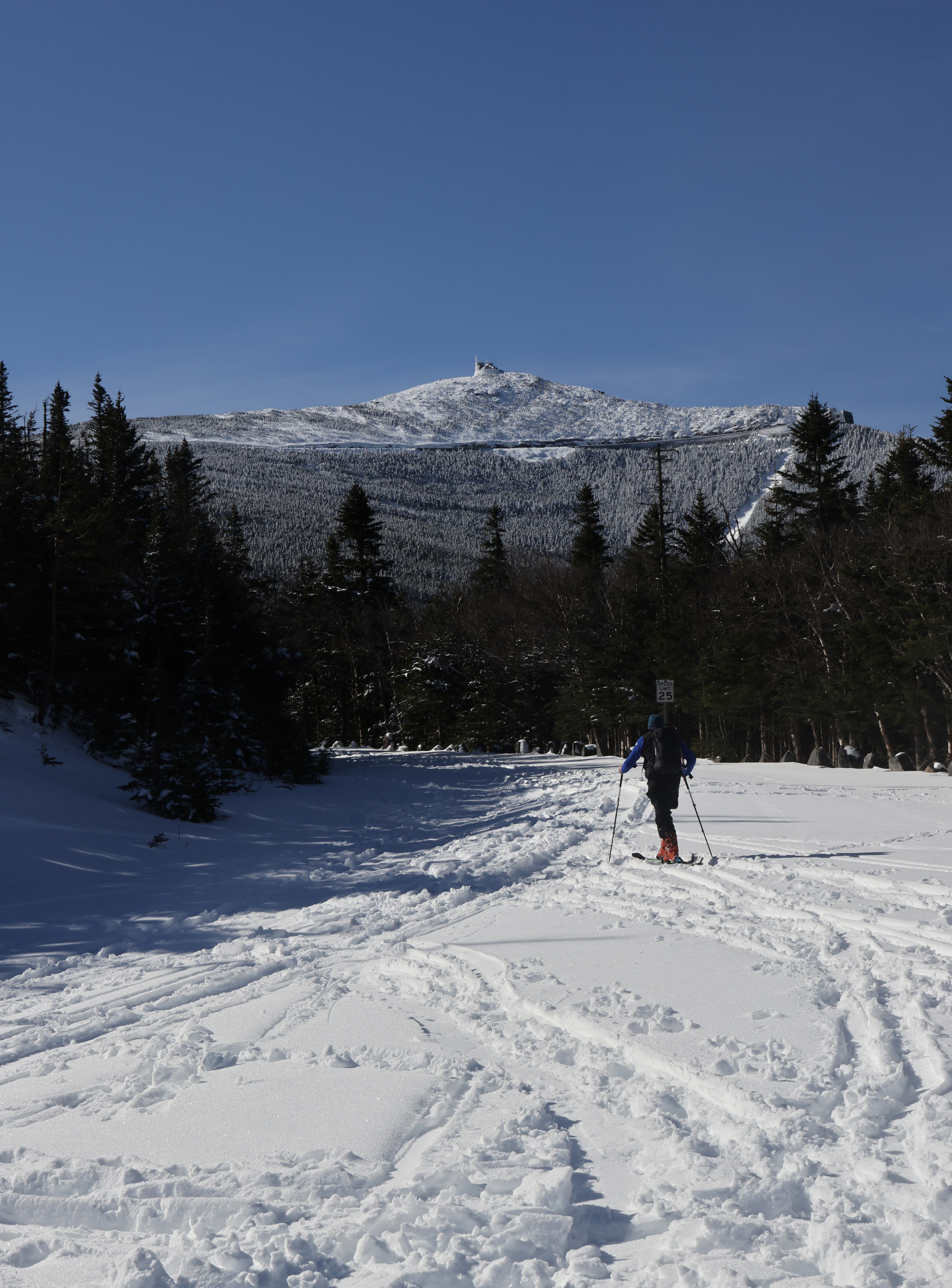
After spending the night in the back of my truck, I set off early in the morning toward the summit of Whiteface Mountain. This being early April, the roads and trails were still snowbound, which allowed for decent skiing. Whiteface Mountain, like Mt. Washington in New Hampshire, features a scenic toll road open in the summer. In winter, this path converts into a gentle, 5-mile cross-country ski course, safe even for bungling skiers like myself. I met another skier on my way up; our goal for the day was to reach the summit before 1 p.m., when the eclipse was about to begin:
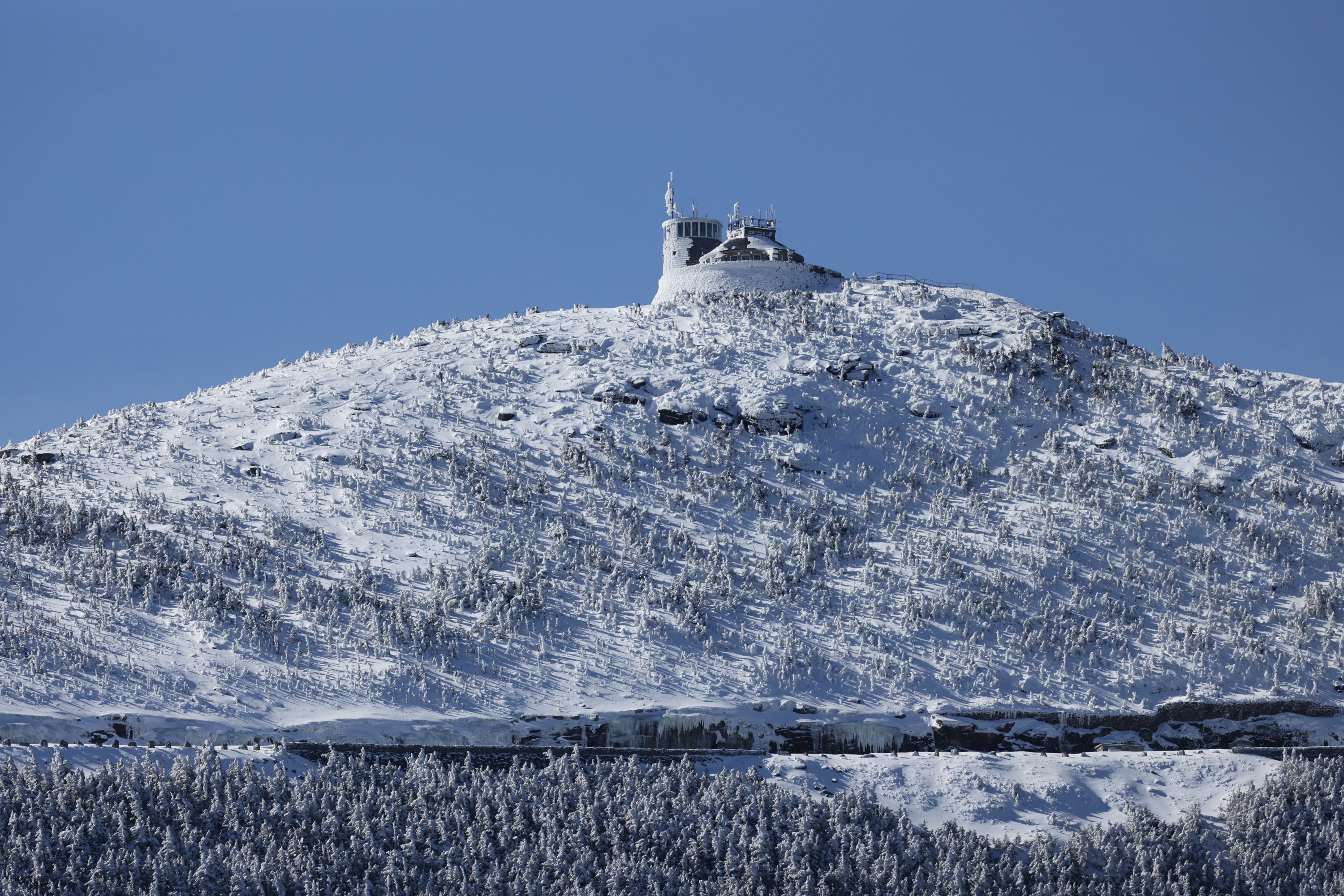
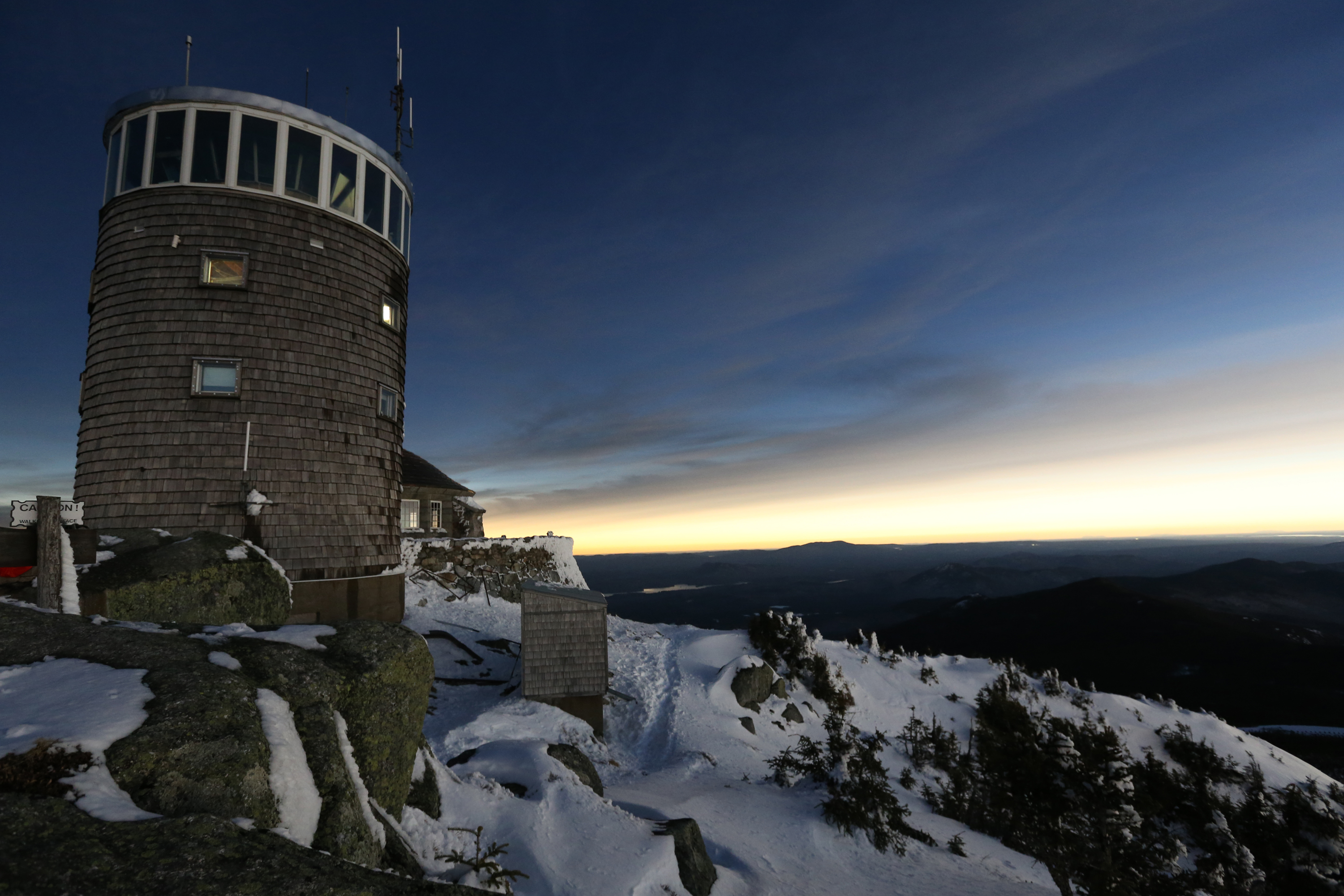
The area was still quite snowy, and the summit observatory building was plastered solidly with snow:
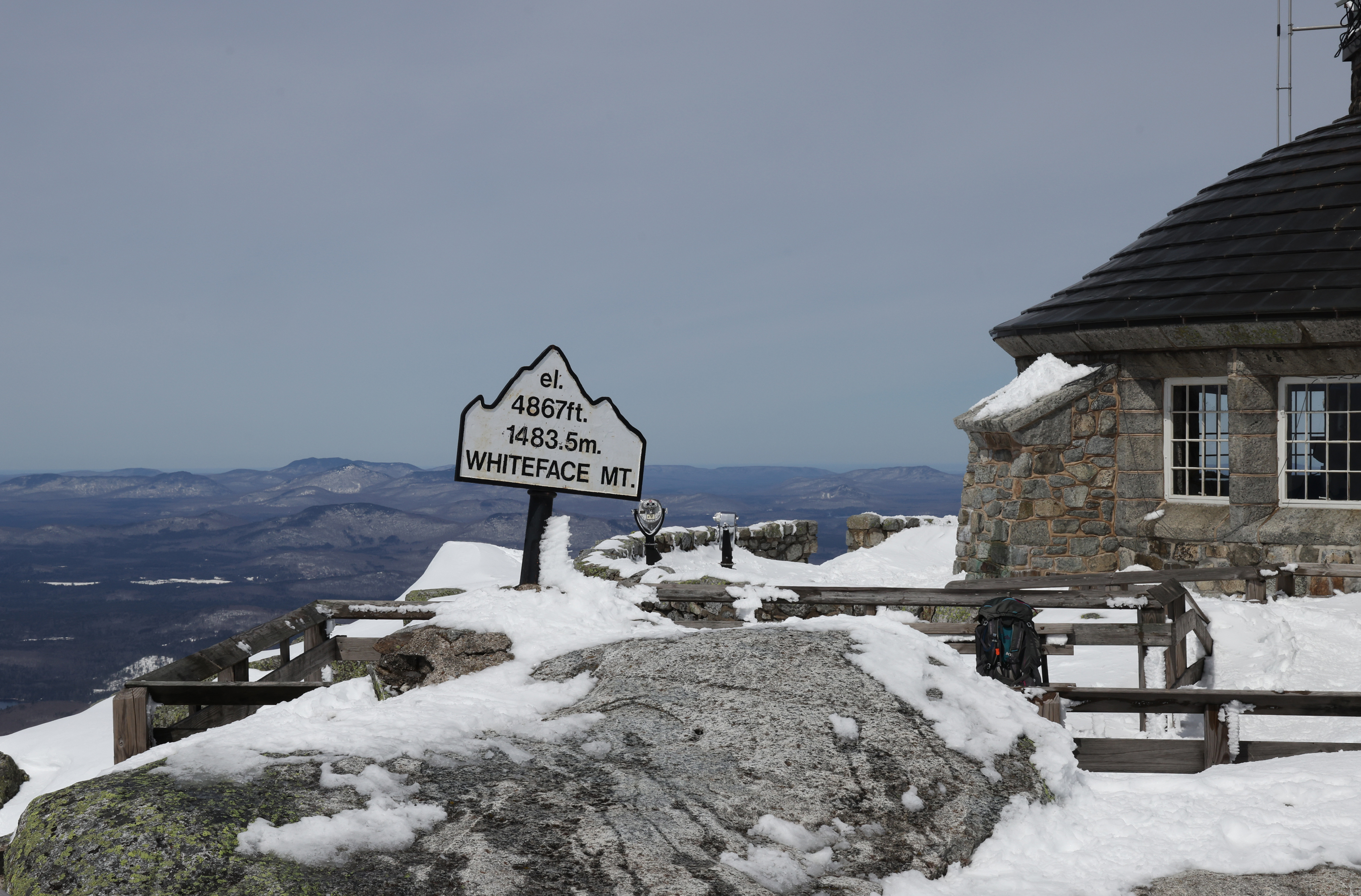
In the summer, Whiteface Mountain is a tourist attraction and one of the few places in the USA where you can see the metric system at work:
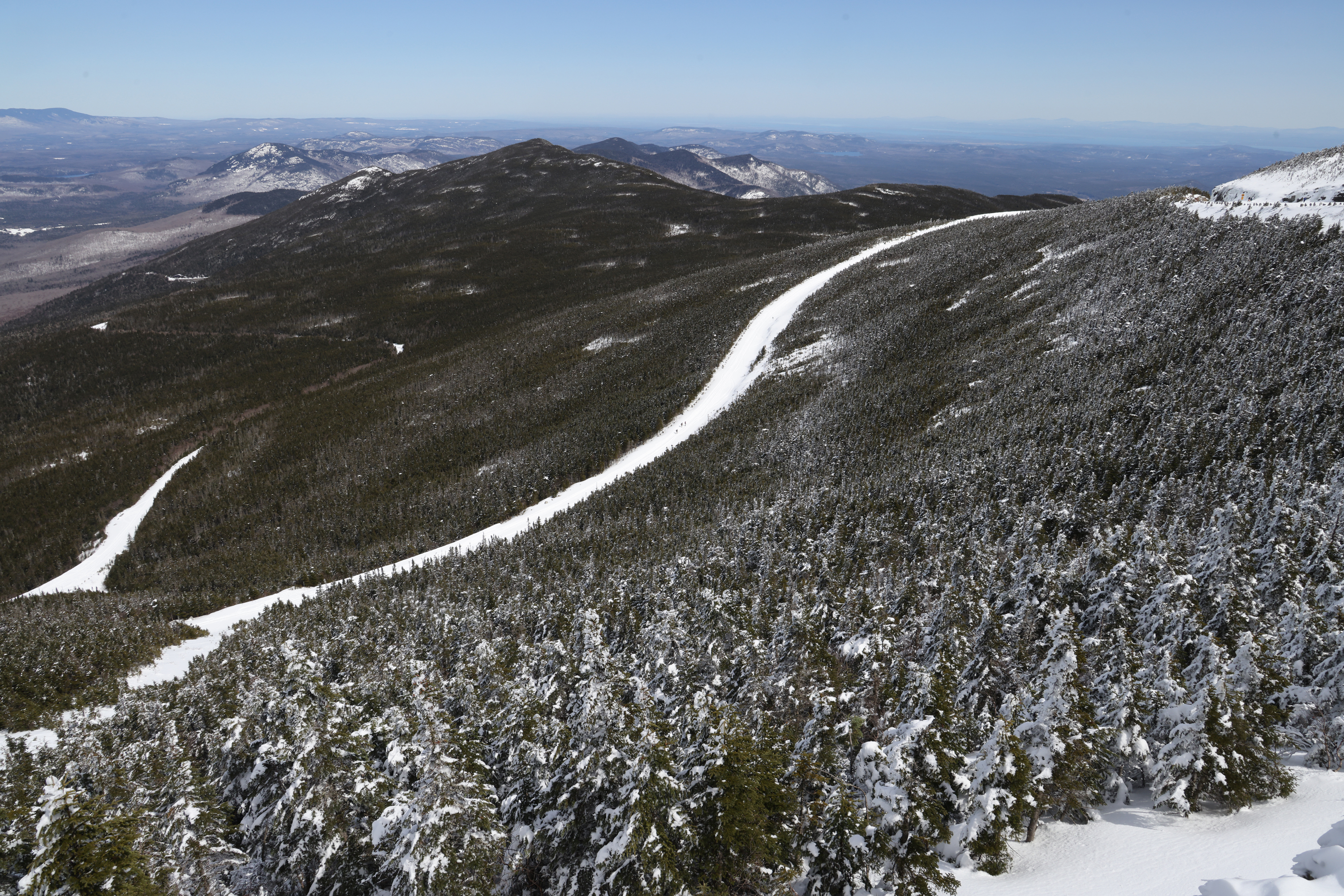
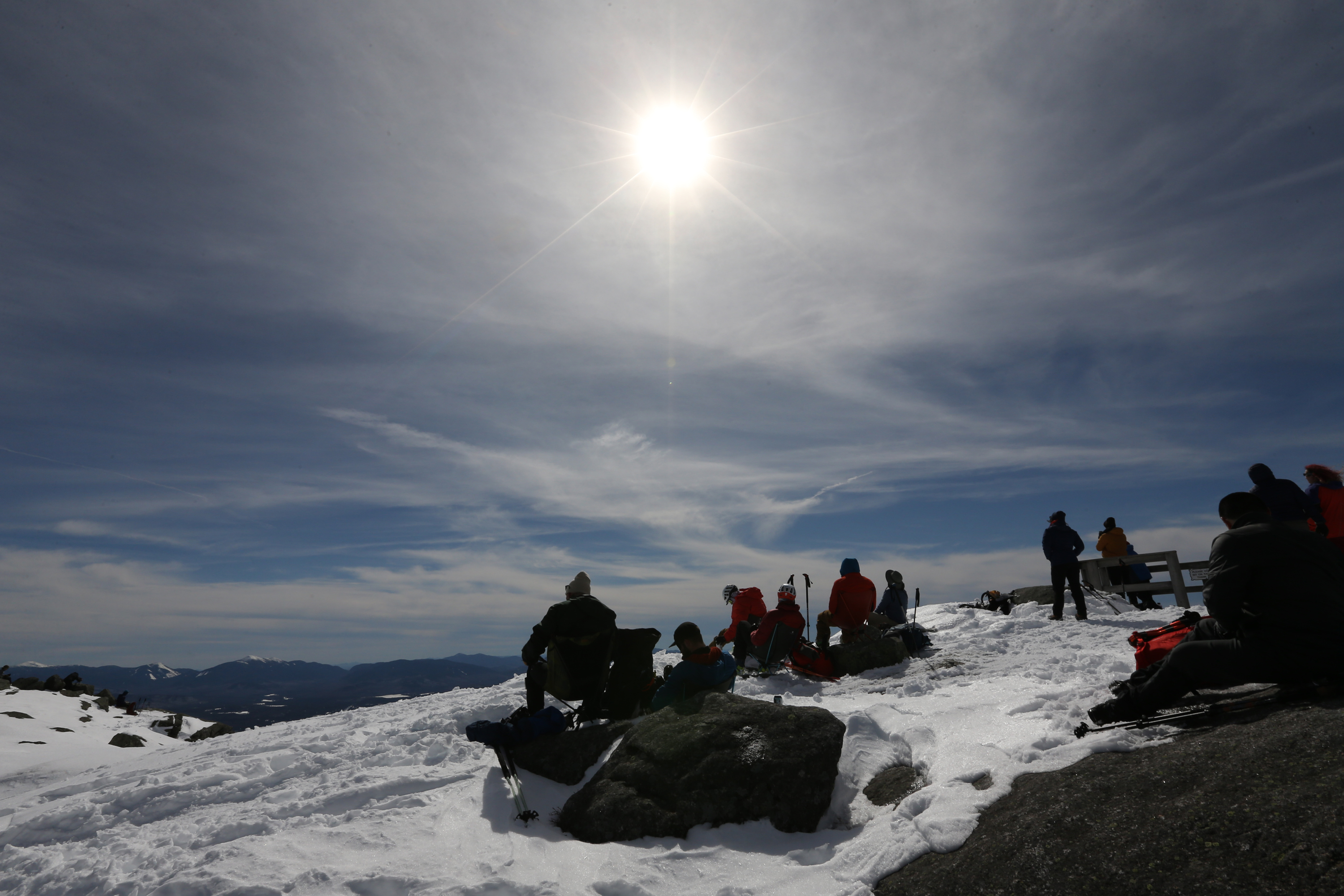
The toll road winds up the mountain at a steady 8-degree incline. If you look closely, you can spot three hikers making their way up. Our main concern for the day was to pick an outlook with a clear view of the sky. Adirondack weather is notoriously unpredictable, but we were lucky that day, with only some wispy clouds in the sky:
As predicted, at about 1 p.m. we could see the Moon bite off a small piece of the Sun. All observations of the Sun must be done through a dark solar filter, except during totality. The filter I had bought was not of very high quality; it had an orange cast and severe dispersion issues:
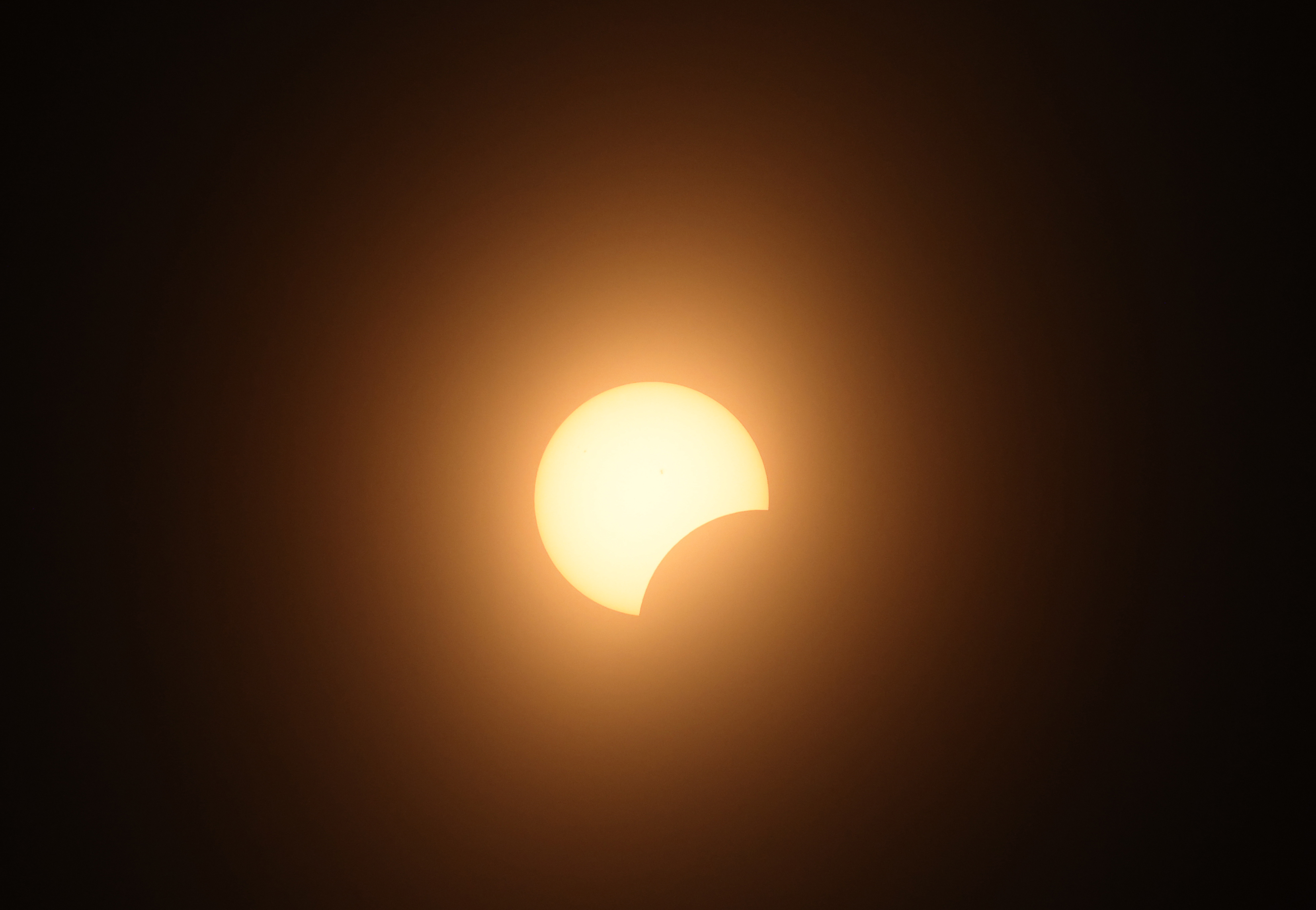
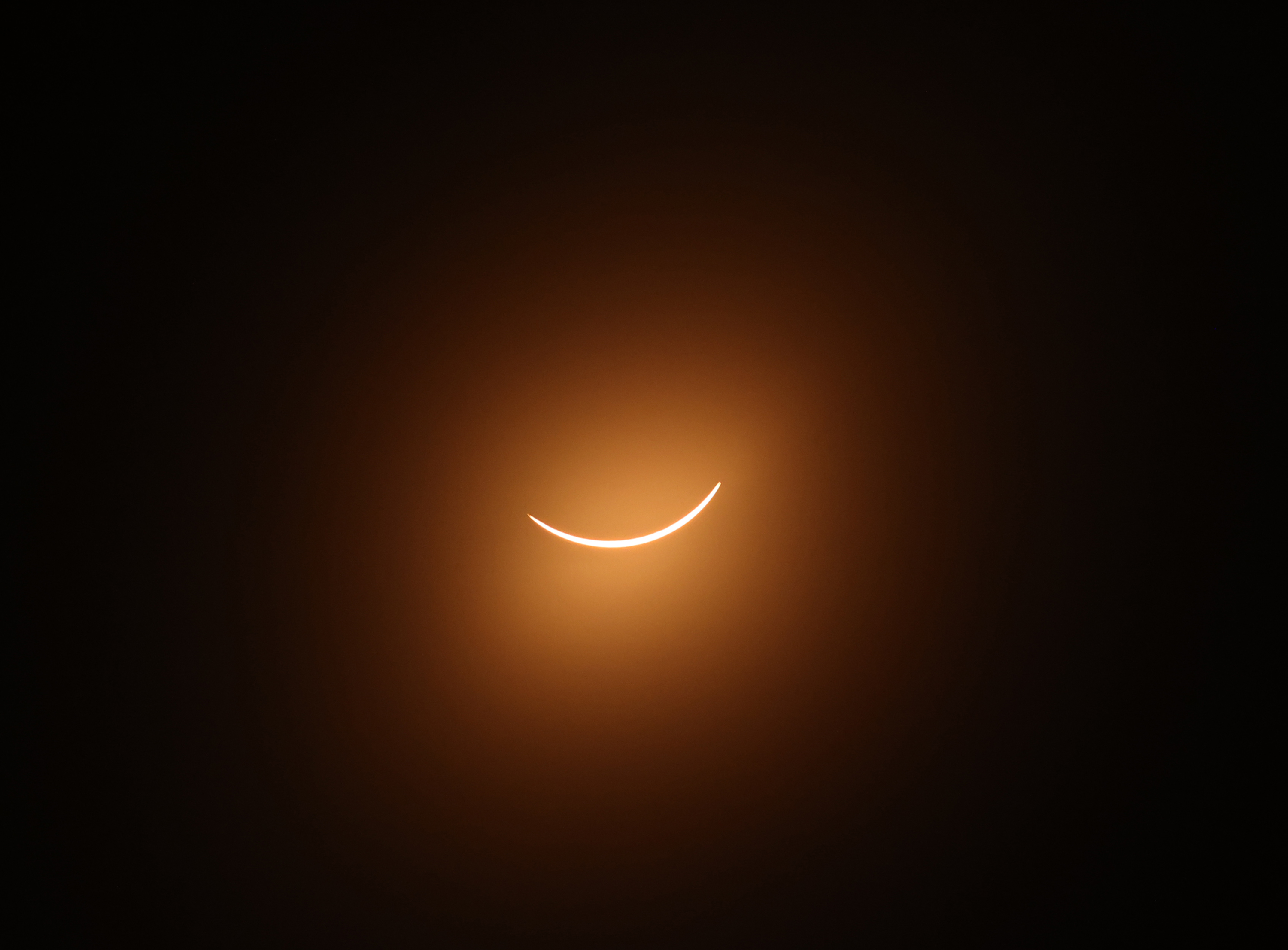
After about half an hour, little remained of the Sun in my viewfinder:
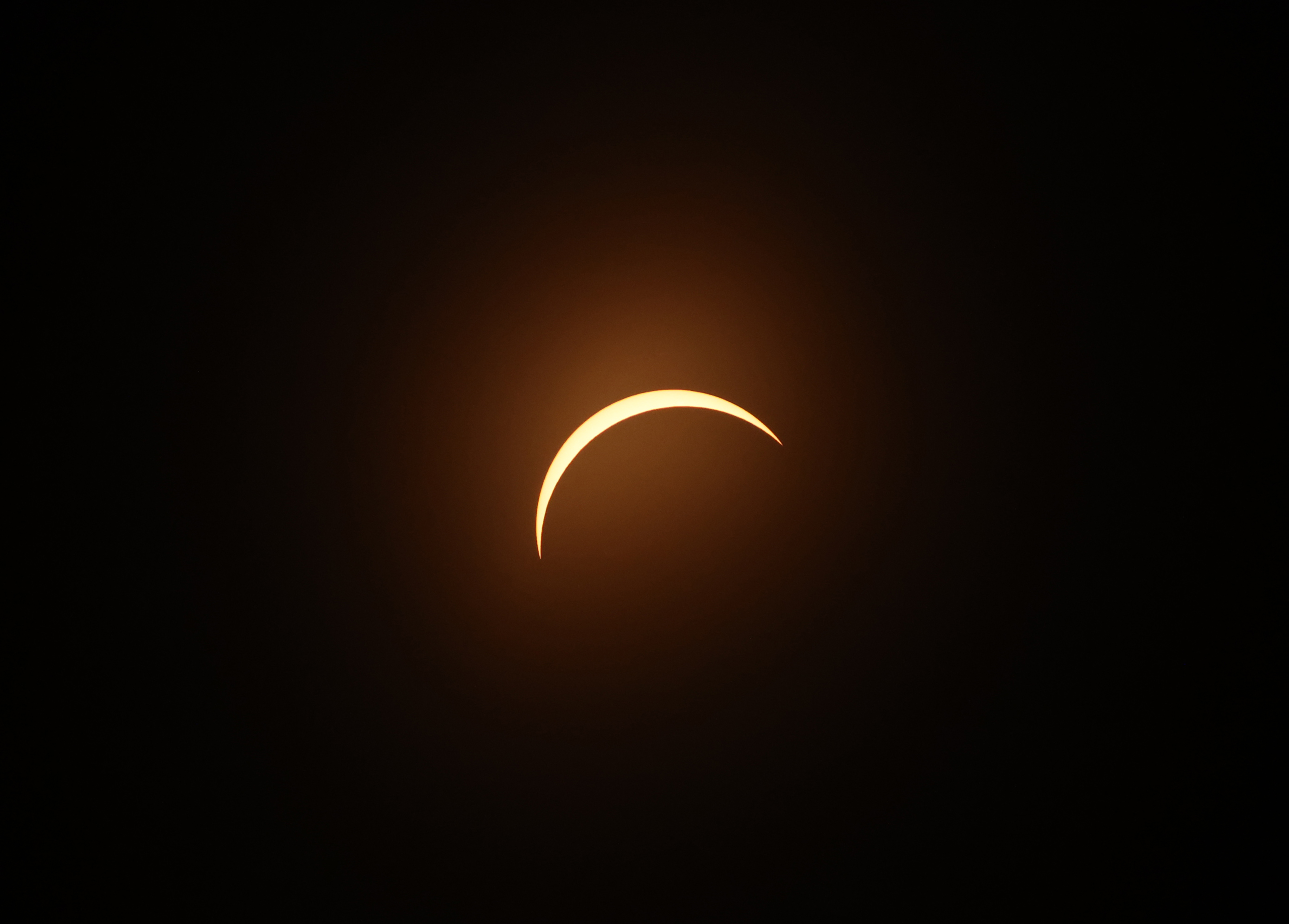
Even with 99% of the Sun covered, it was still bright outside, but the light had an unusual, unsettling quality—quite subdued, but with a color temperature equal to normal daylight. Normally, we experience diminished light only at sunset or sunrise, when the color temperature shifts toward red, but here it happened almost at high noon. The picture doesn’t fully convey that experience; you have to see it to understand the strangeness of the moment:
Then it happened. Seemingly within a single second, the light went out, as if someone had flipped a giant switch, and what we saw above our heads no longer resembled our familiar day star. That was the only time we could observe the Sun with the naked eye. It is not a sensation easily described by words, but I—and I am sure everyone else—was stunned and overwhelmed by this transition from Dr. Jekyll to Mr. Hyde. If you look closely, there are a few solar prominences visible in the lower half of the Sun’s disk, each of them larger than the Earth’s diameter:
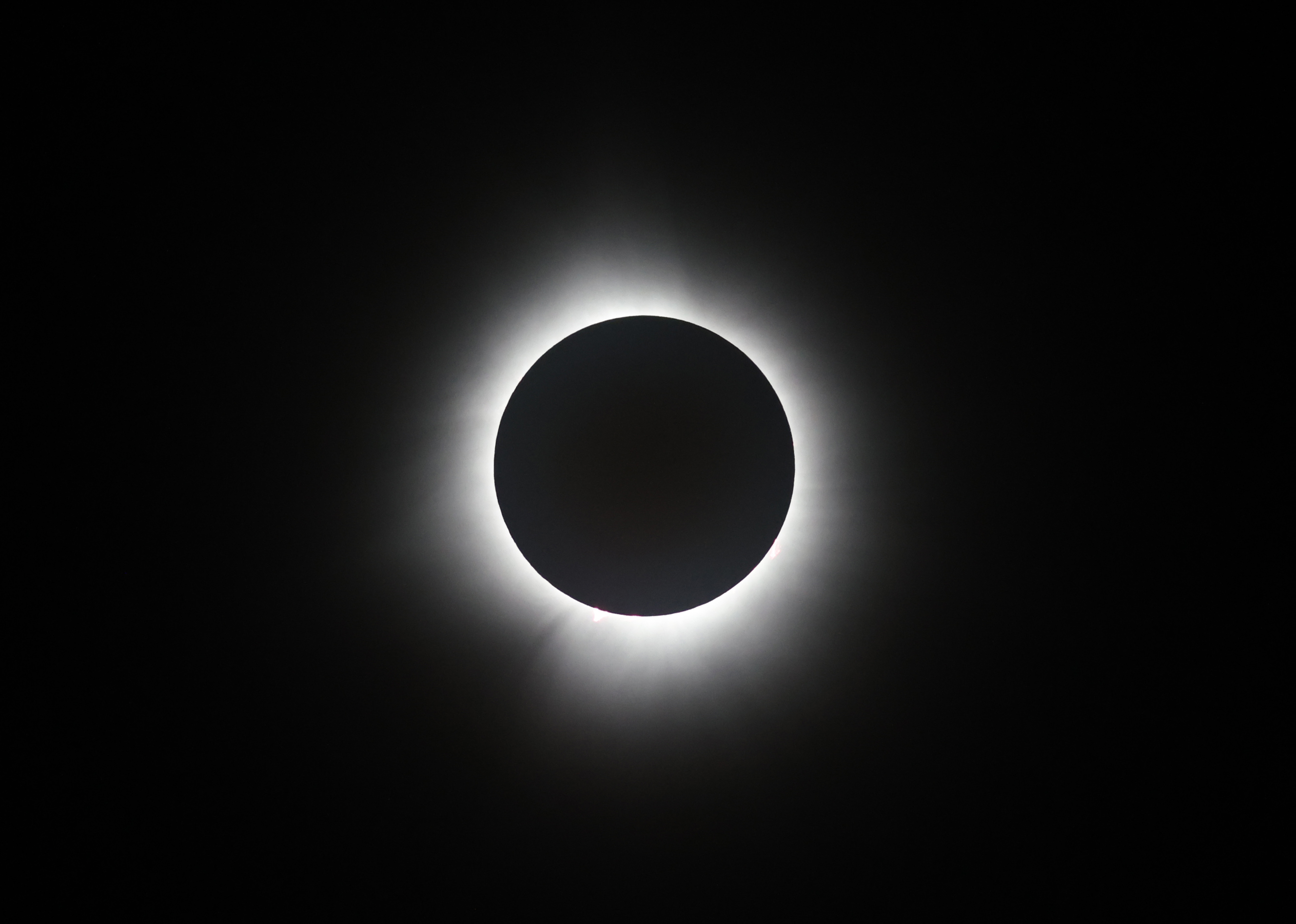
Totality in this part of the Adirondacks lasted a full 3 minutes and 20 seconds, and that time passed quickly. Everyone was absorbed in the moment, trying to capture as much of it as possible, both in memory and on their devices. It became noticeably colder, and the only non-human animal present—a pet dog—started barking, unable to comprehend why the world had changed so abruptly:
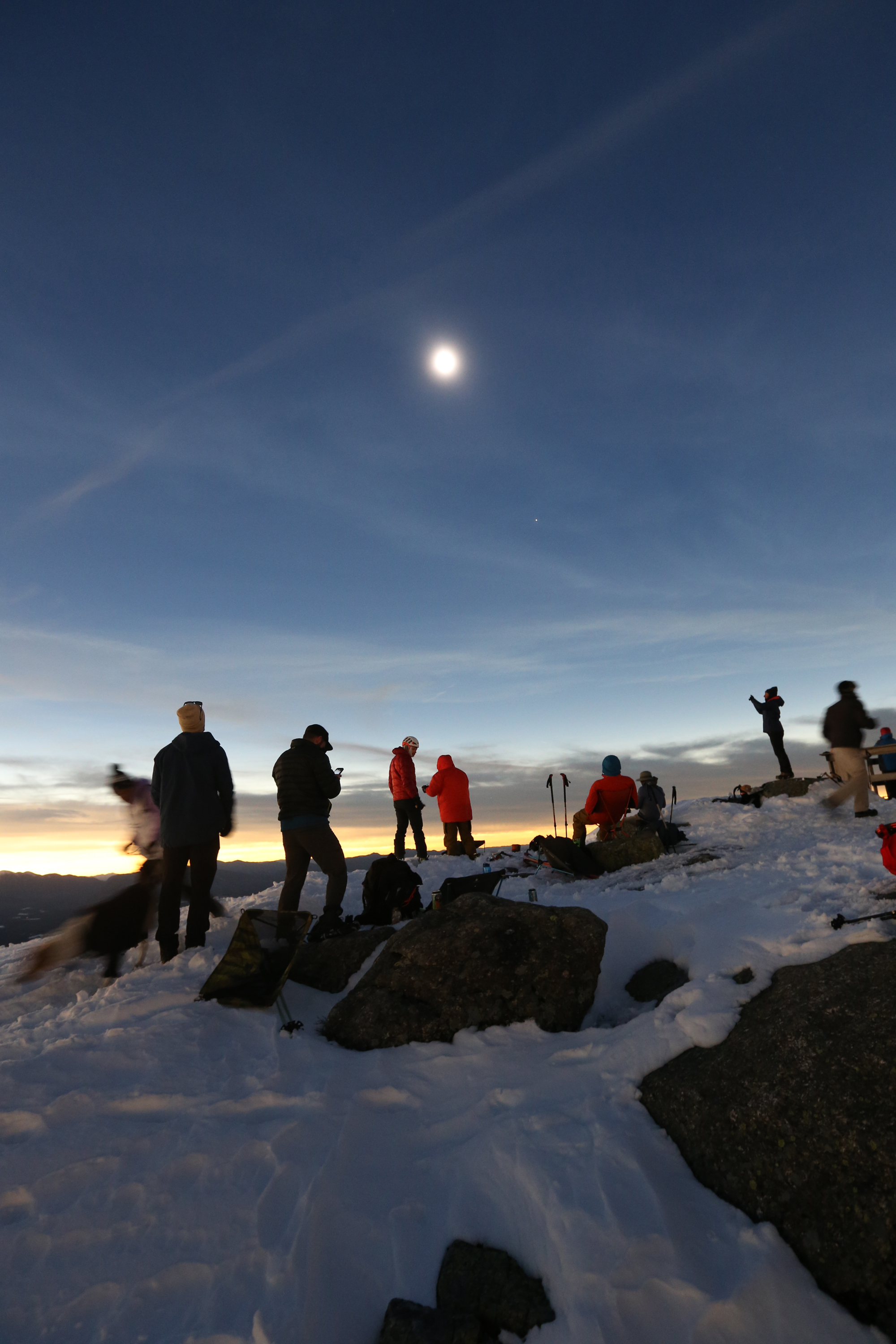
We were in the so-called umbra (totality), but in the distance we could clearly see the distant horizon glowing where the shadow ended, marking the transition back to partial daylight:
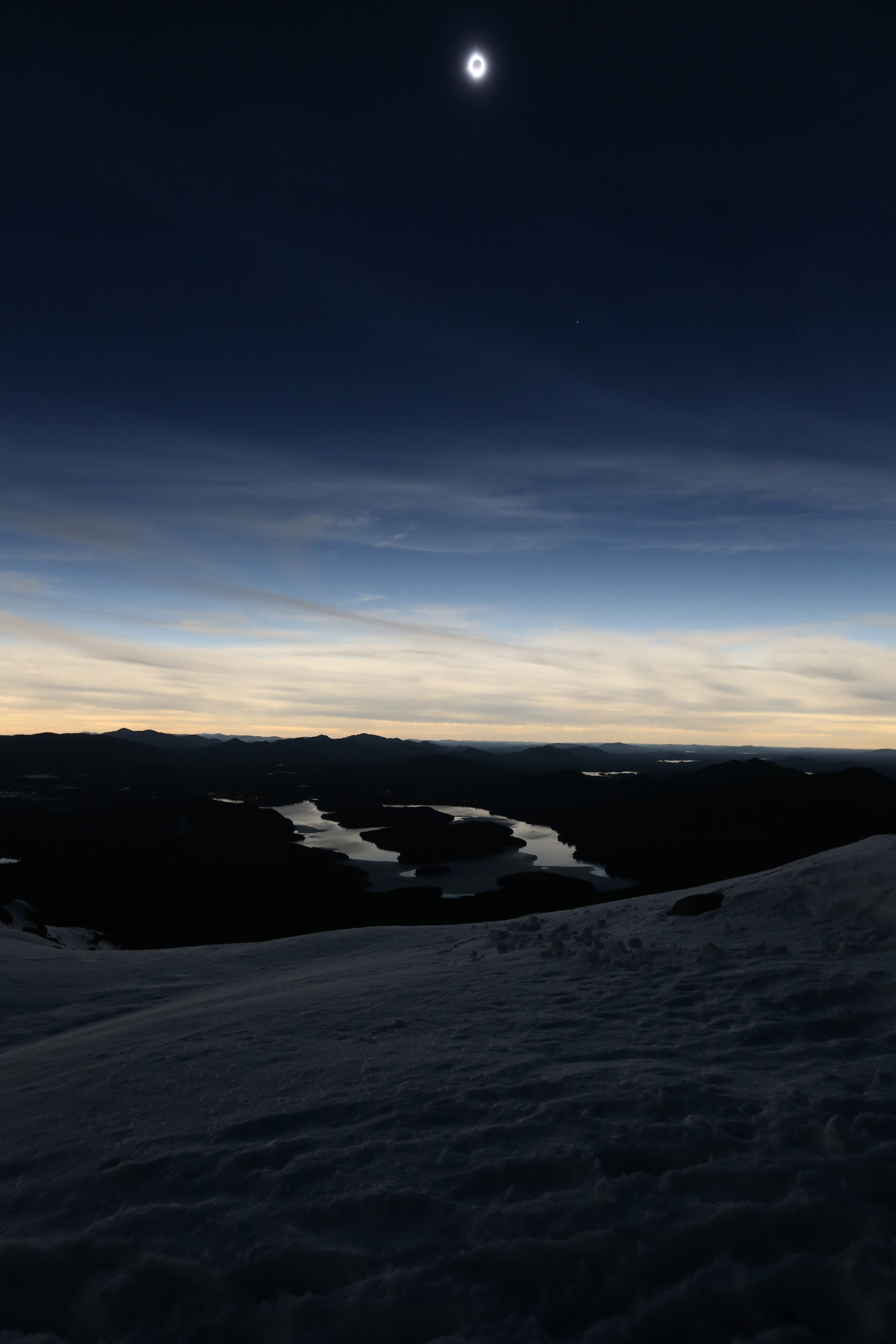
The Sun high above frozen Lake Placid:
I was not prepared for the momentary shock of transitioning from the commonplace to the unworldly and let my photographic guard down, missing the “diamond ring” effect, where the Sun begins to shine again from behind the Moon’s cover. But some moments in life should be savored by observing rather than documenting:
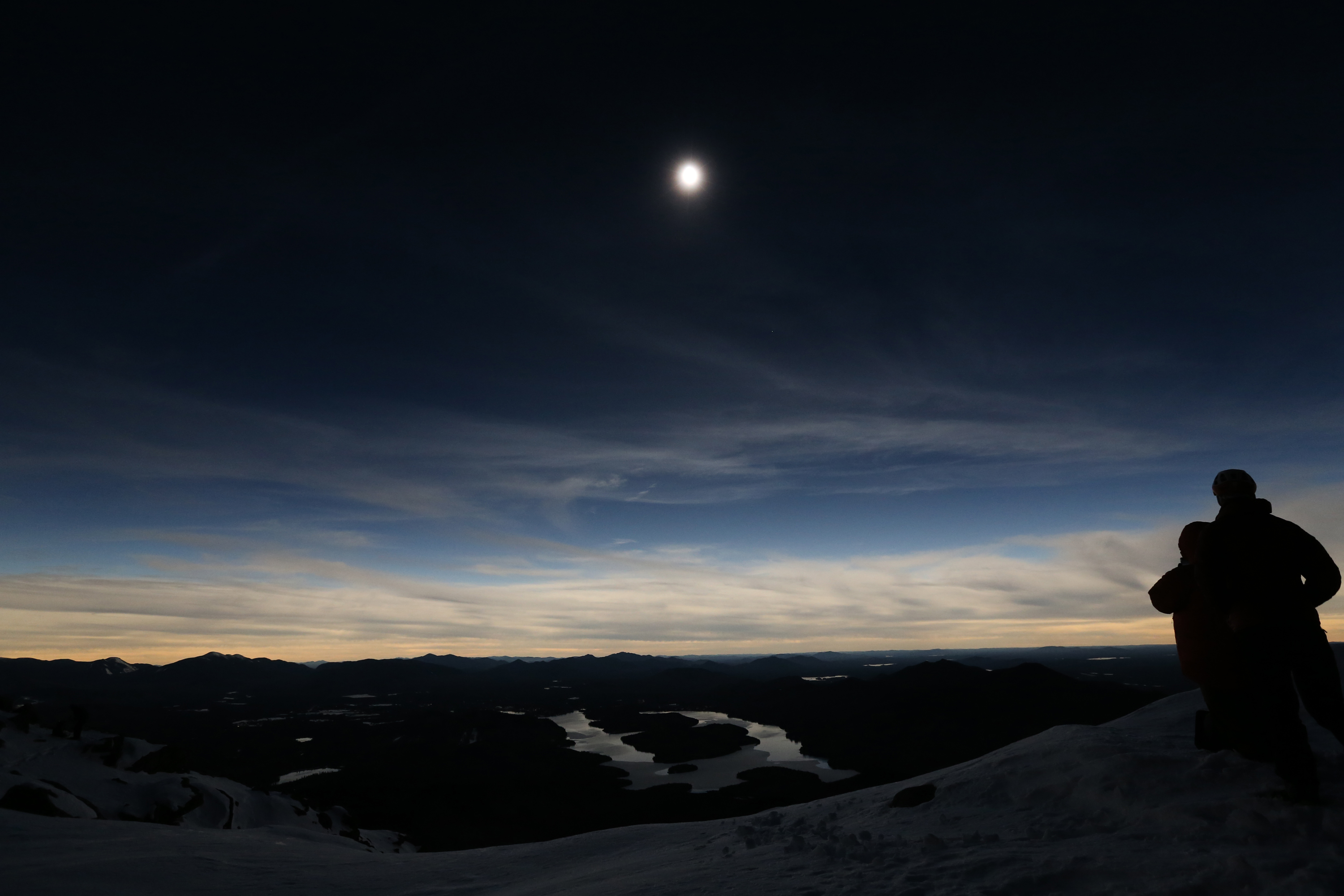
The “diamond ring” lasts only a second or two, and after that, the switch is turned back on and the light reappears. The thermal death of the universe having been averted, it is back to using the filter to protect both eyesight and the camera:
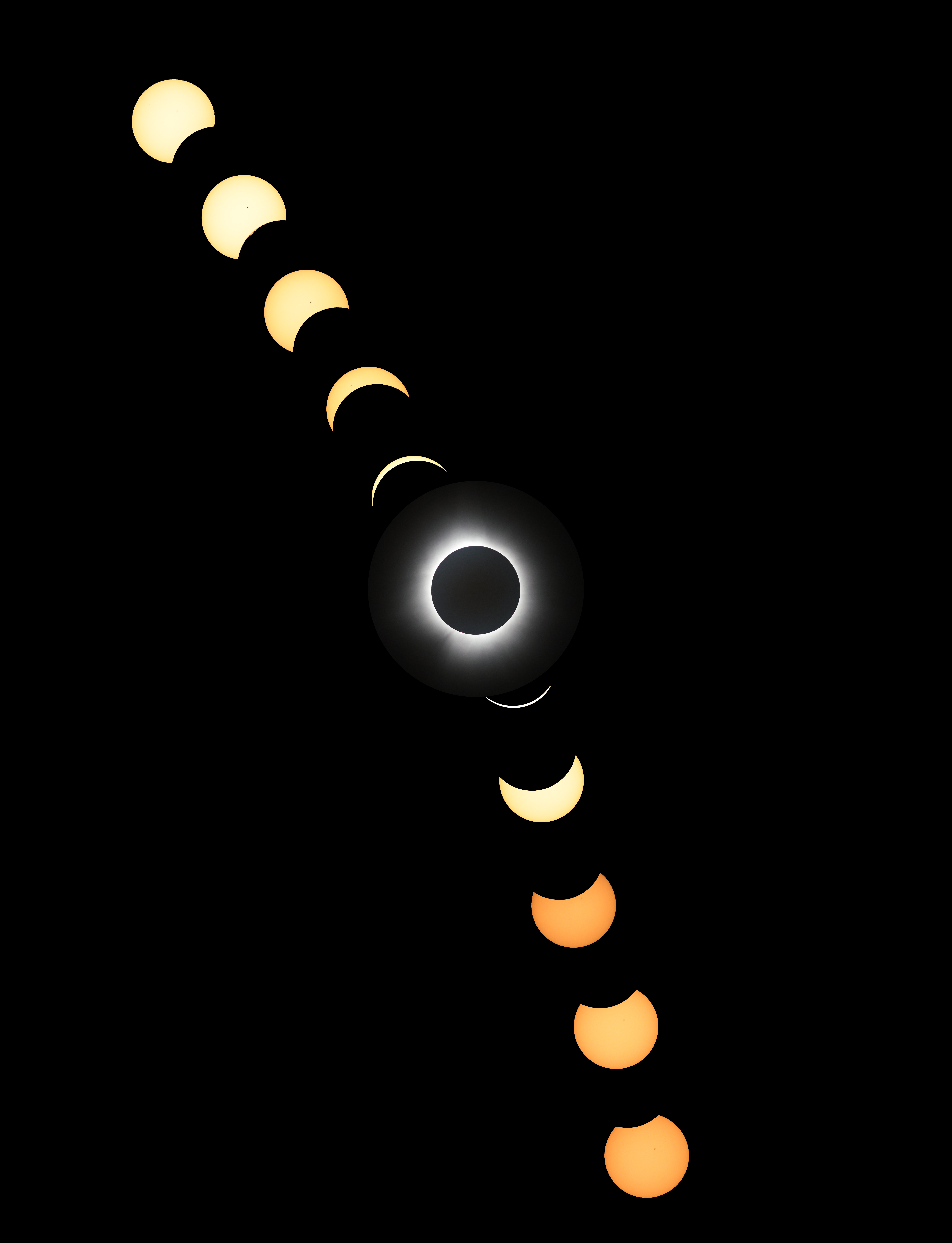
As a bonus picture, here is the entire sequence of the Moon passing in front of the Sun’s surface over 2 hours. The colors are a bit uneven due to an unfortunate choice of camera settings—live and learn. The black specks are sunspots:
At the beginning of that day, I was curious if the hype surrounding the eclipse was somewhat inflated by the tourism lobby or if it was something truly worth seeing. In the afternoon, skiing down the toll road while trying to control my emotions, I knew that it was a mind-altering event that everyone should experience once in their life. I was lucky that it happened in my Adirondack backyard, with hassle-free access and familiar surroundings, but I would now travel far just to see one. The next eclipse, with an exceptionally long totality of more than 6 minutes, will occur over North Africa, Egypt, and Saudi Arabia on August 2, 2027. People will be streaming in by the hundreds of thousands to see it, but crowds or not, I promise you will not regret it. Now is a good time to start making travel arrangements.
Wow, what an exceptionally good set! This eclipse got to a very thin crescent of the sun where I was, but totality was a several miles away. Unfortunately, work forbade me to see it.
Very cool! I watched the eclipse from a cliff in Dixville Notch, New Hampshire.
These are wonderful images enhanced with excellent narrative. Thank you for sharing, Jan.
We watched it in a park just down the street from our house in Burlington, Vermont. Jan could have seen us due east from the top of Whiteface 35.7 miles away.
Thanks, Jan. What a wonderful post! I went the short distance to a friend’s ocean-front rental in Virginia Beach for the 1970 total eclipse visible there. Your words are perfect. Just eerie and something I can still sense and feel – light changes, temp changes, animal sounds, and of course ooh’s and ah’s of all the company around us that afternoon- now more than fifty years later.
Really neat that you got to do a spring ski cross country access on such a beautiful day.
Spectacular. We had a partial solar eclipse here in the Pacific Northwest in 2017. As the sun was in (partial) eclipse, the tiny gaps between leaves in the trees became pinhole cameras, and we could see the eclipse projected onto the ground—thousands and thousands and thousands of tiny solar crescents.
I’ve been to 5 total solar eclipses but never bothered with serious photography during them – too tricky and I like to just soak in the experience. The photo-documentation here is exceptionally good. One phenomenon that particularly fascinates me during total solar eclipses is shadow bands, where just before totality, ripples of light and shade race across the ground. This is due to the last bit of direct sunlight passing between mountains on the moon. Definitely otherworldly!
For me, too much expense and hassle to consider Egypt in 2027 but there will be one in my part of the world in 2028 which I plan to attend. Then in 2037 another one will pass right over my house – hope I’m still around to see it!
I traveled to Kentucky for the 2017 total solar eclipse and I was lucky enough to watch the 2024 eclipse from my home. I love eclipses. This account, including the photos, is accurate and thorough on an emotional level and sensory level. Thank you.
I am lucky enough to have skied Whiteface, and your pics are great reminders of a beautiful place. However, I am unlucky enough to have watched the eclipse from my back yard near Rochester–with total cloud cover. It got dark. Then it got lighter.