
Plant lovers and botanists will be especially pleased by today’s selection of lovely photos from Thomas Webber. Thomas’s captions and IDs are indented, and you can enlarge the photos by clicking on them (recommended).
The theme for today’s installment is Gone to Seed. Here are a few north-Florida flowers shown in their prime and afterward, when their glamor parts had been replaced by seed enclosures, bare seeds, or merely the dried remains of the flower bases. All of them grew within Gainesville’s city limits, at sites from semi-pruned to semi-wild. I think I’ve identified them all correctly to species this time, but I invite corrections.
Frostweed, Verbesina virginica. Individual flowers 1 cm. Native:

These bracts, called phyllaries, surround the bases of the flowers. In late February a few of their papery remnants are still aloft on their brittle four-foot stalks:

Low rattlebox, Crotalaria pumila. 2.5 cm across. Native. The map in the article linked here is incomplete and does not reflect the herbarium records for Alachua County, where I took this picture.
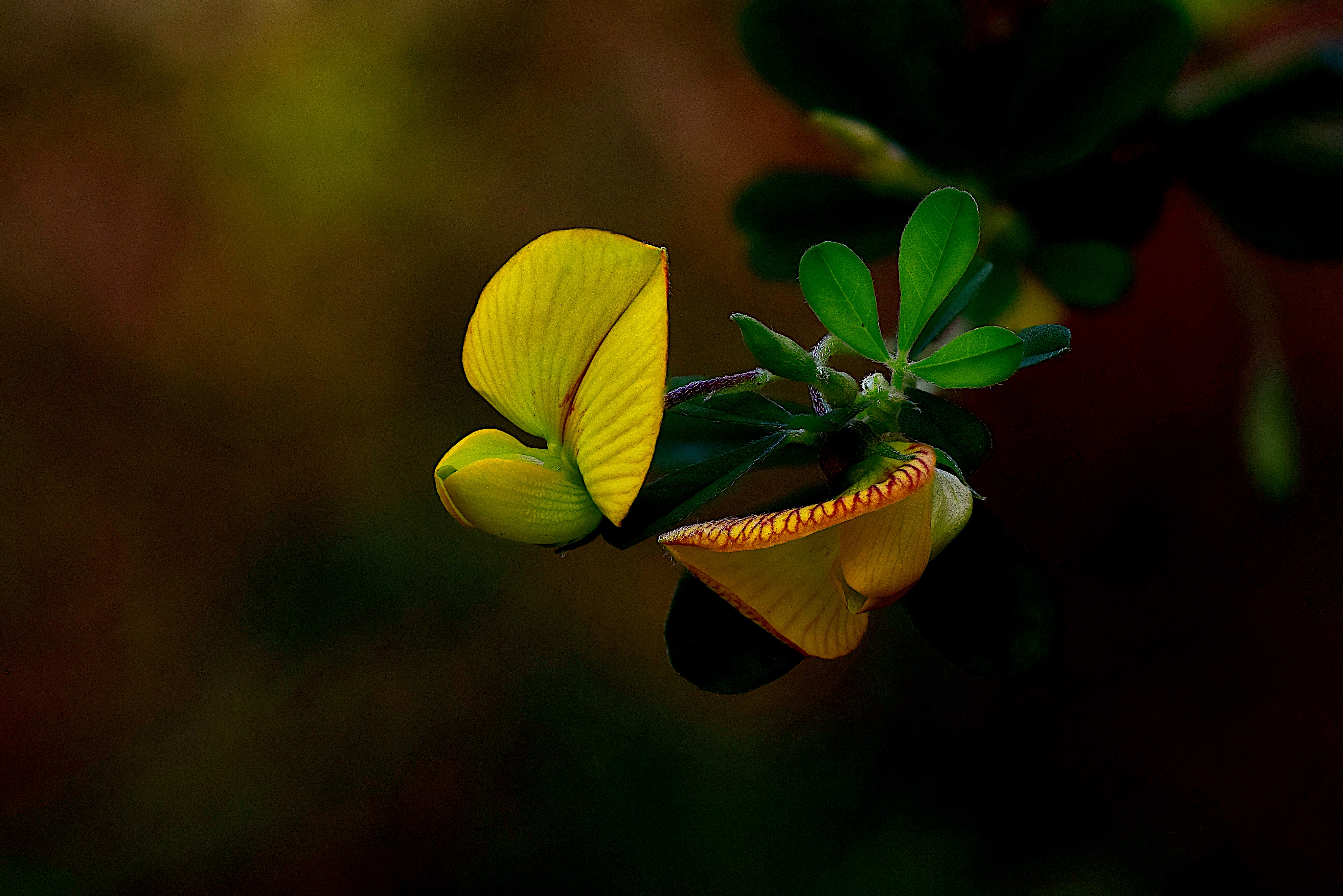
Showy rattlebox. C. spectabilis. 3.5 cm across. Native to southern and southeast Asia, now widely naturalized in southeastern North America:

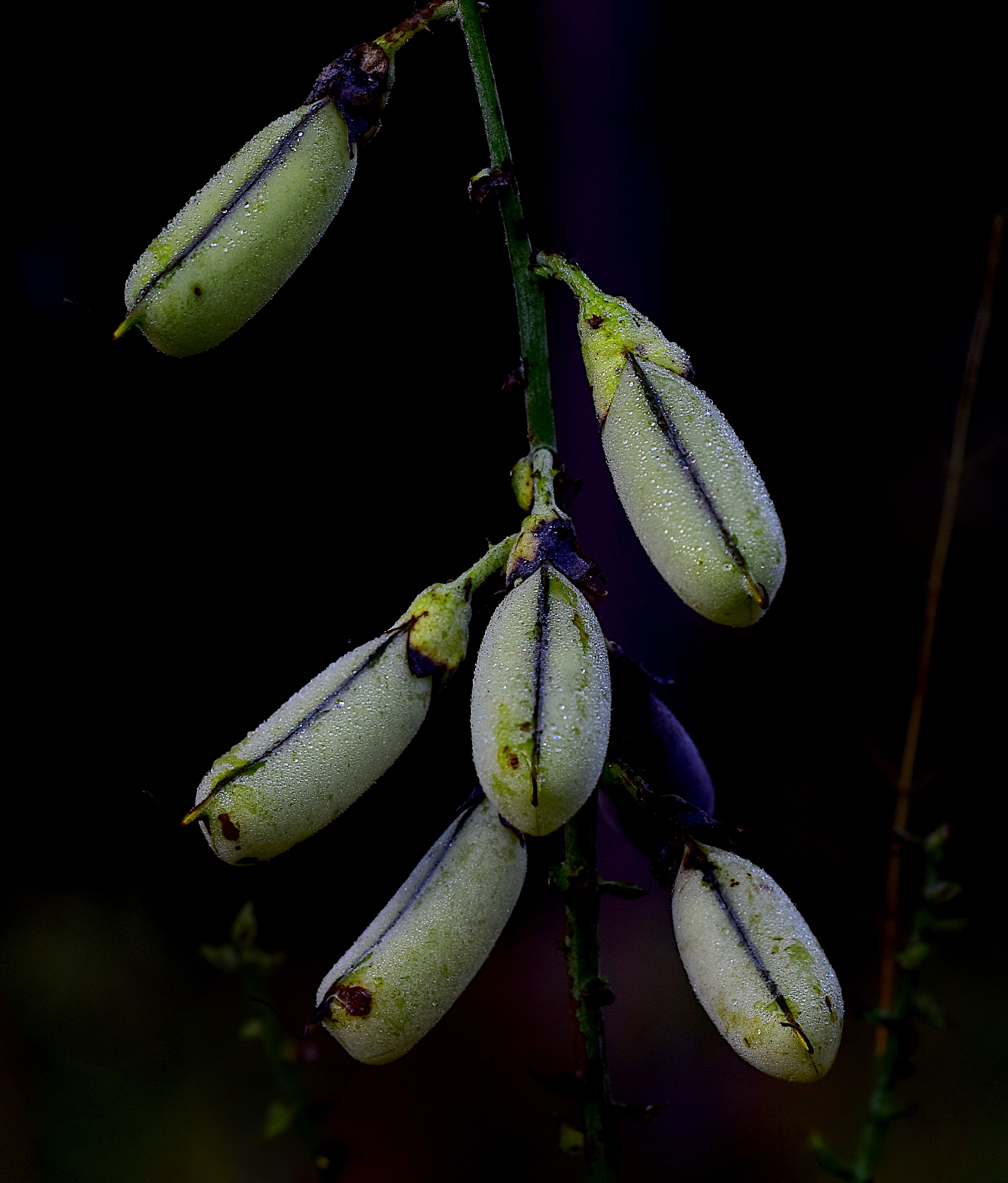
C. spectabilis seed pods. 4 cm long. The pods of C. pumila look similar but are smaller. Crotalaria, and especially their seeds, are laden with toxic alkaloids. Larvae of the rattlebox moth, Utetheisa ornatrix, bore through the walls of the pods and feed on the seeds. Somehow the caterpillars manage to detoxify the alkaloids enough so they aren’t poisoned, while remaining poisonous enough to deter most animals that might try to eat them. The larvae retain the toxins into the flying-moth stage, and at both stages their distinctive vivid color pattern warns predators to leave them alone.
A rattlebox-moth caterpillar. About 3 cm. I doubt that I could have found any of these if I’d gone looking for them, but this one crawled right in front of me while I tried to get a picture of the low rattlebox. It held fairly steady for a few seconds, letting me capture enough detail to identify it. I didn’t have my choice of background:

Tropical sage, Salvia coccinea. 3 cm. Native. At this latitude these remain at their peak through late December:

All that’s left in late February are these cones called calyces, which are fused sepals:

Spanish needles, Bidens alba. 2.5 cm. Native. This is the king weed of these parts, growing everywhere and sometimes in great masses; one dense bunch covers an acre of a low damp lot in the middle of Gainesville:

Seeds of Spanish needles. 1 cm long. The name of the genus, meaning two-teeth, derives from the forks at the tips of the seeds. The barbs on these projections are part of an impressive example of convergent biological and cultural evolution, and have turned out to be just the thing for attaching the seeds to socks and shoelaces:

Dotted horsemint, Monarda punctata. Whole flower head 2.5 cm wide. Native. The most complicated flowers I find around here:

All of that elaborate presentation goes to produce seeds 1 mm in diameter, too small to show well with my basic macro gear. At this stage you can still shake a few of them from the calyces. Thanks to Mark Frank of the Florida Museum of Natural History herbarium for a remedial lesson in the difference between calyces and phyllaries:

Beggarweed, Desmodium incanum. 1 cm across. Native to Central- and South America, naturalized in the southeastern U.S. This year, by means unknown, a few of them showed up for the first time in what passes for my lawn:

Beggarweed pea-pods, 3 cm long:

Scarlet morning glory, Ipomoea hederifolia. 4 cm long. Native:

Morning-glory seed pods, 7 mm. The hard little capsules cleave along their sutures and split open to release black seeds the shape of orange sections, exposing the translucent porcelain-like septa that divided them:

Very nice, thanks!
beautiful flower shots! Thanks you for sharing these.
Lovely photos! My sages currently look like that second sage photo, but they will be back any day now.
Nice. It’s quite true that we usually think of plants as being “done for the season” once their flowers wilt away. But in fact, they’re just beginning!
Thank you so much for the photos of both flowers and their seeds/seed pods. One reason I like plants is because of the fascinating variety of both.
Holy mackerel, those are nice! The care about lighting shines thru in all of these. I am especially drawn to the Horsemint. Love that stuff, bc big hunting wasps love it, so it’s always an exciting thing to come across.
Interesting. In Australia we call the beggarweed pea pods Velcro weed due to its annoying habit of firmly sticking to our dogs fur and being very uncooperative in its removal. Possibly this is colloquial but it works for the neighbourhood.
What a beautiful and informative post.
Thanks! I thoroughly enjoyed it.
I love seeing the same plant species with flowers and then with seeds. Very informative and beautiful pictures.
Wow. Excellent – what fantastic skilled photography.
thank you,
D.A.
NYC
Beautiful. Thank you.
I misspelled Dr. Frank’s first name. The correct spelling is Marc. My apologies.
Wow, enjoyable and new