
After two years of closure, and two seasons without ducks, they opened Botany Pond this morning, taking down the fence that had kept us from our beloved body of water. The pond has been re-lined, made shallower, landscaped, and with an area fenced off for ducks. There’s a new filtration system, too. It looks good, though I’ve had two duckless years.
Here are some photos I just took:
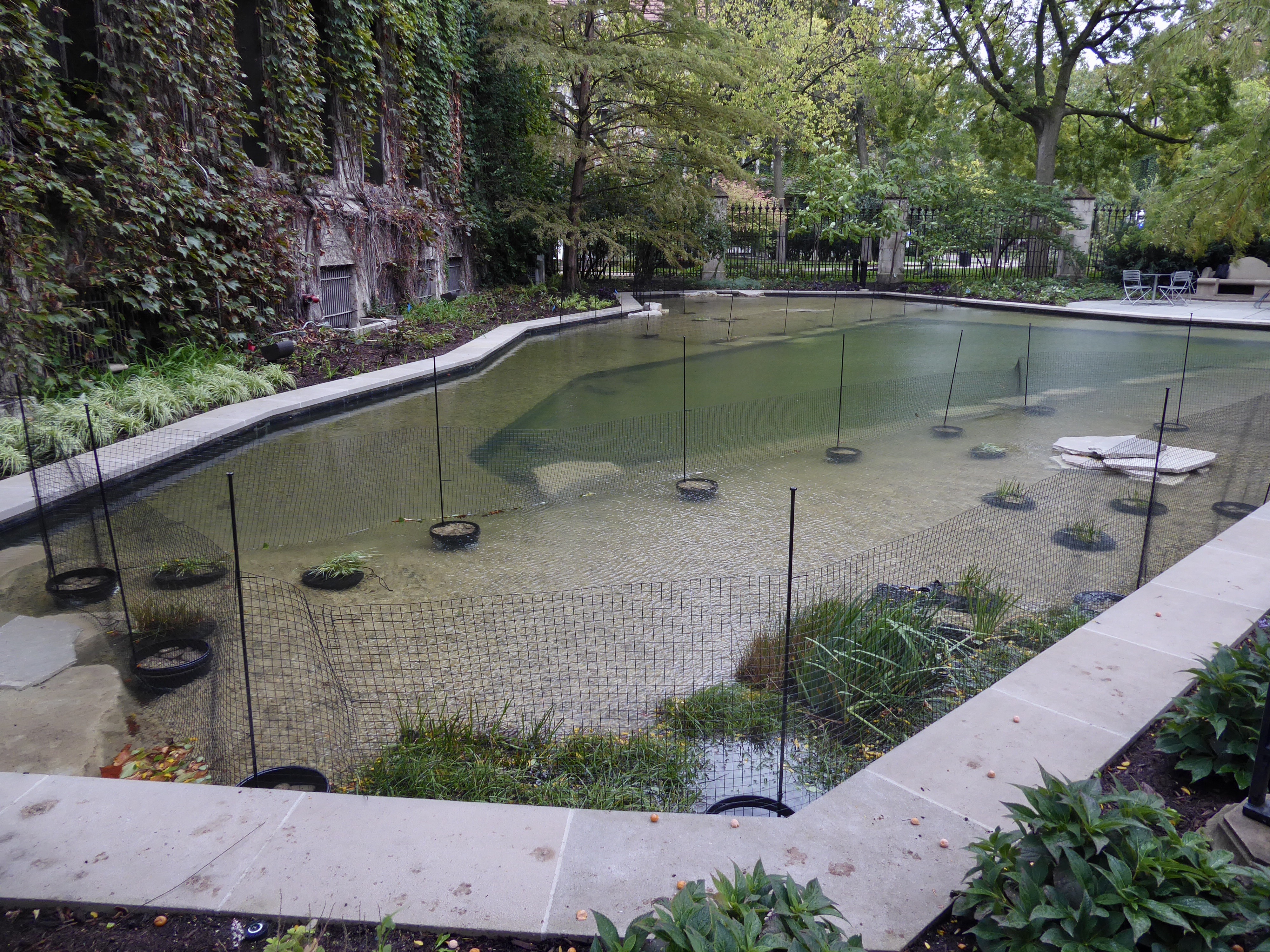
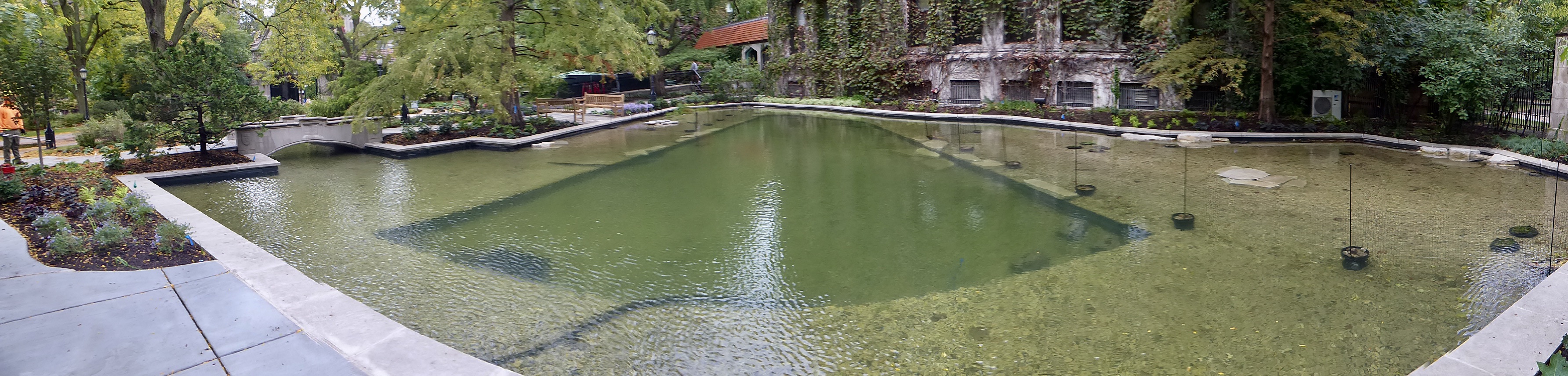
First, main pond, with temporary fencing in the water to allow the water plants to start growing undisturbed. You can see that the two large bald cypresses have been removed, and that the pond is quite shallow.
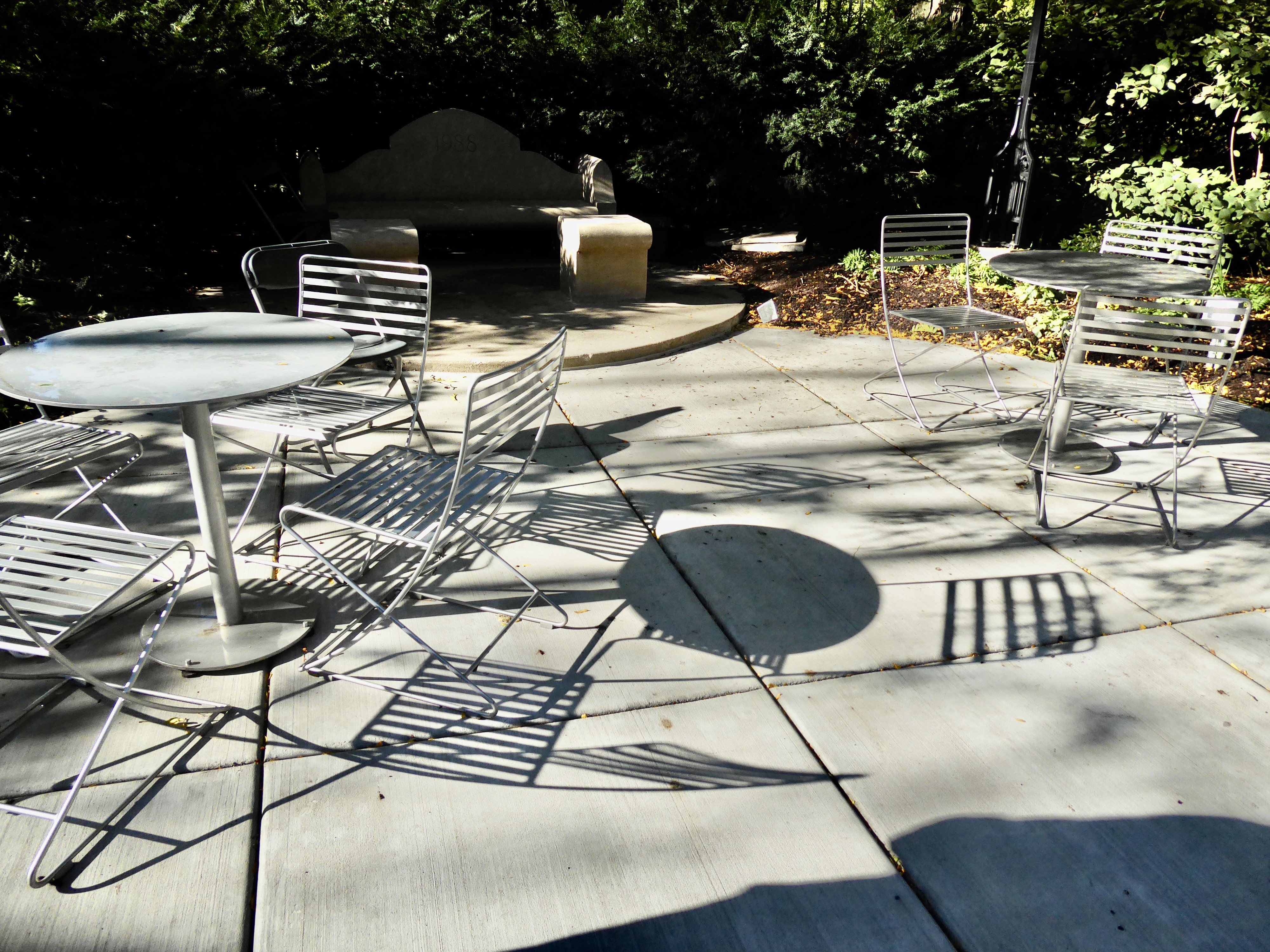
There are large pebbles (or small rocks) in the shallow part, and then a geometrical design of levels. The pond gets deeper (but still below my chest) in the center. Note, at upper right, that the cement bench is still there, along with some tables and chairs that have been put on the cement patio. The building to the left is Erman Hall, on whose windowsills the mallards nest.
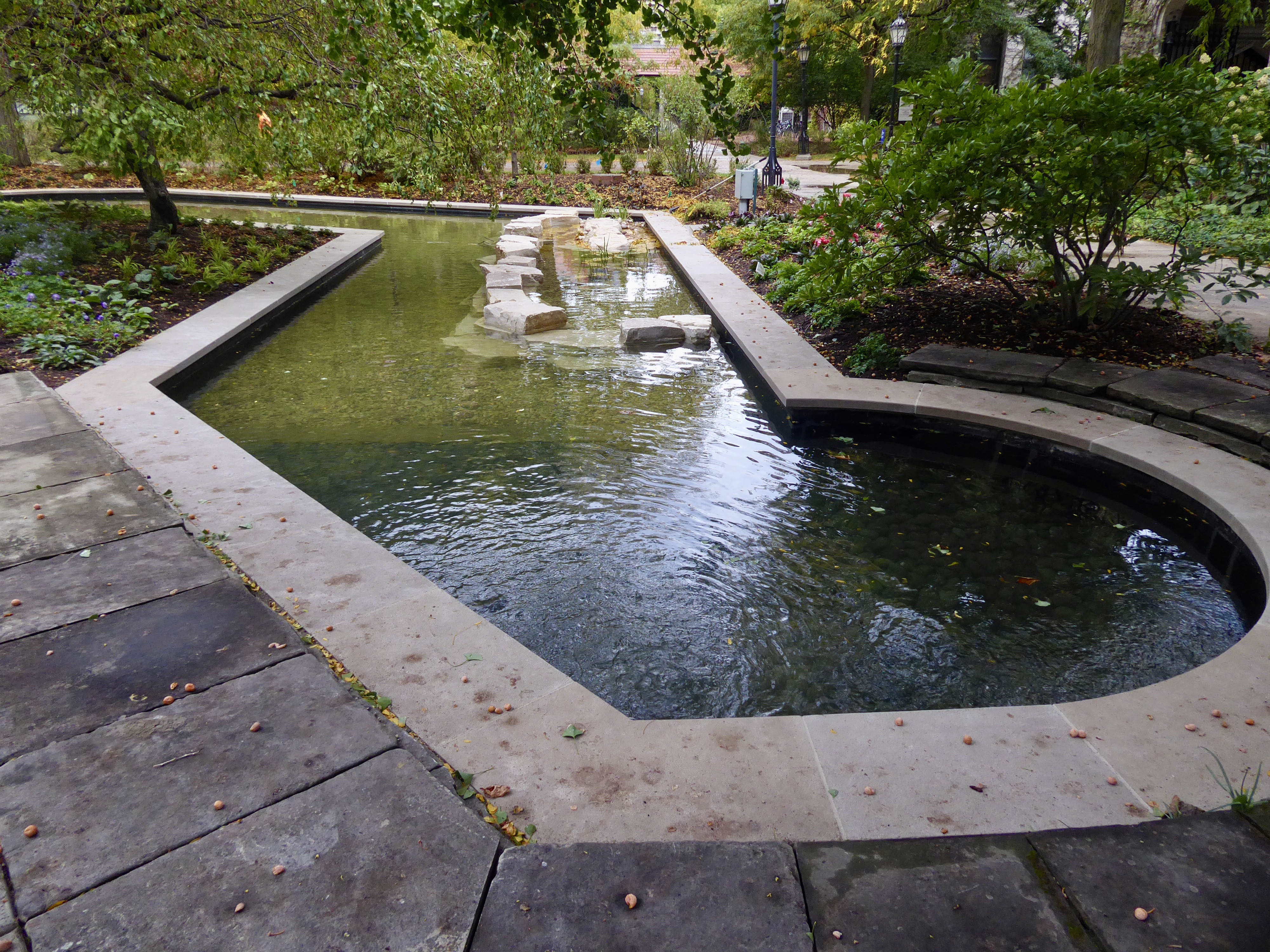
The channel, which contains the filtration system (no new water is piped in as in days of yore; rather, the water is filtered and recirculated). The water bill for the old pond was exorbitant, and there were constant leaks, which have been fixed. The end of the channel is designed as a “reflecting pool,” though it’s hard to see what’s reflected. The boulders in the pond are designed to entrap debris which is removed by the filtration system:
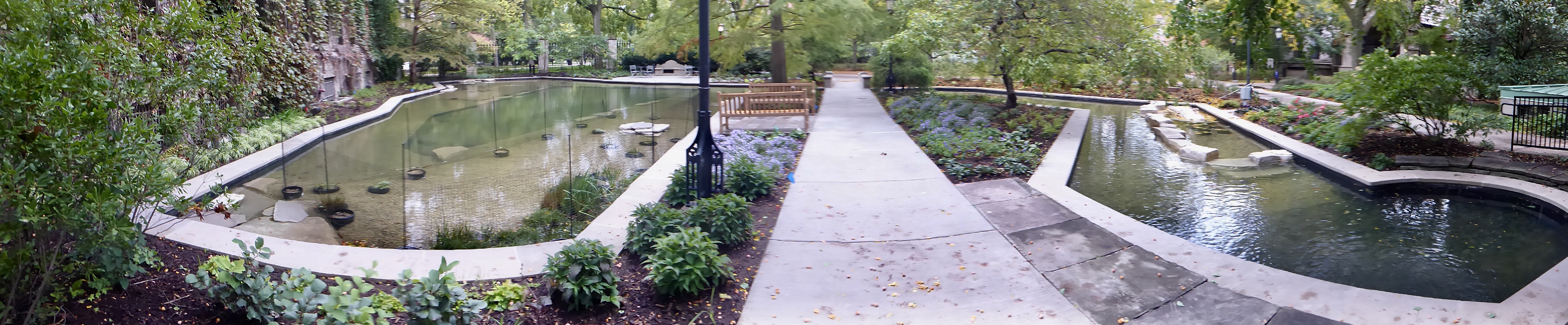
A panorama of the whole pond, with the main pond to the north (left) and channel to the south. Click the photo for a full view:
There are two benches at the north end of the pond to facilitate duck- and turtle-watching:
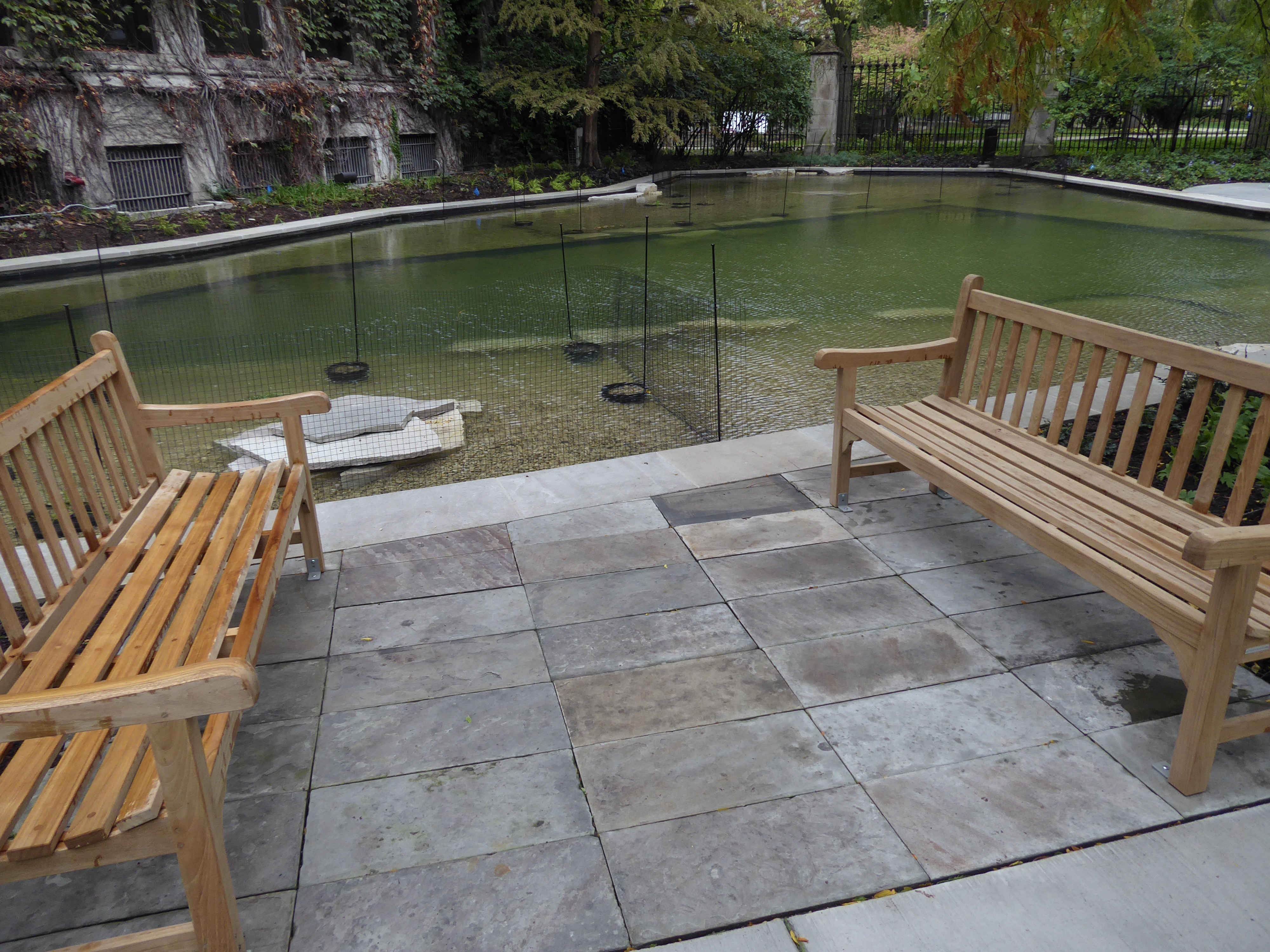
The old cement bench, good for duckwatching, is now supplemented with some tables and chairs:
A panorama of the main pond:
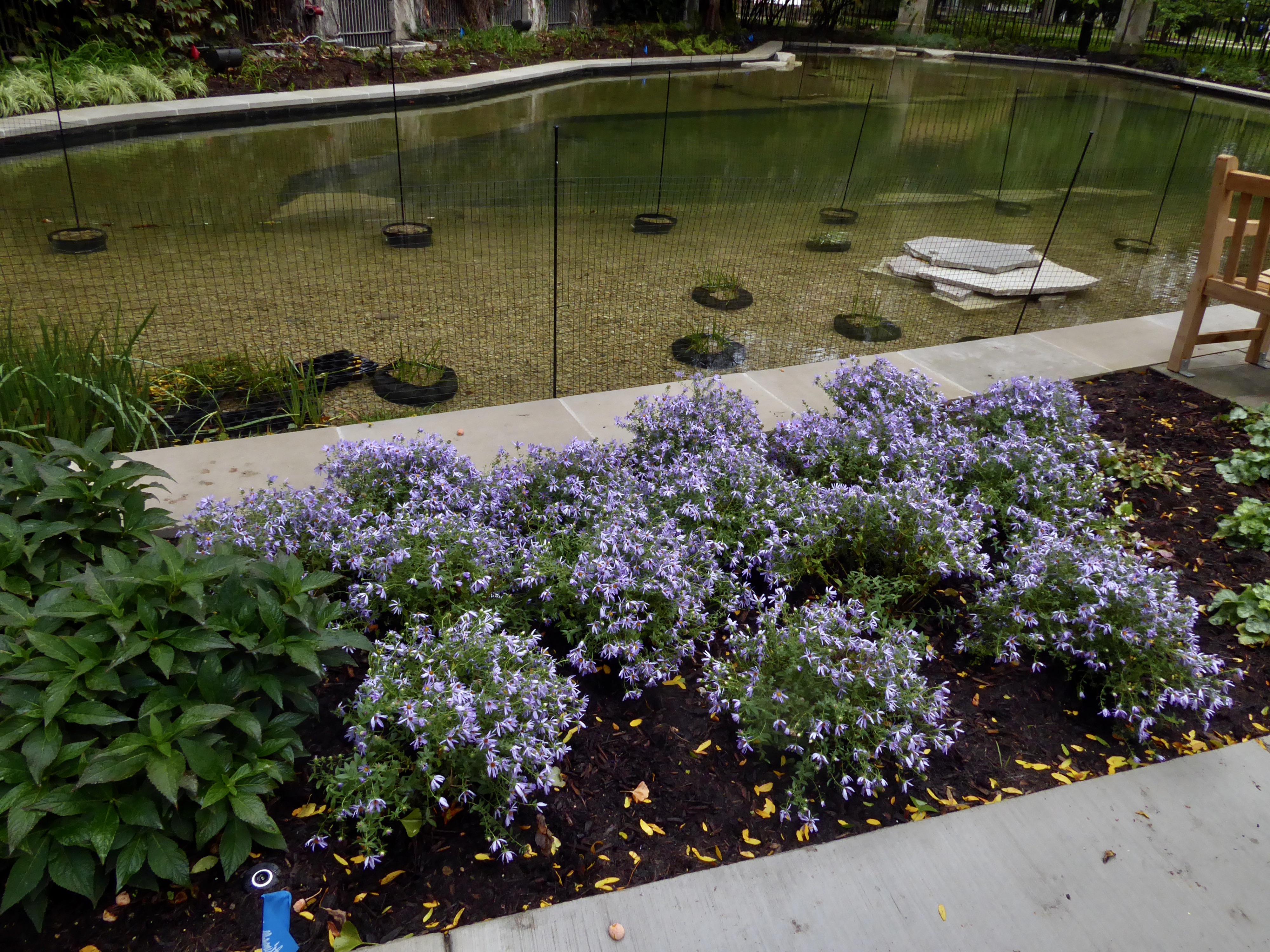
There is lovely landscaping; I’m told that they chose plants that, by and large, are native to the area. The water plants, which include the requisite water lilies, have just been installed (there are tall grasses, too). You can see the pots with the young plants in the foreground.
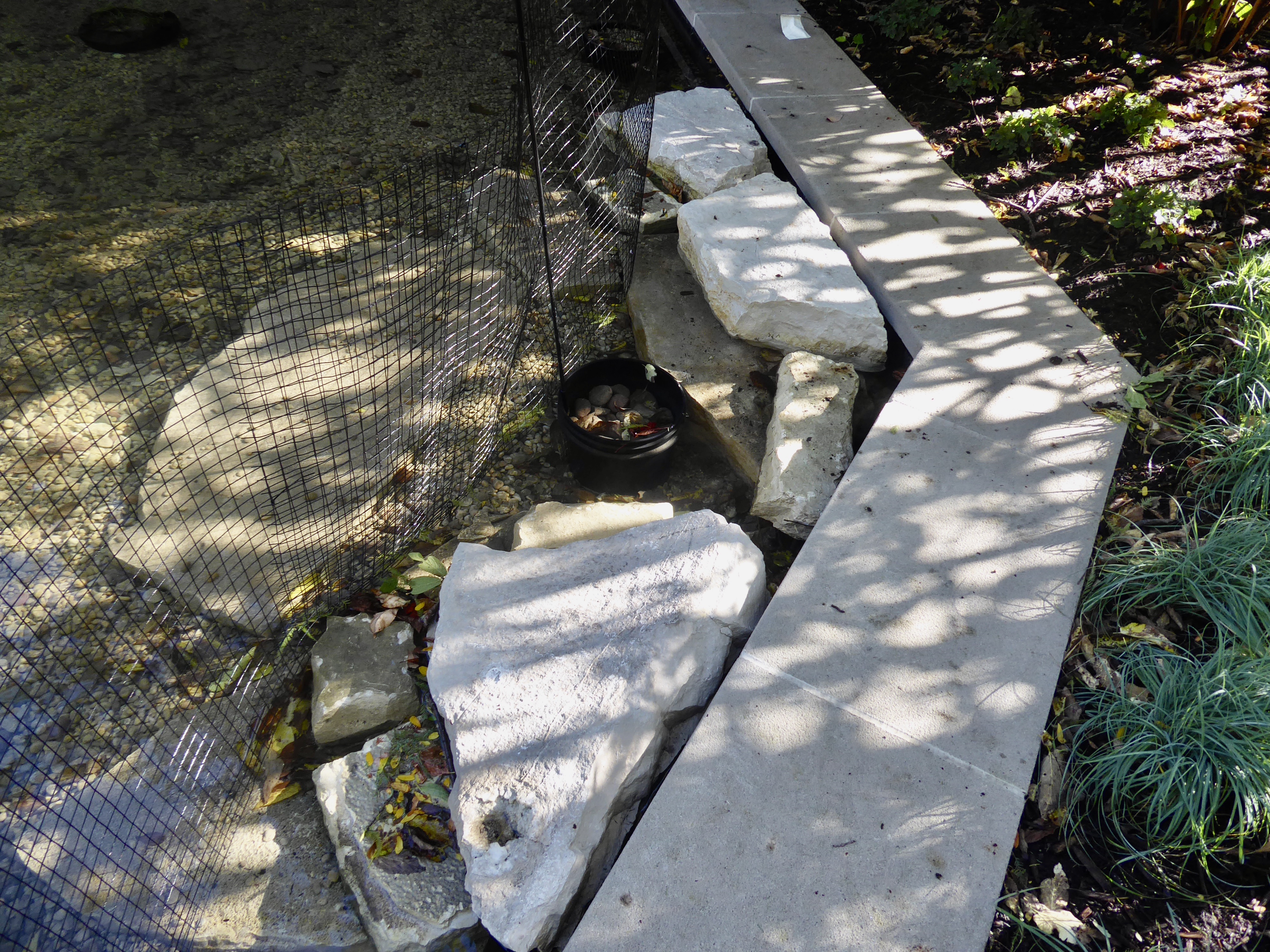
And, thoughtfully, they have reserved the south end of the pond as a refuge for ducks and ducklings. It’s fenced off from the main area of access by a sturdy metal fence (right) anchored in concrete. The rocks to the left are designed to allow egress for young and old mallards from the pond. I hope people stay out of this area. One thing that worries me is that now that the pond is shallow, miscreants will be tempted to jump in and swim.

Where the ducklings will climb out. I hope the stones are low enough to allow an easy exit (the fence will be gone by next spring):
Microfauna (snails, microbes, worms, etc.) have been added to the pond as seeds to allow it to develop, and to provide food for turtles and ducks. I think they’ll put the turtles back next spring.
Let’s hope that all goes well and we get some nesting ducks in the spring!
Finally, here’s a memoriam to Honey, who is surely in Duck Heaven by now. I had six years with this wonderful female, and she reared over thirty ducklings. Goodnight, sweet duck, wherever you are:


With her adolescent brood:

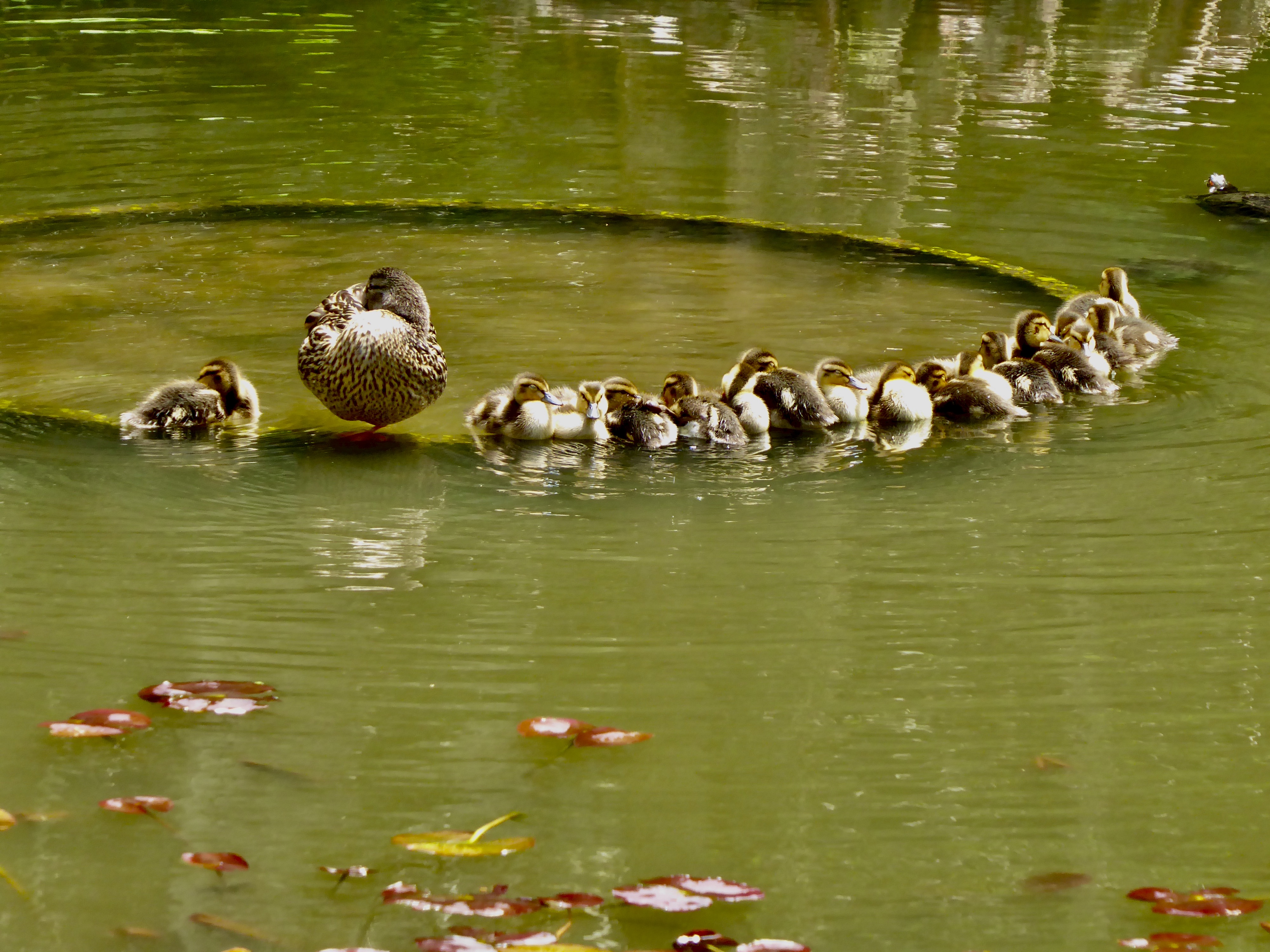
And the year she kidnapped Dorothy’s brood, winding up with 17 ducklings. All of them fledged! Here they are resting on the central ring, which is no longer there.
I think you should rename Botany Pond in honor of Honey.
I’d like to commission a bronze statue of her to be put somewhere around the pond. I’d pay for it if Facilities would let me. I haven’t yet inquired. . .
That would indeed be a lovely idea!
It looks a bit Spartan, but perhaps after the landscaping grows a bit and the ducks return it will become a more attractive part of the campus.
Here’s to Honey, your stories of her adventures warmed my heart.
Glad that you are pleased with the result. It looks like a pretty big design effort to bring Botany Pond into the 21stcentury. I do like that the several egress rocks have replaced the 2×6 wooden ramp. I am also glad they designed the fenced off quiet area…maybe a small sign on the iron gate to the effect: “wildlife refuge area. Please do not disturb”. Hopefully you will be able to wade in in a duck emergency and not need medical treatment afterward. I can hardly wait for spring and summer flora growth to fill in. Maybe I was too hard on the administration…they got ‘er done!
Woah – this is beautiful work – bravo! Bravo!
🦆🦆🦆
Comment by Greg Mayer
I’m concerned that the pond is shallower. Turtles can hibernate at the bottom of a pond without burying themselves in insulating sediment if the water is deep enough. The old pond had loads of sediment in which the turtles buried themselves. Is the new one deep enough to allow “naked” overwintering? (I don’t know how deep is deep enough, but I know who to ask.)
Also, are the Cypress trees all gone?
GCM
Greg,
Yes, they cut both trees down about 1.5 years ago. I share your concern about the turtles.
Greg,
Can they bury in the what appears to be thickly mulched side beds? Or do they need an actual mud bank?
Comment by Greg Mayer
Jim– They actually overwinter entirely underwater, not on the banks. I’ve been advised that the water would need to be 3-4 feet deep for them to overwinter successfully. It may well be that the pond is that deep– Jerry will have to go wading to see! (Or maybe just reach in with a yardstick.)
GCM
Thanks Greg. I had no idea because I thought that as reptiles turtles would need some amount of oxygen to support overwinter metabolism which while low surely isn’t zero? Changes my whole perception of our local lake and lakeside trails beneath my feet in winter.
Comment by Greg Mayer
Jim– They do need oxygen– but not very much. When in hibernation, they have what is called cloacal respiration. Their cloacas– the common urogenital and digestive tract “endpoint”– is rich in blood vessels, and they can respire through water taken in and out of their cloacas.
I’ve seen it called “butt-breathing”!
GCM
Greg, thanks. It is amazing how many things I do not know!
Since the water is circulated, that might keep it from freezing all the way down. But of course I don’t know.
Needs more ducks!
Very nice. I’m picturing a doctoral dissertation that documents the repopulation of the pond. Reminds me of the studies of yore that experimentally denuded islands and documented their recovery. Those studies required travel to exotic places. The one I’m envisioning would be perfect for the armchair naturalist.
So glad the pond is back if not ducks yet. We look forward to many tales of duck adventure.
Looks great.
All right! Bring on the ducks! (I’m quite certain you’ll let us know what’s going on there.)
But of course!!!
All very good! I recognize the flowers as Asters of some sort. These are late season flowering plants that are very attractive to bees, and to their ambush predators like flower crab spiders and ambush bugs.
Stay out of the water, boss. We don’t need your legs all swelling up and getting infected from the less than healthy water in the pond like last year. That was terrible – and I imagine intolerably itchy!
Pond looks good though.
D.A.
NYC
Looks nice to me!
I don’t often comment on the wildlife and food posts but I look forward to them. Happy news about the pond and the prospect of ducks in the spring. Will keep my fingers crossed for the turtles.
A bronze of Honey would be lovely.
So happy that the ducks have a fancy new home. It’s quite lovely, and congratulations to the university for following through. Looking forward to lots of duck posts and a statue of Honey (such a sweet idea).
Congratulations on your restored duck pond!
I’m sure word will soon get out in the Avian Community.
This is my favorite story of the autumn. Thank you for making this a wonderful day.
This is wonderful news. I love all of the photos you sent; it was especially nice to be reminded of the lovely Honey.