
This is my last batch of photos, so please help us (i.e., me) out and send your good wildlife photos.
Today’s photos of sunflowers come from Pratyaydipta Rudra, a statistics professor at Oklahoma State University. Pratyay’s captions and IDs are indented, and you can enlarge the photos by clicking on them. Pratyay and his wife Sreemala have a big bird-and-butterfly website called Wingmates.
I have shared some stories about our Maximilian Sunflowers before. This batch is a set of images of the sunflowers in bloom from the fall. They bloom for a relatively shorter time (a couple of weeks), but it creates a wonderful sunny vibe at that time and the pollinators, especially the migrating ones, definitely appreciate the buffet. Here are some insect photos on or near the sunflowers.
The Maximilian Sunflower (Helianthus maximiliani) plants bordering our property. They are not just low maintenance (no water required even during hot Oklahoma summers), but also kind of hard to kill if one wants that! We had them accidentally mowed down to the ground by a neighbor during the first year, and they grew back up just fine:

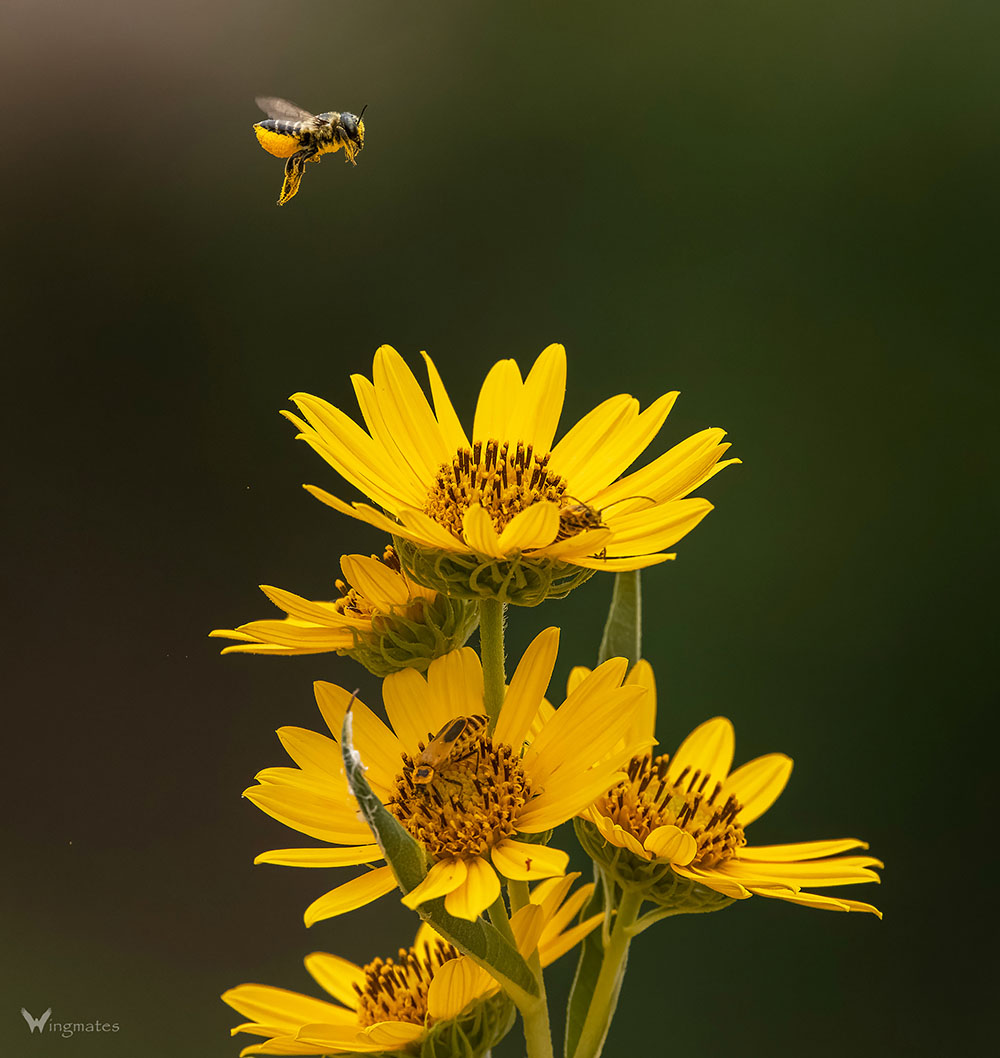
A leafcutter bee (Megachile, not sure about the exact species) flying over:
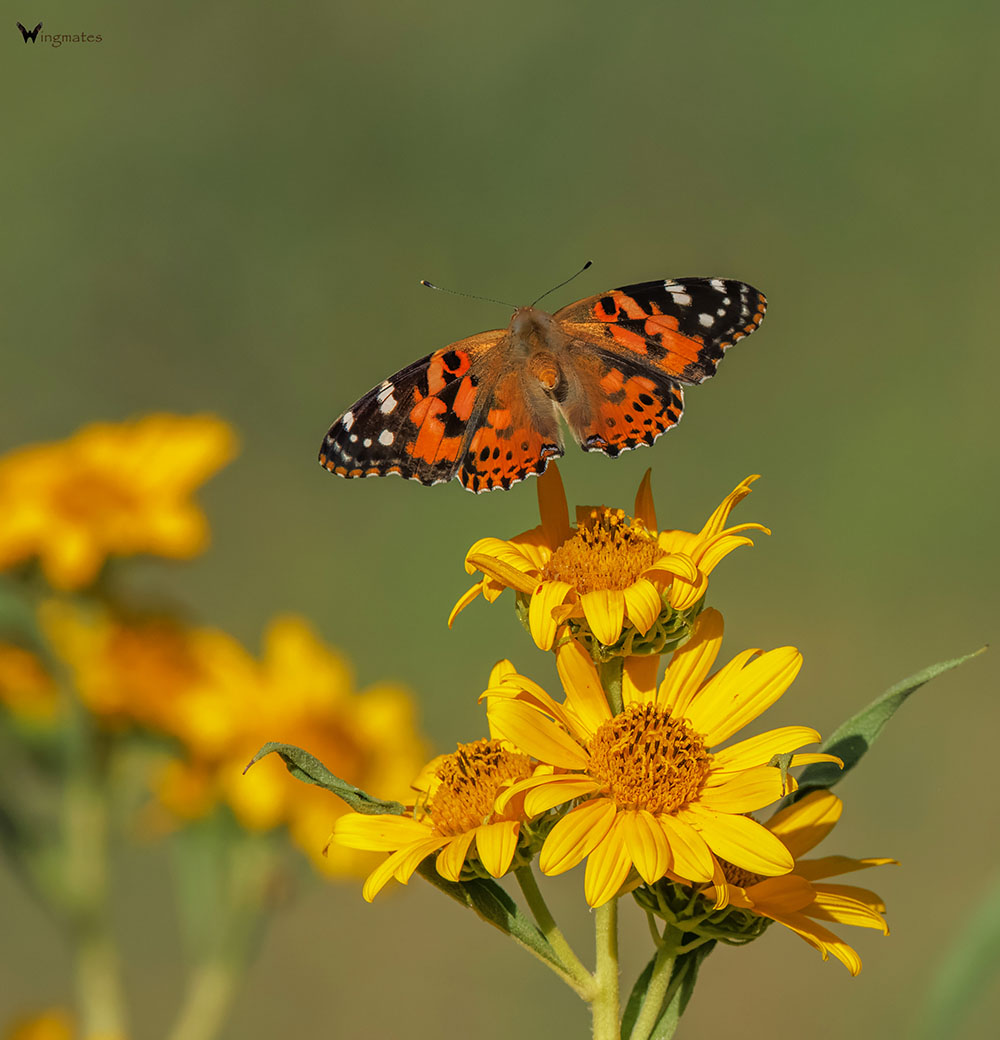
Painted lady (Vanessa cardui) butterfly taking off:
The bloom coincides with Monarch (Danaus plexippus) migration as we see plenty of Monarchs stopping by:

I called this image “The flame and the bee”. It’s the same leafcutter bee from the other image:

A close view of the bee nectaring on the sunflower:

A Spotted Cucumber Beetle (Diabrotica undecimpunctata). These are considered pests, but we see a good number of them every fall and they had never caused any trouble in our vegetable garden:

I think these are Goldenrod Soldier Beetles (Chauliognathus pensylvanicus), or something closely related to them:

Some kind of Meadow Katydid (Orchelimum). I love these with long antennae. They keep us entertained all fall and the garden suddenly sounds so quiet after the frost sets in:

Another Painted Lady. Note how it does not have the typical white spot of the American Ladies (Vanessa virginiensis) on the orange patch. The smaller one is likely a Fiery Skipper (Hylephila phyleus):

The skippers are often overlooked but they have a lot of character! I can spend hours watching them interact with each other. I find them quite hard to properly identify sometimes even with a field guide. This one is probably a Sachem (Atalopedes campestris):

The skippers are fast, but they can still fall prey to these efficient hunters: Goldenrod Crab Spider (Misumena vatia). These spiders can change their color (during molts) to match their surroundings. It’s not a surprise that this one was yellow, efficiently camouflaged among the sunflowers:

I like playing with the backlight through the leaves of these plants. I was happy to capture this little Eastern Amberwing (Perithemis tenera) dragonfly coming back to its favorite perch:

Another backlit image of a sunflower plant with some nice bokeh of out-of-focus mosquitoes/gnats:

Ooooo, a warm treat for a cold winter day
🌻🐝…❄️☃️
Just gorgeous photos! Very nice to wake up to.
Thanks!
Thanks for the lovely sunflowers! They obviously provide for good entertainment and are a welcome relief for those of us in a cold environment with inches of snow on the ground (south-central PA).
Beautiful! I am hammered with work, but this was a welcome respite.
Beautiful pictures. I have noticed—or think I have noticed—that many fall flowers are yellow and that many yellow flowers are fall flowers. Is that true? Is there a known reason?
I tend to agree with this, at least for my region, but I don’t know why. So, I looked up, and it seems like there are some reasons why yellow flowers may offer more utility in the fall. I don’t have a solid reference though. Also, several of these belong to the same family, so they are correlated in that sense too.
Those are exquisite photos!
Wonderful detailed photos — I especially like the Monarch — they were common when I was a youngster in Wisconsin decades ago.
Lovely! Thanks
Thanks, everyone, for your comments.
These are gorgeous, thanks!
Beautiful colors and composition.