
Please send in your good wildlife photos (with “wildlife” construed broadly) if you have them. So far we can continue on.
Today’s bird photos are by Ephraim Heller, continuing with his pictures from the Pantanal wetlands of Brazil. Ephraim’s captions and IDs are indented, and you can enlarge his photos by clicking on them.
These photos are from my July 2025 trip to Brazil’s Pantanal, the world’s largest tropical wetland area and the world’s largest flooded grasslands. Today I have photos of a toucans, aracaris, woodpeckers, and “cardinals.” It’s a random assemblage of species, but all the adult males have at least some red feathers so I declare it to be a cohesive post.
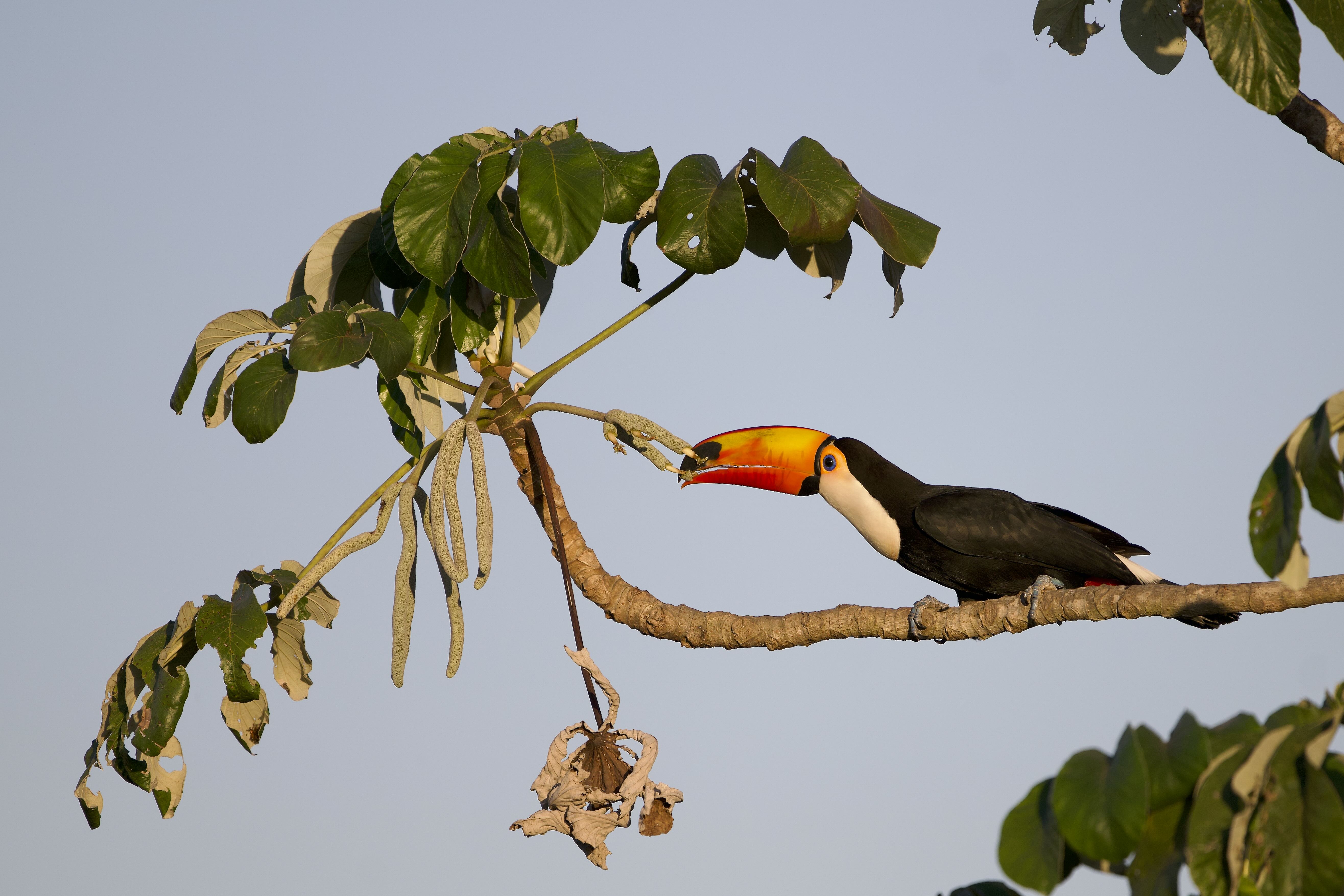
Toco toucan (Ramphastos toco). The largest and most recognizable toucan species. Despite its size, the bill is lightweight due to internal honeycomb structure. Per Wikipedia:
Research has shown that one function is as a surface area for heat exchange. The bill has the ability to modify blood flow and so regulate heat distribution in the body, allowing for the use of the bill as a thermal radiator. In terms of surface area used for this function, the bill relative to the bird’s size is amongst the largest of any animal and has a network of superficial blood vessels supporting the thin horny sheath on the bill made of keratin called the rhamphotheca. In its capacity to remove body heat, the bill is comparable to that of elephant ears.
This one kindly posed against the full moon before dawn:

The enormous beak helps the toco reach fruit on small branches:
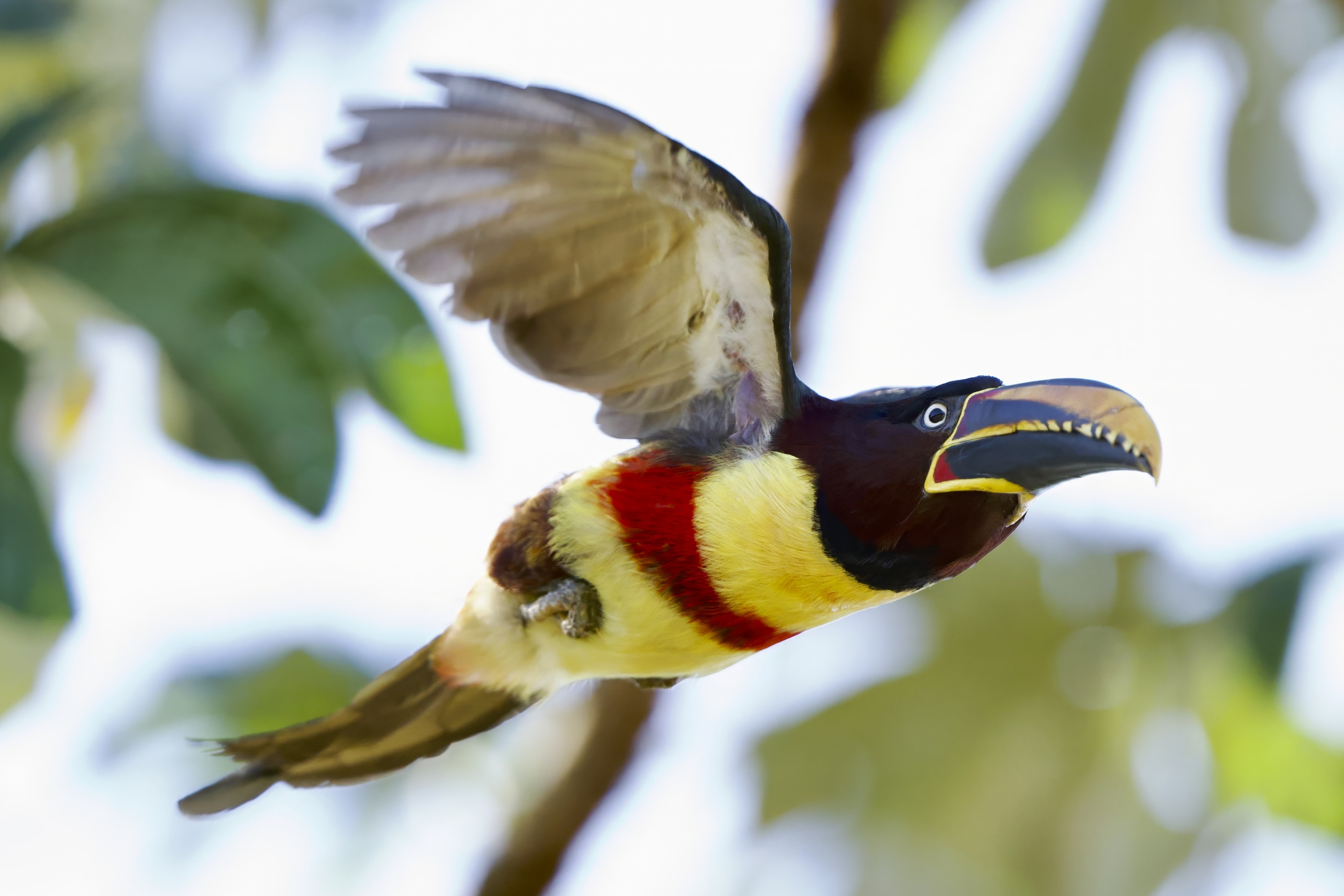
Chestnut-eared Aracari (Pteroglossus castanotis). Just a small, cute toucan:
Green-barred Woodpecker (Colaptes melanochloros). The green-barred woodpecker’s diet is almost entirely ants including their larvae and pupae. Yum!:

Little woodpecker (Veniliornis passerinus). As you can see, it is a hard worker:
Female:

Male:


Pale-crested woodpecker (Celeus lugubris):

Yellow tufted woodpecker (Melanerpes cruentatus):

Now for the “cardinals.” Why the quotation marks? Because neither the yellow-billed cardinal nor the red-crested cardinal are true cardinals. Both belong to the tanager (Thraupidae) family, not the cardinal family (Cardinalidae). Now why would you go and call a tanager by the name cardinal? I’m outraged by it. How did the naming bodies allow this? In my opinion it puts all of science in a bad light with the general public, like cold fusion.
Red-crested cardinal (Paroaria coronata):
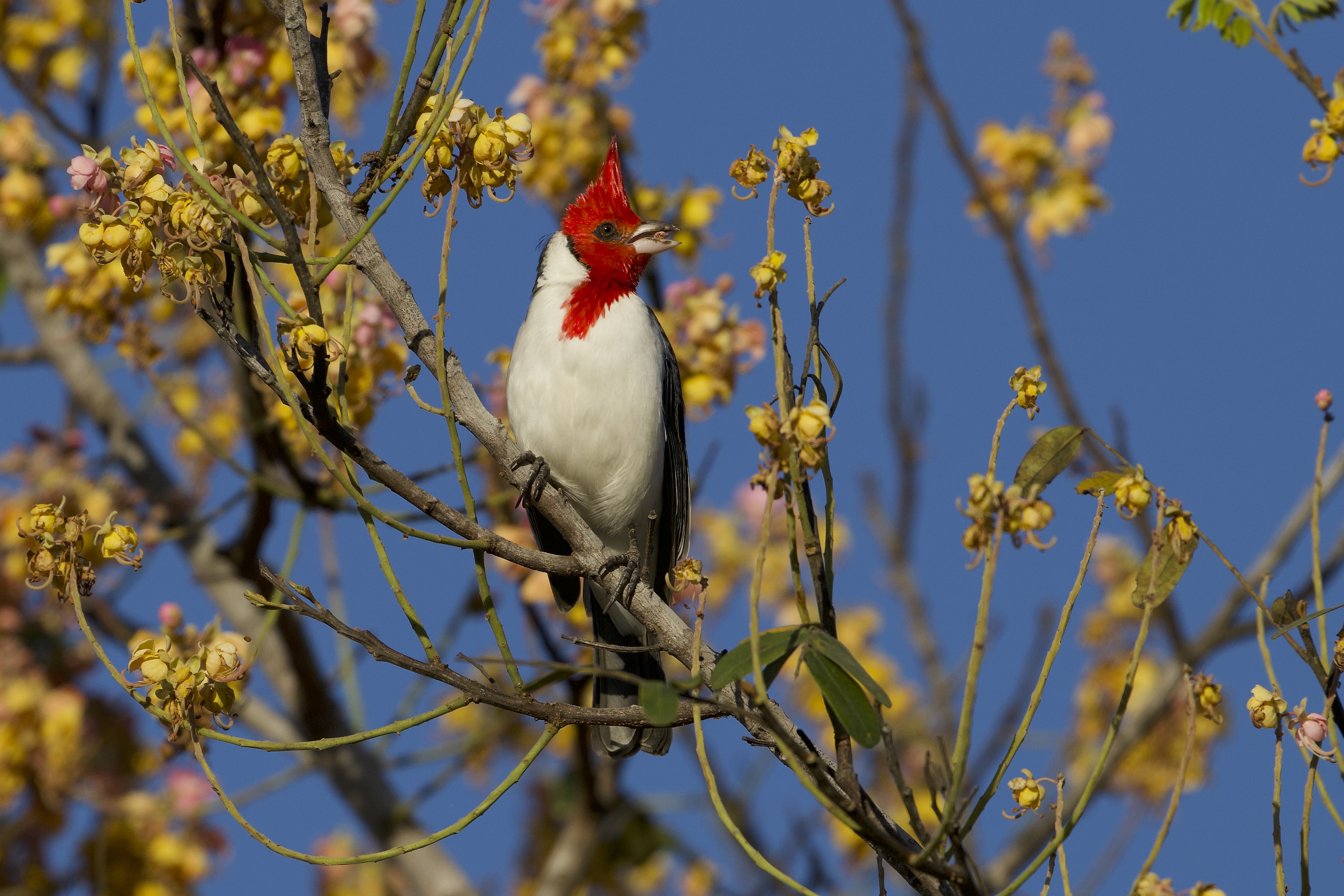
Yellow-billed cardinal (Paroaria capitata):


Please write to your congressperson and ask them to immediately address this issue. Tell them to “follow the science.”
Ooo, another surprise Pantanal treat!
I’m intrigued by the coloration of the male Little Woodpecker… blends in, but has the red patch, and also I think picks up a slight green reflection from the leaves….
The flight pictures are especially striking. The Pale-crested Woodpecker and the aracari are amazing. I also like the “cardinals” and will dutifully write my representative. We have the same problem here in Ecuador with the Red-capped “Cardinal”.
Then let’s go after the American “Robin” and “Meadowlarks” and New World “Blackbirds” jejeje.
Fun fact: While these “cardinals” belong to the tanager family, our North American “tanagers” (summer and scarlet) actually belong to the cardinal family. Double the outrage!
Well gee, am I also supposed to complain that some tanagers (Scarlet, Summer, etc.) are in the Cardinalidae family? As well as some (not all) grosbeaks and buntings? Trying to align common names with their proper phylogeny is a hopeless quest. And don’t get me (a retired ornithologist) started on the woke mission (successful, sadly) to change the common names of all North American birds named for people. Rant over.
I think we have the makings of a political movement here! Can I count on the ornithologists’ votes?
Bob, can you update me on the official status of that re-naming mission?
That Chestnut-eared Aracari (Pteroglossus castanotis) looks like a World War II fighter plane, all dolled up with its threatening paint job. Very cool pictures!
It does too. I had to look and look.
“Little Woodpecker” now that’s a fun and simple name.
These are beautiful, thanks!