
This is the last full batch of photos I have, so please send yours in. I will eat worms if this feature has to stop!
Today’s batch of photos comes from Ephraim Heller, who sends us hawks from his trip to the Pantanal of Brazil. Ephraim’s captions and IDs are indented, and you can enlarge his photos by clicking on them.
These photos are from my July 2025 trip to Brazil’s Pantanal, the world’s largest tropical wetland area and the world’s largest flooded grasslands. Today I focus on the five species of hawks and kites that I saw: black-collared hawk, great black hawk, roadside hawk, savanna hawk, and snail kite.
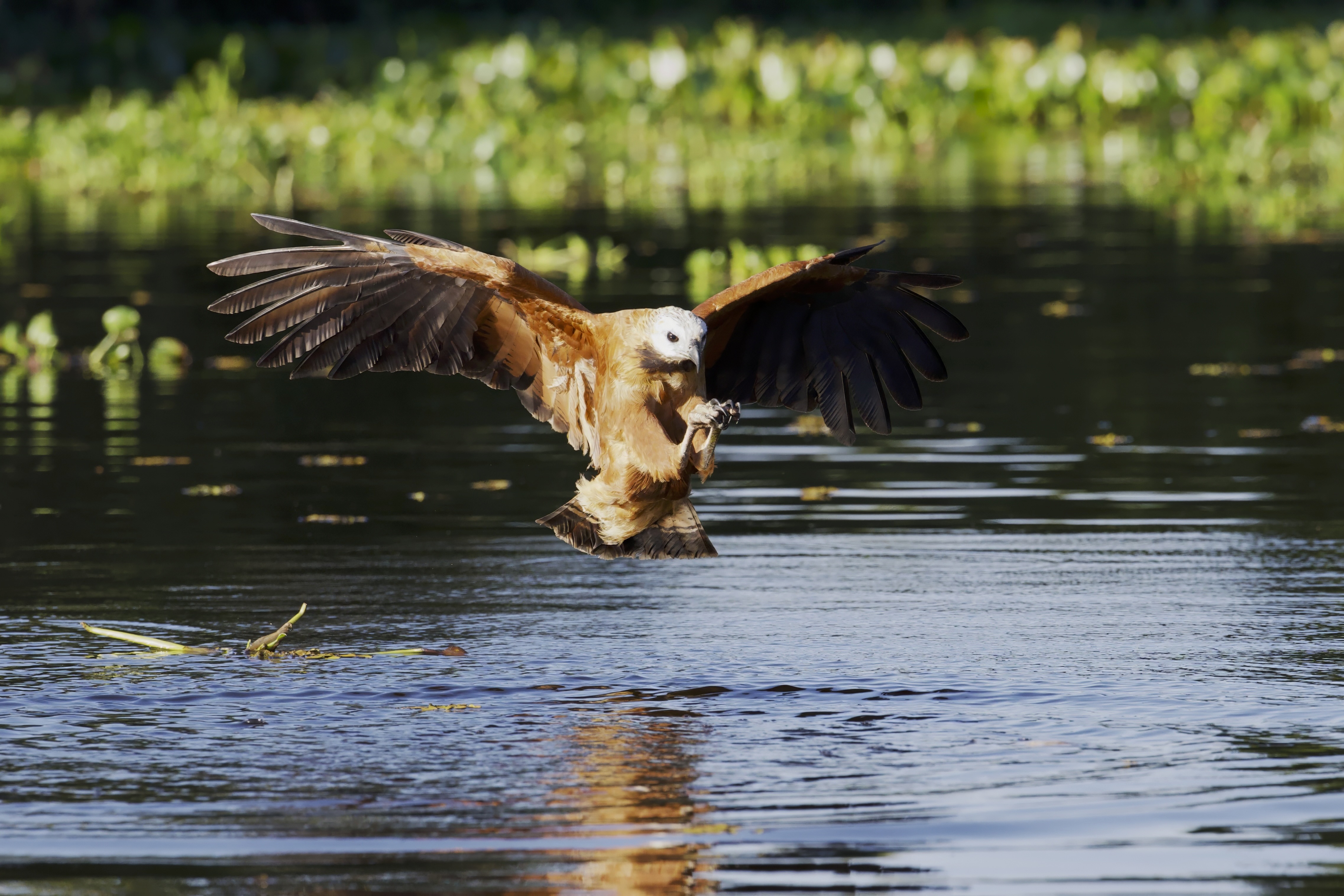
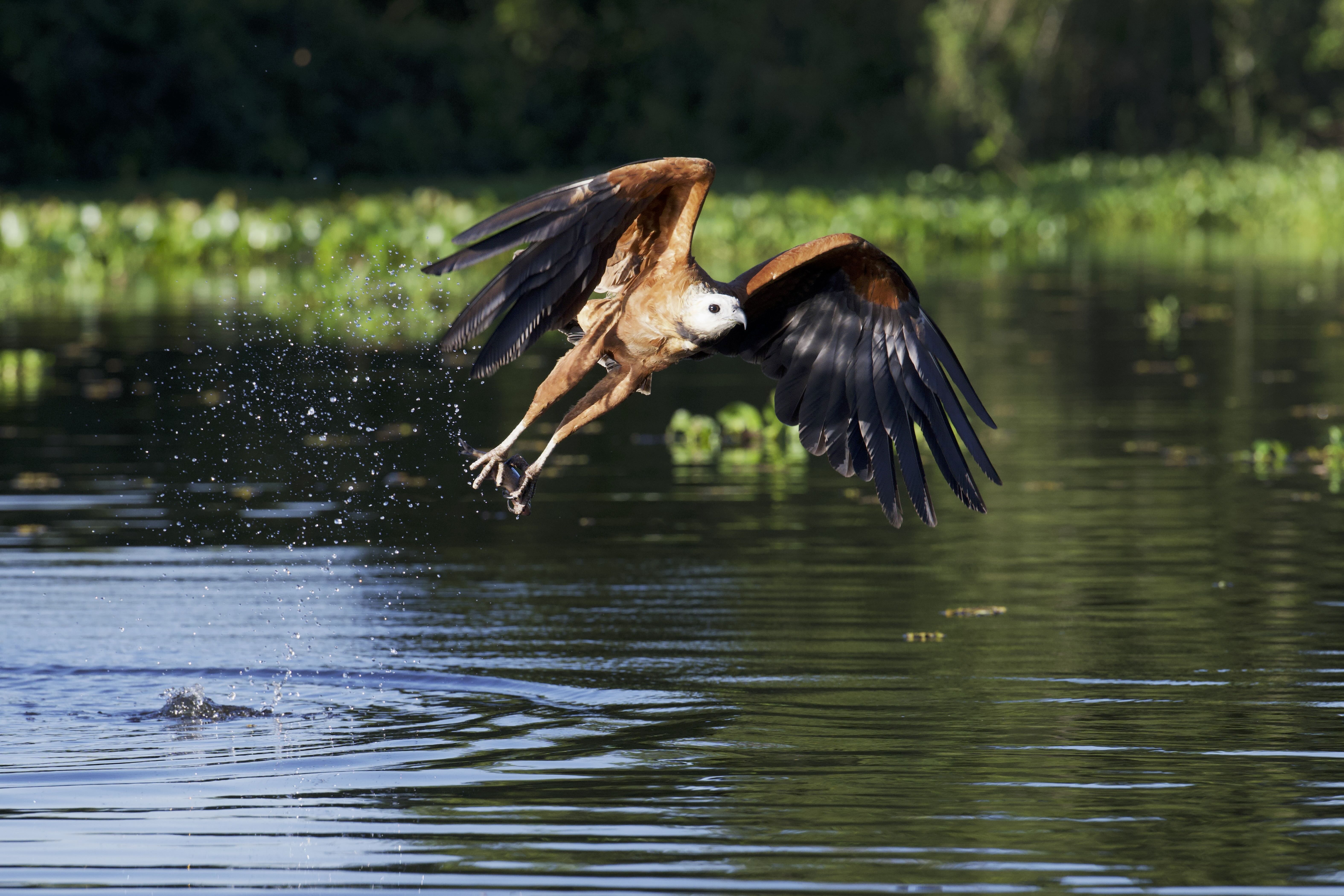
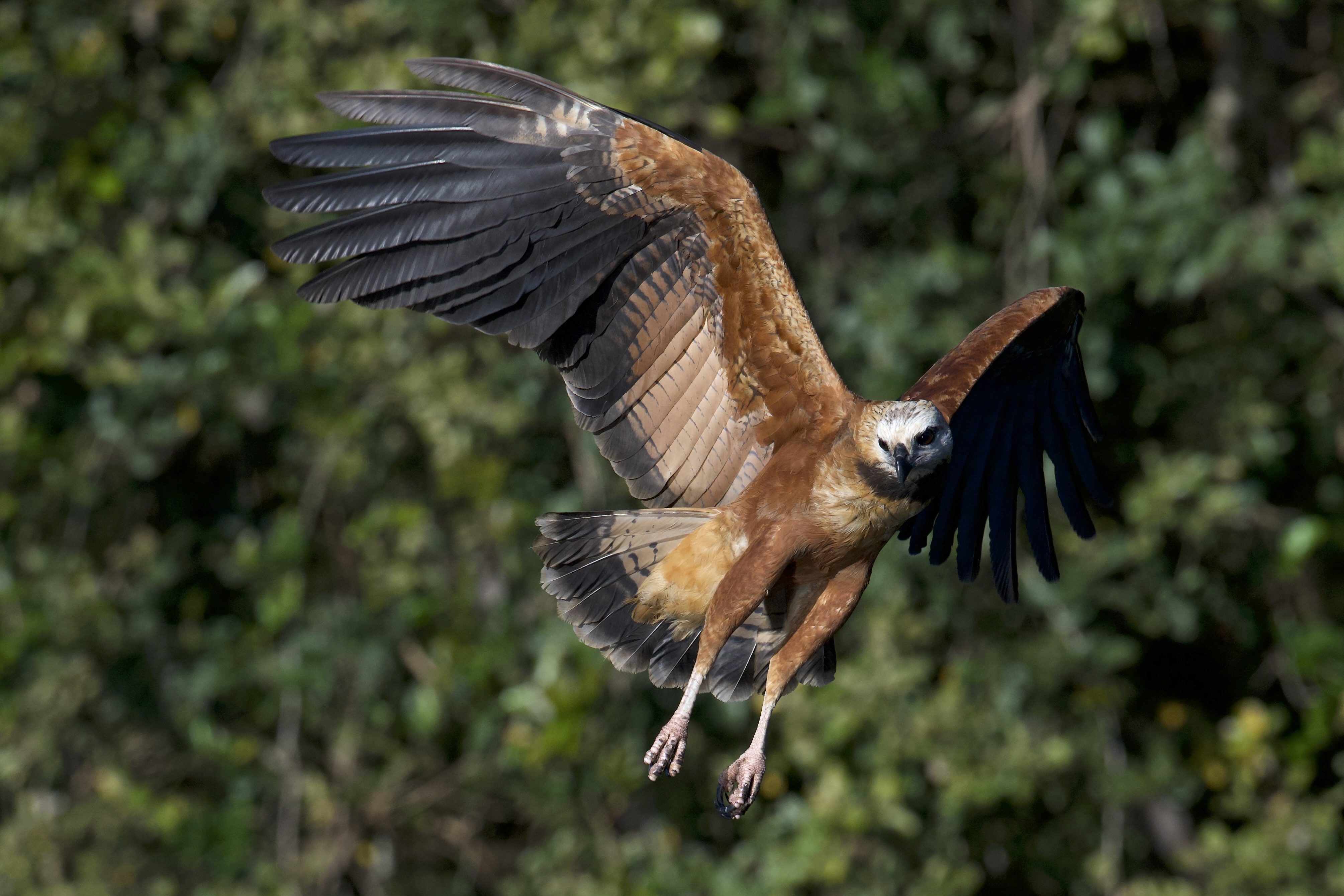
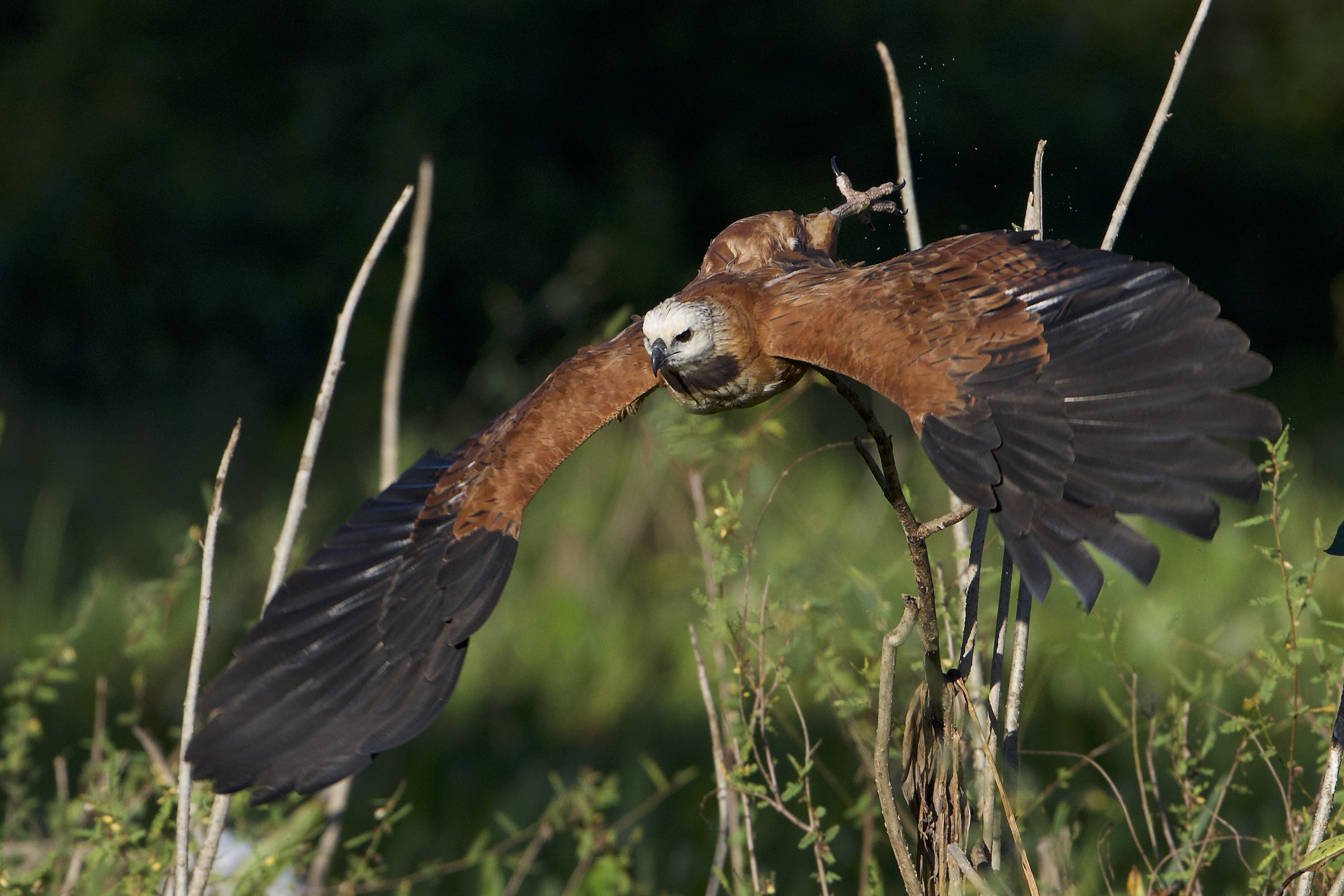
Black-collared hawk (Busarellus nigricollis). A fish-eating raptor found near wetlands and rivers, known for its distinctive white head and black collar markings. This specialized piscivore wades in shallow water or perches over streams to snatch fish with its talons. It builds large stick nests in trees near water and is often seen in pairs defending territorial boundaries.
Great black hawk (Buteogallus urubitinga). A large, powerful raptor of wetland areas that hunts fish, reptiles, and amphibians from waterside perches. This hunter often wades in shallow water and uses its broad wings for short gliding flights between perches. It builds massive stick nests in tall trees and is known for its loud, far-carrying calls. The first two photos show an iguana having a bad day; the next shows a hawk dining on a crab (I think); and the last shows a juvenile.


Roadside hawk (Rupornis magnirostris). A common hawk known for its loud calls and bold behavior. This medium-sized raptor hunts from exposed perches, taking small mammals, birds, and large insects. It has successfully adapted to human presence and often nests in parks and suburban areas.

Savanna hawk (Buteogallus meridionalis). A long-legged hawk of open grasslands that hunts both from perches and on the ground, taking everything from insects to small mammals. This terrestrial hunter walks through grass searching for prey and uses its long legs to wade through marshy areas. It’s particularly active during grassland fires, catching fleeing animals.

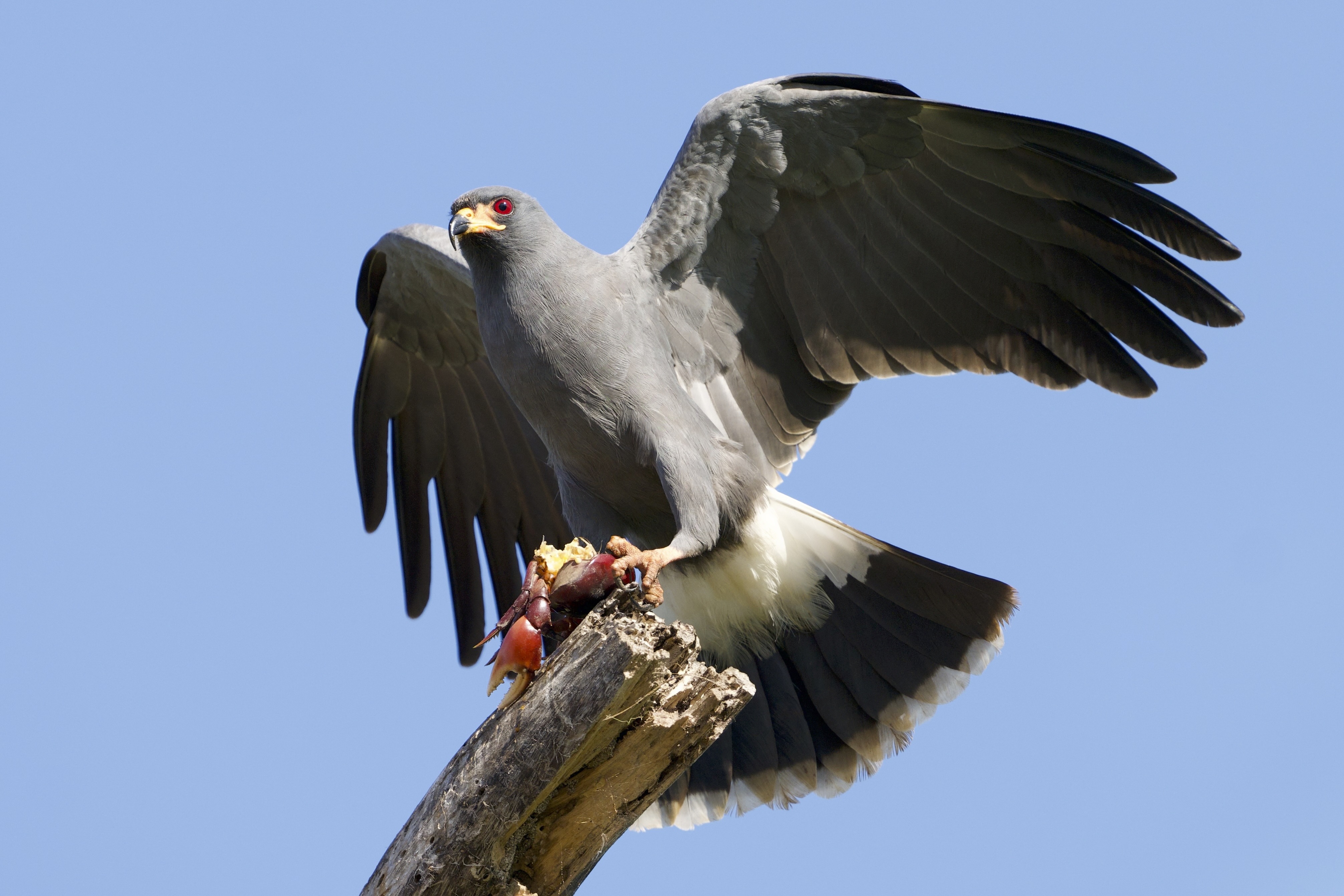
Snail Kite (Rostrhamus sociabilis) – A highly specialized raptor that feeds almost exclusively on apple snails, using its curved beak to extract snails from their shells. This wetland specialist demonstrates remarkable feeding precision and has co-evolved with its primary prey species. Population numbers closely follow snail availability, making it an excellent indicator of wetland health. This individual is eating a crab.
Fantastic pictures. Awesome power on display. Thank you for those pictures of living dinosaurs.
Keep the pictures coming if you can!
Gorgeous photos. The wings are incredible to see on all these hawks.
I love that third picture down of the Black-collared hawk.
Just amazing wings and deadly claws.
Nice. 🦅
What terrific raptor-in-action shots!!
Second that!